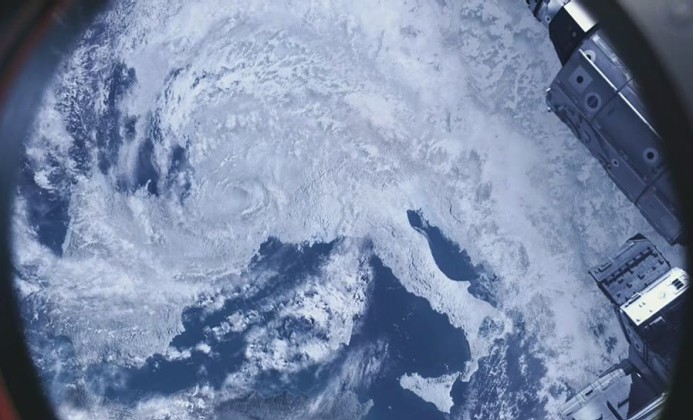
And if the latest mathematical models are anything to go by, winter after 2020 will be truly brutal:
Professor Valentina Zharkova gave a presentation of her Climate and the Solar Magnetic Field hypothesis at the Global Warming Policy Foundation in October, 2018. The information she unveiled should shake/wake you up.
Zharkova was one of the few that correctly predicted solar cycle 24 would be weaker than cycle 23 — only 2 out of 150 models predicted this.
Her models have run at a 93% accuracy and her findings suggest a Super Grand Solar Minimum is on the cards beginning 2020 and running for 350-400 years.
The last time we had a little ice age only two magnetic fields of the sun went out of phase.
This time, all four magnetic fields are going out of phase.
The summary of Prof. Zharkova’s presentation is given below. It’s a 20-minute long video, and likely worth watching in full to get an idea of just how bad things could get:
I have mentioned Prof. Zharkova’s work before. I came across her name a little under a year ago when I stumbled across a Daily Mail article that looked askance at the whole Anthropogenic Global Warming agenda. This, for the lamestream legacy (((media))), is a rare and surprising thing, and so I followed that particular rabbit down its hole a little bit further.
I was surprised and impressed to discover that Prof. Zharkova is not your typical climate scientist. She does not have a degree in engineering, like Bill Nye the Science Guy. She does not pretend to be any kind of expert in atmospheric science, climatology, or anything else.
She is a mathematician. And she is an expert on statistical modeling. That is what she is good at, and that is what she uses.
And if Prof. Zharkova is right, we are in for a very, very nasty few centuries ahead.
The first thing to understand about modern climate “science” is that most of it is largely useless. The accuracy of the predictions of most climate models is unbelievably poor. Those of you who went to grade school in the 90s (like me) will probably remember being taught (read: indoctrinated into the belief) that the climate models of the world’s best researchers and universities were all pointing to severe climate shocks by around the year 2010.
Climate modeling is a fiendishly challenging area of science. It is very, very hard to figure out how to project out future climatic trends – and certain scientists, who actually know what the hell they’re talking about, would argue that it is outright impossible to do so:
The second thing to understand is that a warmer planet is GOOD for life.
This takes some explaining to the climatards who insist that if the world warms up by 2 Kelvin, then ALL LIFE AS WE KNOW IT WILL END!!!, but the reality is that this is simply not true.
The history of human economic activity tells us that the warm periods of existence have always coincided with increased economic activity, output, and prosperity – while the most recent period of real cold, known to us in the climate history as the Little Ice Age, saw extreme hardships and significant contractions in economic activity.
The Mediaeval Warm Period, which took place immediately before that Little Ice Age, was a period of significant economic activity, where according to contemporary sources wine was grown even as far north as southern England. (That is not, by the way, a statement in support of English wine. Based on my own firsthand experience, let’s just say that the Angles are better off sticking to ales.)
By contrast, the Little Ice Age was in many ways one of the worst periods in all of human history.
Anyone who has read Barbara Tuchman’s A Distant Mirror: The Calamitous 14th Century will recognise that the 600-year period between the roughly the early 13th and middle 19th Centuries was filled with tremendous difficulties. Famine, war, disease, plague, religious strife, economic depressions, and extreme poverty blighted all of Europe, which had just begun to emerge out of the true Dark Ages imposed by Islam after the 9th Century and into the Middle Ages and then the Renaissance.
In fact, the real miracle of the Renaissance, which I will certainly concede did take place during the LIA, is not the fact that it resulted in an incredible revival of Western civilisation; the miracle is that the revival happened in the first place, given what had gone on in Europe just a few hundred years earlier.
All of that happened centuries before Europe had a population of even 100 million people. That was back before North America’s white civilisation even existed. That was before the Industrial Revolution, the Green Revolution, the Digital Revolution, and various other massive leaps forward in technology and human living standards.
That progress is all to the good, and wonderful, in many ways. But there is one very serious problem with that progress: the world has become far more interconnected, and as a consequence far more fragile to systemic shocks.
A significant stretch of really cold global weather will cause much of that progress and trade to come screeching to a halt.
Imagine what will happen when serious cold hits Northern and Eastern Europe – which are already very cold and inhospitable places. Ukraine was, and in some ways still is, the bread-basket of the region. Much of Europe is extremely productive in agricultural terms – no matter which European nation we are talking about, agricultural produce is exceptionally efficient, industrialised, and productive.
A few decades – heck, even just a few years – of prolonged and severe winters, followed by cold and mild summers, will likely cause a serious contraction in agricultural output. Europeans will adapt, react, and overcome, given that we have had the technology to produce high-yield cold-resistant crops for many years. But it will take time to adapt to the new conditions, and Europe will suffer.
That picture up the top is from the highly overrated and overwrought Roland Emmerich disaster-porn movie, The Day After Tomorrow from 2004. It shows Europe as seen from the International Space Station after catastrophic runaway global warming causes massive global cooling.
Yeah, the movie was stupid – and yeah, I know, global cooling is theoretically possible after significant spikes in global temperature due to planet-scale feedback and regulatory mechanisms that we don’t really fully understand yet.
The point is, that is what Europe might actually look like in future winters if serious global cooling hits.
And now imagine what will happen in North America when a severe prolonged cold spell hits.
America and Canada combine to make up the bread-basket of the entire world. A really severe cold spell hitting the most productive parts of the American agricultural heartland would be a disaster for the entire world.
This is not scaremongering and it is not a call for immediate action. Unlike the AGW cultists, I am not interested in running around with my hair (read: pants) on fire blatantly making shit up. I’m simply pointing out a few basic realities of living in a cold climate versus a warm one.
We will ultimately find out who was right – the AGW crowd, or the global cooling bunch. Given that the AGW crowd has consistently gotten just about every single one of its predictions catastrophically wrong for the past thirty years, it isn’t difficult to figure out who I would rather pay attention to.









2 Comments
So basically we're in for a hell of a ride until the advanced countries can figure out how to make frost reistent crops.
What about the 3rd world. Will globall cooling bring rains to the Sahara or just frost?
This isn't a dumbass question but curiosity.
One possible solution is to take a hard look at selective deconnection. What world economic links can be sacrificed that'll beef up resilency without wrecking the world economy in one go?(I'm think of both skin in the game and anti fragility policies a Nassim Nicholas Taleb)
xavier
So basically we're in for a hell of a ride until the advanced countries can figure out how to make frost reistent crops.
We already have some cold-resistant crops, but most staple crops, such as wheat, corn, rye, millet, and buckwheat all suffer very badly from near-zero temperatures.
There is some new research out there which indicates that there is a specific enzyme in many crop plants which determines their tolerance to frost, and learning how to manipulate or modify this could result in much hardier and more frost-tolerant plants.
What about the 3rd world. Will globall cooling bring rains to the Sahara or just frost?
Unfortunately I just don't know enough about climatology to say anything definite. I do think that you would likely see deserts like the Sahara, much of Texas and Arizona, and even large parts of northern California, experience significant greening – because that tends to happen in desert areas.
I also think that you will see significantly worse hurricane events from global cooling, due to the fact that hurricanes and cyclones form from temperature differences between the equator and the poles. Global cooling means significantly colder temperatures at the poles and through the temperate zones, but the equator stays roughly the same.
One could argue from pure logic that we should see significantly nastier hurricane activity during periods of global warming too, but the NOAA records show that this has not happened.
What world economic links can be sacrificed that'll beef up resilency [sic] without wrecking the world economy in one go?
At this point, basically none of them. The world is too interconnected. If the US economy implodes, the rest of the world goes with it, immediately. The world depends on the US to be its economic engine. If it blows up, it would be like watching a jet turbine explode.
The thing to remember, though, is that climate events will not cause economic collapse overnight. That takes months and years to achieve.
What WILL cause overnight collapse is a plague. If you look at what happened in SE Asia in 2003, you will see exactly what I mean. The economy of the entire region basically came screeching to a halt for about three months. The damage was tremendous. Fortunately it was repaired within a year, but that was a truly brutal period.
I know. I was in Singapore at the time.