I am finally back after a couple of weeks off, during which time I was essentially doing a whole lot of nothing. And that was no bad thing.
This description is not entirely accurate, of course, but this was a family trip, not a solo one, and as such, the pace of movement was significantly slower than it have been if I had gone on my own. We spent quite a bit of time over in Turkey, and I must admit, I came away from the experience with a significantly better opinion of the country than I had previously.
I have been to Turkey several times before – most recently at the very beginning of the year, where I spent about 7 hours running around various bits of Istanbul, but I had been there for a longer 2-week holiday back in late 2024, and for another holiday for a week in July of that year.
My previous excursions to Istanbul in particular, and Turkey in general, left me with the impression of a ridiculously expensive place that is full of people who will gladly rip you off. While that remains substantially true, this trip was significantly better, because I made some effort to learn a few words of Turkish, and because we did try to go beyond the standard tourist traps.
Istanbul, as a city, is unquestionably a beautiful and magnificent place. It is also, by Izzlamick standards, very liberal. You can easily find lots of places that play music, allow for hookah smoking, and serve liquor. Hell, the Turks are famous for their national alcoholic drink, raki. (I bought a bottle of the stuff on my way out of Istanbul, simply to serve my curiosity, though I rather doubt I will find it anywhere near as rewarding as wine or whiskey.)
It is also full of cats, and if you like petting fluffy furry things, then Istanbul is great fun. (I am one of those weird people that thoroughly prefers dogs, but gets along fine with cats, for some reason.) Turks as a people have a belief that how you treat animals, is an indication of the quality of your soul, which is why the stray cats of Istanbul are very well cared for and looked after. People there put out water and food for them every night, and the city administrators take great efforts to vaccinate them properly.
This does not, however, stop them from carrying fleas, which then happily transfer themselves onto you and stay there until your next shower. Nor does it stop them from peeing on you if it suits them. (I did not have this particularly annoying experience, fortunately – but my travelling companion in that winter of 2024 did, and was not at all amused by it.)
I can wholeheartedly recommend walking around the old city of Istanbul. I have done it numerous times myself, and have always found it an amazing experience. However, the Hagia Sophia is a scam and a rip-off at this point. You pay EUR 30 for the “privilege” of going into what was once the Mother Church of the Orthodox faith, and then you discover that most of the best bits are off limits due to ongoing reconstruction and restoration efforts.
There is also something rather jarring about exploring the Hagia Sophia itself, especially if you have seen St. Peter’s Basilica in Rome. The latter is a staggering experience; blame the rosary-rattlers all you like for their excesses, but they know how to put on a bit of pomp and circumstance. The Vatican in Rome is an awesome and incredible place; by comparison, the old city of Istanbul, for all of its grandeur and majesty, still feels like a poor copy of the original Rome.
This, by the way, is not a new sentiment. The Byzantines themselves, back at the apex of their power, knew quite well that they were but pale imitations of the Romans whose name they took as their own – even though they spoke Greek, not Latin, and even though their faith diverged significantly from that of the western Church. Until the conquests of Justinian – or more precisely, those of his greatest general, Belisarius – the Byzantine Empire had lost contact with much of the western Roman lands, and it showed in the substantial divergence between the two halves of the former Empire.
Byzantium never did manage to hold Rome for very long, even after the immense achievements of Belisarius. And the rise of the Caroligeans, resulting in the Holy Roman Empire – which was neither holy, nor Roman, nor really an empire at all – made sure that the western and eastern worlds would stay forever divided after that.
You can see the fatal consequences of that division to this day. Whether you want to call it Constantinople, or Byzantium, or Istanbul, the fact remains that the city itself was an attempt to rebuild the faded glories of Rome in the east – and yet it was the West that destroyed the East. It was Western Crusaders who sacked Constantinople in 1204 AD, after the sponsors of that particular Crusade failed to pay the men involved; enraged, they sacked the heart of the Eastern Church, thereby forever weakening it and sealing its fate.
The Eastern Roman Empire limped along for another 250 years, before the Ottoman Sultan Mehmet II built his fortress near the upper mouth of the Bosporus, and then rolled his fleet of ships over the hills on logs to avoid the Byzantine defences near the Golden Horn.
The centre of Orthodoxy, as it had become by then, shifted from Byzantium to Moscow, where it has largely remained ever since. The Russians have a saying: “Rome was the first of its kind, Constantinople was the second. Moscow is the third Rome, and there will not be a fourth.” There is every reason to believe them in this regard.
From my perspective, I find Istanbul both a great experience to walk through, and a rather depressing prospect. It reminds me that Christians are often their own worst enemies. We don’t need Moose Limbs to make us look stupid – in fact, we do a great job of making them look the same, simply by reading their own books. No, our greatest enemies are our own peoples, divided as we are by doctrinal and liturgical issues.
This is all the more pathetic given that, in the end, the Roman and Eastern churches teach largely the same things, with largely the same emphases on works-based salvation and the equality between Scripture and tradition. The Eastern church focuses more on mysticism and personal virtue, and has a far less centralised structure than the western one does, but ultimately, it is the same basic set of ideas cloaked in different robes and with different-smelling incense.
That said, I personally would strongly prefer worshipping in an Orthodox church these days, than in a Catholic or Protestant one. The reason, quite simply, is that the eastern church has preserved masculinity and reverence for the Divine, in ways that western churches simply have not. Yes, their emphasis on tradition over Scripture is just as wrong-headed as the RCC’s is, but critically, the eastern church – or at least, the Russian version of it – has not fallen wholesale for the vice of modernity, the way the RCC has after Vatican II.
Anyway, all I can say is that, after much time spent in Istanbul, Antalya, and then Izmir, I am very, very glad to be back at home. It was a fun trip, and I came away with a whole new appreciation for Turkey. I would definitely go back – but ONLY IF I have the chance to drive. Turkish highways are excellent, and their speed limits are not retarded the way they are in much of Europe – though they have this inexplicable habit of providing different limits for different types of vehicles, so if you are not paying attention, you have no idea what speed you are actually supposed to hit before you get to the inevitable cameras. And yes, the Turks DO have speed cameras, and they DO enforce the limits – which does not stop Turks from driving like bloody lunatics, though they are not as bad as Russians (in Sochi), and nowhere near as bad as Indians (who as a general rule drive like drunken chimpanzees who cannot see over the steering wheel).
I will simply say that the voyage back home from Miklagaard – the old Varangian name for the city – was uneventful, but as I have now effectively seen three seasons in the space of two weeks, I will take a bit of time to myself to rest and recover. Expect normal poasting to resume – such as it is – in the next few days.
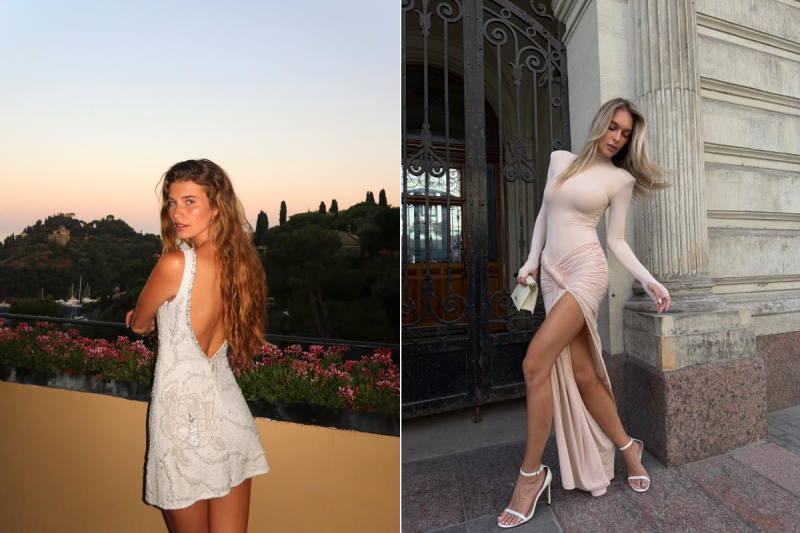
In the meantime, here are a couple of lovely ladies to liven up the weekend. We are a few poasts behind in the series, so this week’s and next week’s will double up.
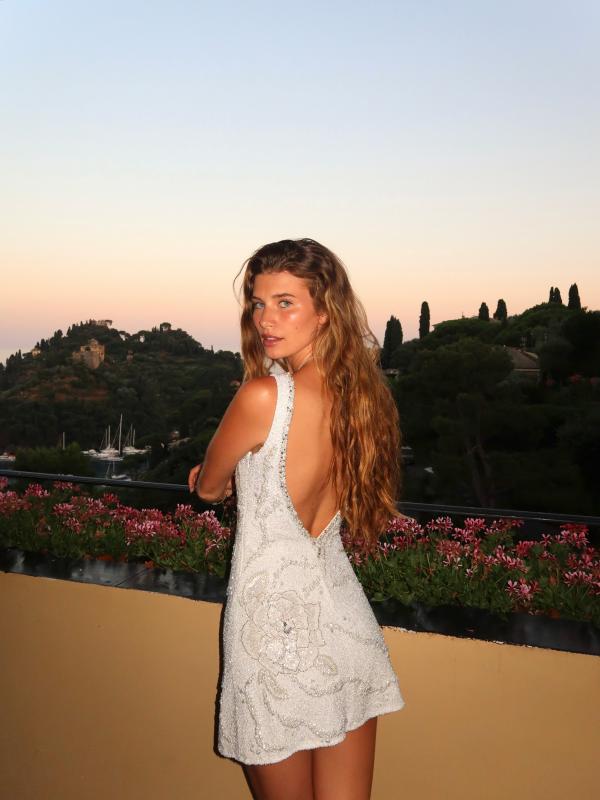
First up is Sienna Raine Schmidt, age 24 from Amerikhastan:
And second is Anastasiya Glivinskaya (Анастасия Гливинская), age at least 21 (probably closer to 25, if I am any judge)from Moscow, Mordor:



Oh – and as a quick bonus, here is the song that inspired the title of the poast:
Happy weekend, all.








0 Comments