
Our good friend from Israel, Dawn Pine aka The Male Brain, is back with another guest post. This one was inspired by ramzpaul‘s expressions of frustration about the way that the USA keeps sending billions of dollars in aid to Israel, often at the expense of its own citizens. Dawn Pine wrote in to provide some additional background and details to that conversation. What he has to say does not necessarily contradict or refute what Paul Ramsey and other critics of American aid to Israel argue, but both Dawn and I think that we can all benefit from a bit of added context.
Many thanks as always to The Male Brain for his continued excellent contributions to this site.
Introduction
If there is anything that makes Israeli supporters “nervous” or apologetic is the huge amount of aid Israel gets every year from Western nations. As a former IDF officer, who also dealt with procurement (some of which is aid-related), I’ll try to shed some light on the subject.
In order to do so we first need context in the form of history and “meaning”. I also want to share my own opinion, a minority one but still one present in the debate on the future of aid to Israel.
The Historical Context
It all started in 1949. The US was not a patron of Israel, but agreed to lend Israel money. Yes, it was a $100M loan. If you check that, it is equal to $12B in today’s money. Israel GDP at that time was estimated at ~$5B (1949 terms) so one can see that this was big money. However, it was a loan and was paid back in full.
It took a decade (1958) until Israel negotiated its first actual aid – $37M. Yes, it wasn’t a big thing. The equivalent purchasing power is almost tenfold – meaning that it was a $350M aid package in today’s money. It took an additional 8 years for direct aid to go to $90M (1966) – $750M today. Two years later we started the QME policy – which is to say, Israel should have a Qualitative Military Edge over its neighbours.
If you want to understand why, you need to realise that the Arab countries surrounding Israel wanted then (and some still do now) to annihilate us. Yes – not win a war, get back land or redeem honour – I’m talking about total destruction, driving us into the sea, wiping us out to the last man, woman, and child, etc.
The year 1970 saw military aid to Israel amount to almost 50% of total US military global aid. Yes, the US did not give away much those days. However, that aid was mostly in loans, which were paid back. It became “actual aid” around 1971.
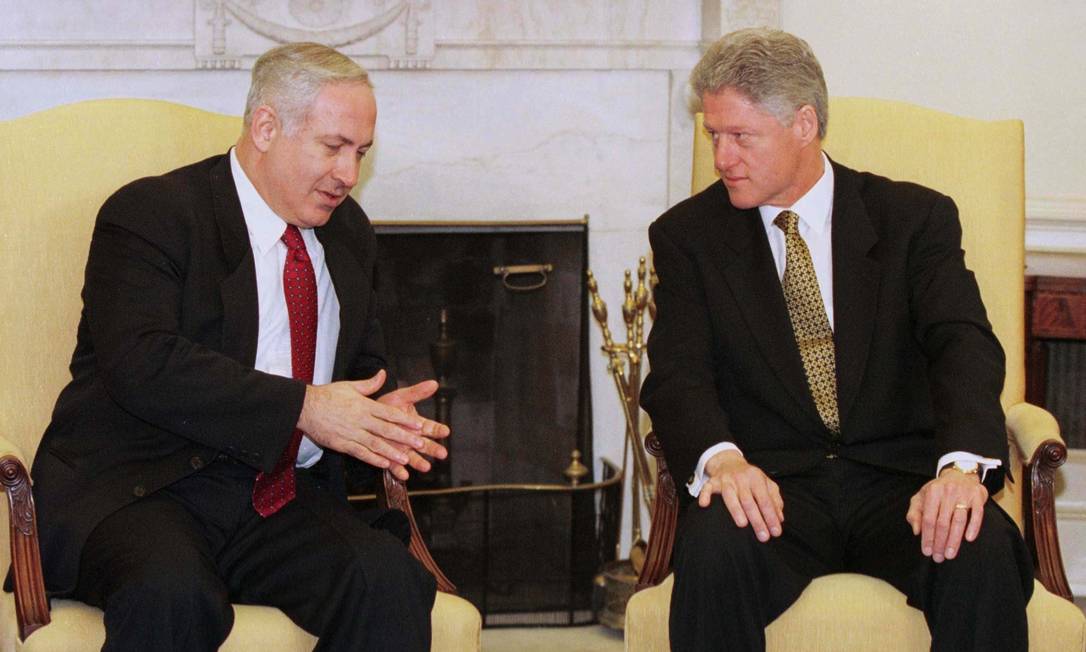
An interesting thing happened in 1998. Netanyahu, who was at his first term as Israel’s PM, asked to reduce the financial aid and move the budget to the military aid. In 2016, Israel and America signed their last aid agreement, amounting to $3.9B annually. This represents 55% of American foreign military aid.
So What is “Military Aid”?
Throwing around those numbers, one would think that it is like getting endless cash from Uncle Sam’s ATM.
If you think like this, you totally misunderstand what “aid” really is.
US FMF (Federal Military Financing) is defined as :
“The Arms Export Control Act (AECA), as amended [22 U.S.C. 2751, et. seq.], authorizes the President to finance procurement of defense articles and services for foreign countries and international organizations. FMF enables eligible partner nations to purchase U.S. defense articles, services, and training through either FMS or, for a limited number of countries, through the foreign military financing of direct commercial contracts (FMF/DCC) program (Also DCC Guidelines).”
So, what you are actually getting is a coupon for the US “company store”. The US tells you that you now have received a coupon for purchasing at one of the US companies on the program (there are a lot), and are subject to their prices. Yes – THEIR PRICES. E.g. if an object costs 100$ on the free market, the FMF price is usually ~150$, and that is after you negotiate it. One more thing – it takes 1-2 years to use the funds, meaning that from the moment you ask for a quote till you can actually order you have at least a year of lead time.

Let’s run that by you again. The US government gives your nation a coupon, with T&Cs, with which you can buy stuff at a more expensive price than you could get it from, say, the Russian or French corner store, and what you want takes forever to order and it is usually a fully produced US object.
That was the lion share. There are also other perks – Excess Defense Articles. Those are old army surplus equipment that nations get at a good discount or sometimes even free.
The Good, the Bad and the Ugly
The Good
The good thing about the aid is that it helped a lot in the past. I’m not going to sugarcoat it, but in the 1970s, after the Yom-Kippur war (1973) Israel needed help, badly. The QME concept is also a key ingredient in Israel national security policy. For the US, they get to test their latest and greatest in actual battlefield and in the past – against the top USSR military equipment. Today, it is still one of the best key selling points – “IDF approved”.

Also, the aid creates big profits for the military industrial complex, but also generates national benefits for the US. To name a few:
- Using Israel’s air space, for free;
- Using Israel bases for fueling, recovery, preparation for special operations;
- Intelligence sources (and Israel gives more than it gets here);
The Bad and the Ugly
Where do I even start? There are so many bad things about this setup:
- The “charity” perspective – When you are a beneficiary, you think twice before enraging your sponsor. This means that from Israel’s perspective, it needs to trot carefully even in subjects that are vital to its national security;
- The “All or nothing” problem – The aid is approved by Congress as a package. Let’s say you are a Congressman who wants to amend the aid to specific countries (not just Israel) – you can’t. You have to vote it all – which makes you angry at that process;
- Israel no longer needs the money in the same way – You don’t say no to “free money”, but this changes the allocation of resources in a distorted way. For example, you can’t buy what is most suited for your needs. This brings us to next item:
- Buy because you have to – On top of that, our host has voiced his strong opinions on the F-35 “Joint Strike Flying Piano”. A full decade ago, Israeli officials voiced their concerns regarding the plane (link is in Hebrew). The US told Israel to use the aid to buy it. Israel was able to change some of the attributes, but still – If it wasn’t for the aid – Israel would probably not buy it;
- US national security policy – Israel doesn’t always gets what it wants. And when it does, it can’t always modify it (because that gives access to the source code). If it was a “free market” situation – the US industry would benefit more (because of the modifications) and Israel would have better prices;
- Money or diplomatic support – Let’s talk about Obama as an example. He approved the aid, so he is “Pro Israeli”. Yet he hurt both US and Israel national security interests, with the Iran deal. Classic Leftist – claiming support while stabbing you in the back. I do believe that diplomatic support in the long term is better than just sending money. Money ties both sides while diplomatic support is based on mutual interests;
- The DEBT – USA has the highest national debt the world has ever seen, in both % of GDP, actual financial debt or whatever. This is not sustainable and we all know it. This means that Israel is taking “money” from someone who may not be able to keep “giving it”. Going cold turkey is not a recommended recipe for long term planning – since it may happen when you least expect it;

What to do
As I usually say: “If we were girls, we would now sit together and cry about it. Since we are men – we need to do something”. I’m well aware that nothing is probably going to change till 2028 – that’s when the agreement reaches its end.
I said it myself and I’m not alone – this past good is now a faulty present. The best course action would have been to gradually reduce the aid. It is possible to reduce it by 10% annually thus nullifying it within a decade. That opportunity is now lost. Even if you want to start today, you can’t – the aid is already subordinated to the F-35 purchase till 2022/3 (that’s my estimate based on deliveries).

Getting money from someone is always “string attached”. This is the way of the world. I, and a lot of other people (yet not those who make the choices and maybe not the majority), believe that the addict should cut back until he is clean. Once that is out of the way, resource allocation will be much better and relationships can stand on much more equal ground.
Didact’s Thoughts
Once again, I am most grateful to our good friend for adding some much-needed context and thoughtful views to the conversation about American aid to Israel. As to the topic at hand – the issue of aid to Israel is, indeed, a polarising one. There is a large and growing segment of the Right in America (and elsewhere) that argues that America should stop putting Israel’s interests above its own. I agree with this, quite strongly. And I write that as a nationalist who has visited Israel and absolutely supports the right of the Jewish nation to exist and defend itself.
As Dawn Pine points out, the way that the USA attaches strings to its military aid to Israel is not good for either nation. This is unwise for both parties. Israel ends up locked-in to American weapons systems at extremely bloated prices, and then has to spend quite a lot of money to make them, y’know, USABLE.
As our friend notes, the Turducken Planes that the Israelis buy from America are bloody expensive. But, about the only version of the F-35 Joint Strike Flying Piano that actually, y’know, works, is basically the Israeli F-35I. And that is because the IDF gets them, and then spends a pile of money getting rid of all of the obtuse stupid shit that the Pentaloons have loaded it with, and then replace it with stuff that allows the damned thing to shoot straight and fly right.
The major problem with the relationship, from a Western point of view, is that it appears to be very much one-way. Israel has repeatedly attacked, spied upon, stolen from, and otherwise acted in rather ungentle fashion toward America, the UK, France, Russia, and other nations. It is this bad behaviour that makes the peoples of those nations think that the Jews among them have dual loyalties. Few Jews are brazen enough to say so outright, but those who do – the American Jewish spy for Israel, Jonathan Pollard, and the Russian billionaire oligarch, Boris Berezovsky, come to mind – are at least being honest.
The ambiguous – to put it very mildly – loyalty that Jews display toward countries that fund Israel sits very badly with the people of those countries. They do not see why they should have to pay vast sums of money to support the quite wealthy Jewish state at their own expense. And they resent being called anti-Semites and other inaccurate and hateful names when they raise valid objections.
Now, as The Male Brain notes, this perception is not entirely accurate. The current state of the relationship is not good for either party. If things continue like this, sore points like the bombing of the USS Liberty and its subsequent cover-up by the Johnson Maladministration will continue to rankle. America’s populace is already largely disillusioned with the elites who are running their country straight into the ground. It will not take much more for the people to turn their backs entirely upon the globalist project. And one of the first casualties of that breaking will be the small state of Israel.
That would be a great tragedy as well as a mistake. But the way things are going right now, it’s a fairly inevitable outcome.









2 Comments
The article is generally on point.
In terms of the one-way nature of the aid, that isn’t wholly true. What separates Israel from all other aid recipients is that it produces military gear that is sometimes adopted back in the USA. The helmet sights in almost every US fighter are an Israeli partnership, the LITENING targeting pods, the explosive-reactive armor that protects tanks and APCs, etc. The “company store” aid process made it easy to set up production in the USA anyway via partnerships, explicitly so Israel can sometimes buy its own tech with “company store money.” Once there, it isn’t much of a stretch to just sell from those American production facilities to the USA as well.
All that being said, a more conventional process for this would benefit all parties.
True. Israel does sell back its own innovations, and both parties do benefit from this, and that’s a fair point.