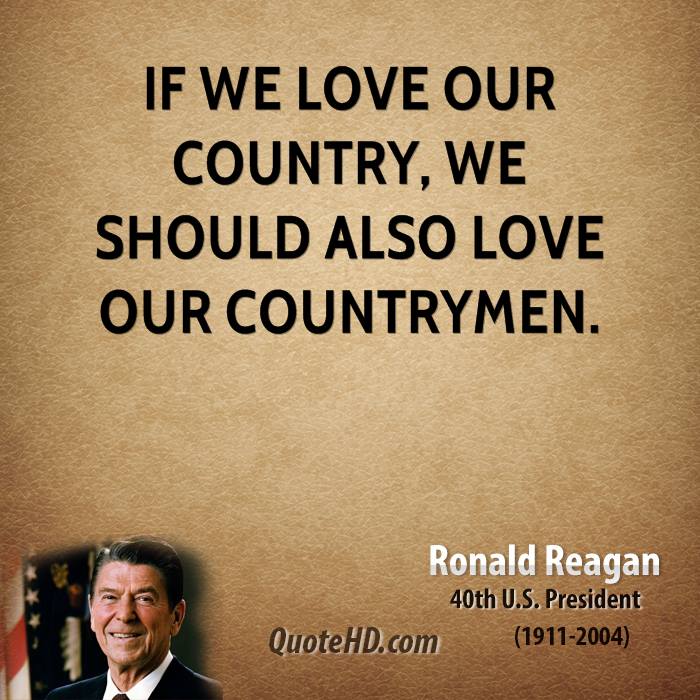
Reading through Yoram Hazony’s excellent book, The Virtue of Nationalism (far too slowly, by my usual standards – for various reasons), I am much struck by just how central and vital the understanding of the nation as a concept is to any individual’s existence.
The thing is that I was brought up to be a good little globalist tool. I left my country of origin at the age of 5. I spent the next 13 years bouncing around the Asia-Pacific region. By the time I graduated from high school, I had lived in 4 countries and had attended some of the very best private schools anywhere in the world. And by the time I graduated from my Master’s program and started working in the US, I had experienced Left-liberal mental indoctrination on both sides of the Atlantic and was, supposedly, fully primed and ready to become a “citizen of the world”.
But the older I get, and the more I see of human nature, the more that I am convinced of the fact that the nation is absolutely central to a man’s existence and sense of well-being.
In my personal opinion, you have to be bereft of the very idea of “nation” in order to understand and appreciate how important it really is.
I don’t consider my country of origin to be anything other than a government that issues my passport. If it were not for the fact that my parents live there, I would have happily shaken the dust of that land from my feet and left it behind without the slightest regret or second thought, years ago.
Even though I have been living there for over 6 months, I have no firm roots there beyond my family (though admittedly those are pretty deep roots), I do not speak any of the many local languages particularly well, and, being a Christian in a thoroughly pagan land, I have no patience whatsoever for that land’s customs and traditions.
Yet even I can appreciate and understand the fierce sense of pride that the people around me feel for their nation.
Every man needs a nation. Ultimately, every man needs a home. He needs to belong to something bigger than himself. He needs a reason to live, to fight, to strive, to work, to sacrifice.
For most men, that reason is his family – his wife and his children. But they, themselves, are usually part of something much bigger, through ties of birth and blood.
Consider the very origins of the word, “nation”. Its root lies, of course, in the Latin nominative natio, which means: “birth, origin, breed, stock, kind, species, tribe, people, literally that which has been born”.
To be part of a nation is to be born into a people, a distinct kind, a tribe that is a man’s own. They accept him, and he accepts them. They fight and die for him, because they know that he will do the same for them.
Those of us who are without nations, in any meaningful sense, are missing out on something wonderful and vitally necessary to any man’s existence.
Without a nation, a man is easy to control. Men without nations are in a very literal sense not human, because he has nothing in common with the people among whom he lives.
And that is precisely why the globalists of the Left and the cuckservative Right are so keen on this ridiculous and utterly unworkable idea of the “global melting pot”:
People without nations are easy to control. When people have no central identity against which to measure themselves, with which to reassure themselves, and upon which to rest themselves, they have literally nothing to stand for – which means that they are unable to stand against those who wish to control them.
By contrast, men and women who have real nations to fight for, will resist control over themselves and their people, to their last dying breath if necessary.
What, indeed, does it mean to be part of a nation? InfoGalactic defines a “nation” as “a large group or collective of people with common characteristics attributed to them – including language, mores, habitus, and ethnicity”.
In other words, a man’s nation is greater than his language, his skin colour, his race, his political leanings, and even his family background. His nation encompasses all of these things, and becomes far greater and more important besides.
Let’s take the Indian “nation”, for instance. If you look at India, it is a collection of a ridiculously huge collection of tribes and individual separate nations that all band together under a common government and one flag. The last time I bothered to check, there are 14 separate official languages in India – it’s probably more like 22 now – and English and Hindi are the two most common. Hindi itself is not actually a strictly Indian language; it is in fact descended from a Persian linguistic branch and has a very great deal in common with Urdu, the official language of India’s neighbour and greatest enemy, Pakistan.
If you travel from the north to the south of India, or from the west to the east, you will rapidly come to the conclusion that the only thing that could possibly hold such a motley collection of states and races and castes and classes and tribes together is a particularly potent form of Krazy-Glue.
Yet something binds them all together. What, exactly, is it?
One possible answer is the Hindu religion. Regardless of what you and I, as God-fearing idol-hating Christians, might think of the pagan ways of Hindus, the fact is that it remains an incredibly powerful binding force upon over a billion people – including the Sikhs of the western regions, who literally defined themselves as the defenders of the Hindu religion and civilisation against the incursions and depredations of India’s one-time Islamic rulers, and who eventually grew so marginalised and ostracised by the very society that they believed that they were protecting, that they assassinated a sitting Prime Minister.
Another possible answer is hatred of the British, although that has worn quite thin, since the current generation of Millennial Indians has absolutely no memory of the British Raj and only remembers what life was like living under Indian rule – which, it must be said, was and has been vastly more misguided even than anything the Pommie bastards could dream up.
Or let’s take a look at Russia – the largest country in the world.
In the relatively densely populated western part of the country live a very Europeanised population. They are white, attractive, and highly cosmopolitan in outlook, especially in the big cities. But east of the Urals there are… well, pretty much nothing beyond bears and mosquitoes. The sparsely populated eastern end of the Russian Federation consists of peoples who are highly Asiatic in appearance, attitude, and customs.
And yet, throughout the country there remains a strong Orthodox Christian ethic, a common language (which is fiendishly tricky to learn and speak well), and a political system that, for all of Russia’s recent changes and developments, is basically unchanged from the old ways of the tsars and boyars of old.
Those who mess with the Russian sense of nationhood, and who seek to impose their will upon the Russian peoples, are rapidly and violently rebuffed by both the people and their government – which by the way is considerably less popular among the Russkies than the Western media seems to be capable of understanding.
The same applies for China, or Indonesia, or various Asian republics with diverse and complex populations. Something keeps them bound together into a nation, and those countries are better off for it.
Why, then, are the Western nations – who literally created the modern world – becoming less and less like nations every single day?
Why is it that those nations are seeking to sell their own futures and peoples into slavery at the behest of globalist elites?
And why is it that the same Western nations which once conquered the entire world, are now ashamed of themselves and their own proud histories, and seek to redress wrongs, whether real or imaginary, by letting in millions of non-Westerners into their borders?
It is because the peoples of those countries have forgotten what it means to be a people in the first place.
They have allowed themselves to feel guilt and remorse over what their ancestors did – and in the process have forgotten the ancient Scriptural principle that only the Lord shall visit the iniquities of the fathers upon the sons, and that each and every one of us must ultimately pay for our own sins, individually.
This is beyond foolish. It is a literally Satanic lie to argue that the white descendants of imperialist overlords from an hundred years ago somehow owe the people of the Dirt World anything whatsoever.
The fact is that if it were not for the Western nations, with their proud and great legacies of Graeco-Roman philosophy, Christian morality, and the very idea of the nation as defined by Europeans, the rest of the world would still be figuring out how to get candles to work, instead of trying to figure out how to put satellites into space.
The true glory of the nation lies in the fact that it gives each and every one of us something to fight for. It is, in fact, glorious to belong to a nation, and to fight for something greater than oneself.
It is at this point, with the expression of this sentiment, that the globalists recoil in horror and argue that it was precisely this sort of warmongering poppycock that landed the entire world in the midst of two great and dreadful global wars in the first place. They argue that it was overt and proud nationalism that created all of the problems which led to industrialised slaughter in the trenches and murder-pits of the World Wars, and that the only way out of a similar future Hell is to bind all of the nations together into a single unified political entity with no distinguishing features whatsoever permitted between them all.
This argument is nonsense.
First, the Great War started because, not in spite of, a complicated series of globalist alliances and entanglements that resulted in something of a ten-way Mexican standoff after the assassination of minor figures of Austrian royalty.
Second, the next great global war started because there was still considerable unfinished business left over from the first. The Americans, who had until 1917 very sensibly minded their own bloody business and stayed the hell out of the Great War, were brought in because the Allies feared that the Germans, who were by many measures actually winning by that point, would eventually dominate the continent and England would be forced to sue for peace.
If the Americans had not intervened, a more stable world order might just have resulted, and the disastrous “peace” that resulted at Versailles in 1919 might never have resulted in the resumption of hostilities, on a vastly greater and far more terrible scale, a bare 20 years later.
And third, as the collapse of the Soviet Union demonstrated so perfectly nearly 20 years ago, even the most totalitarian and terrible of dictatorships could not stop national identities from reasserting themselves when given even the merest ghost of a chance.
Today the Western world is experiencing a strong resurgence in nationalist sentiment. This is very much to the good. The fears that the globalist elite have of blood in the streets is entirely justified – but not because nationalism is evil. It is justified because those same globalists have spent the better part of fifty years trying, and largely succeeding, to suppress national identities in favour of meaningless and anodyne supernational ones.
A Frenchman is a Frenchman, not a European. (That is to say, he is an immensely irritating, thoroughly arrogant, work-shy, lamb-burning peasant and Communist – but he is still French.)
An Italian is an Italian, not a European. (Which is to say that flat-out lying to the government and dodging taxes is not only normal but actually quite honourable.)
And a German is a German, not a European. (Meaning that no self-respecting German would ever want to be lumped into the same company as the Greeks and Spanish, who most hard-working Germans consider to be the laziest blighters on the planet.)
And so on, and so forth. The same applies for Americans. The reality is that the “United States of America” is really three, perhaps four, nations held together under an imperial identity by the credible (so far) threat of force.
Once that threat of force is removed, and the old national identities of New England, the South, the Midwest, and Mexifornia all start reasaserting themselves, the resulting breakup of the American empire will make the chaos that followed the demise of the USSR look like a pleasant and lovely summer’s day by comparison.
And it all could have been avoided simply by letting nations be nations.
There is much to love about one’s country – starting with one’s people. Anyone who seeks to deny a man his God-given right, given to him from the very day of his birth, to love his people and his nation, is in defiance of common sense, historical example, basic logic, and the Lord Himself.
And as such, both he and his foundationless temple deserve to be destroyed, and will be.









0 Comments