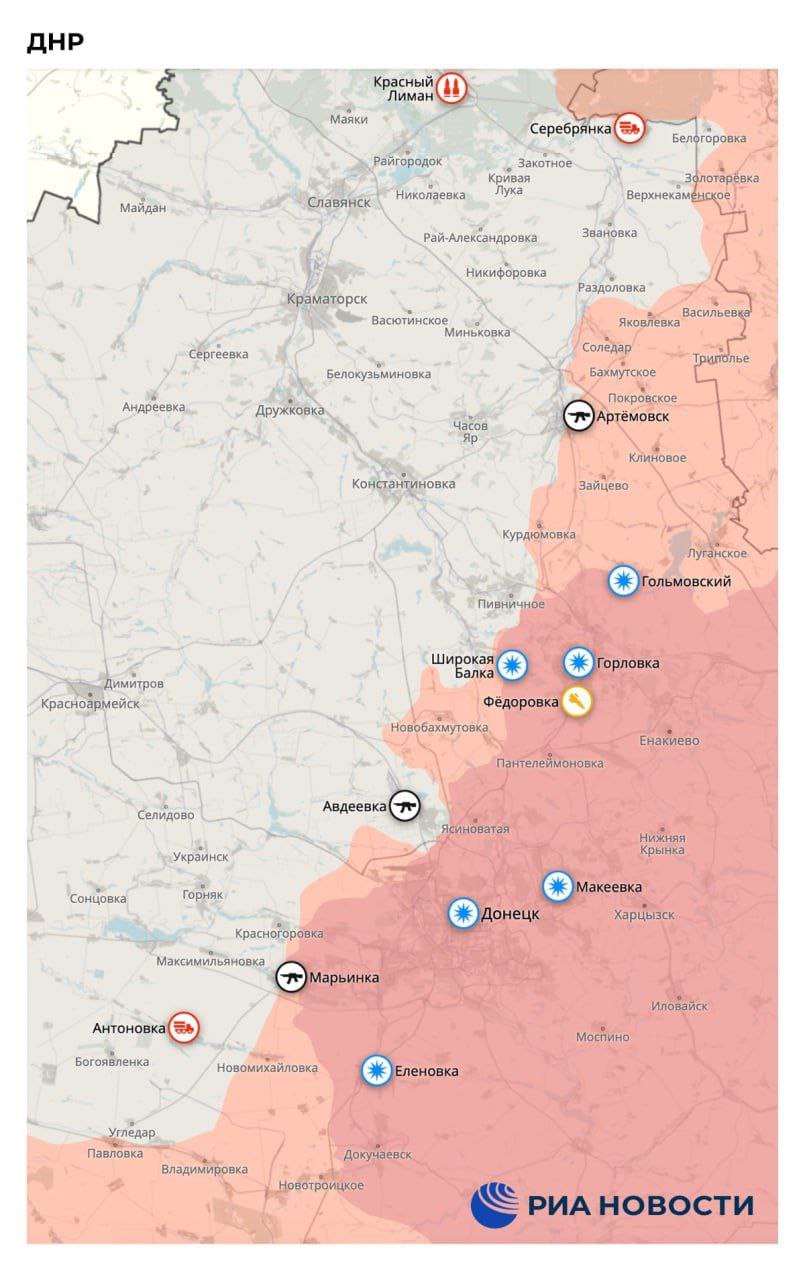
Throughout the nearly year-long Banderastan War, the never-to-be-sufficiently-damned whorenalists of the Western propaganda machine have endlessly hyped up Ukrainian “victories” and “offensives”, to the point of sheer absurdity. They have ridiculed the slow pace of the Russian advance, and claimed the Russian military has been exposed as a weak and impotent construct.
Worst of all, Western presstitutes are talking with themselves, and the neolibs and neoclowns who read their work, in an echo chamber where they all sniff each other’s farts and proclaim themselves the smartest people on Earth. And that self-reinforcing delusion bubble insists that, given the “extreme weakness” of the Russian military, NATO will therefore emerge from this conflict stronger and tougher than it was before the SMO.
Never mind that the average presstitute couldn’t find his (or her – let’s not be sexist, after all) arse in a brightly lit room with both hands, a map, and precise GPS coordinates. The reality on the ground is very different, and is indeed the diametric opposite of everything the pressitutes think.
The truth, as I and many other observers have repeatedly pointed out, is the Russians are not merely winning, they are DESTROYING NATO, and its Ukrainian proxy, in the slaughter-pens of Banderastan.
The Crucible of War
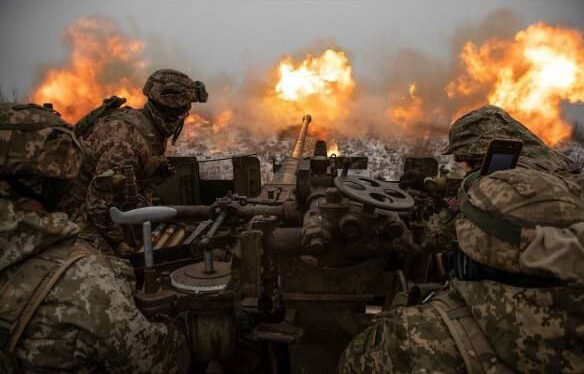
Here we must acknowledge a very important realty:
War is the crucible in which illusions, stupidity, incompetence, and failure burn away to reveal whatever core of skill remains.
The immediate corollary to this fact is:
If one side has no such core, then it loses the war.
Every army operates under some form of illusion or another. That is a fact. These delusions usually start at the political level and permeate through the generals, and onward down to the rank and file.
The US military, for example, operates under the massive delusion that weapons need to be complex, over-engineered, high-maintenance, precision-guided objects of marvel and wonder that can do anything and everything. This is because the civilian leaders of the country find themselves all too easily enamoured of such technological terrors – and, perhaps less prosaically, by the campaign contribution dollars thrown around so liberally by the manufacturers of such things.
Unfortunately, this is the same US military that cannot win a war against illiterate goathumpers armed with antique (but extremely reliable) Soviet-era weapons in the Sandbox and Rockpile. It is the same military which has lost every single war it has ever fought since at least WWII (except for Operation Desert Storm – and that one should really come with a big fat asterisk).
The Russian leadership, for its part, operated under the delusion, at the beginning of the SMO, that it could compel the Queef Regime’s capitulation through a lightning manoeuvre-based strike to encircle the capital of Ukraine, while launching a limited economy-of-force mission in Ukraine’s south and east to liberate Donbass and secure Crimea.
This high-stakes gamble failed – though, to give Russian President Putin his full due, it actually came extremely close to succeeding. The reason it failed is because the Western powers refused to countenance or tolerate the possibility of any form of Russian victory. They wanted an outright war.
From there, Russia entered the crucible, and realised very quickly that many of its most cherished post-Great Patriotic War doctrines and ideas about warfare, particularly of a defensive kind, did not work in the modern battlefield against a near-peer adversary.
Emerging from the Doctrinal Fog

A big part of this may be due to the ways in which Russian combat doctrine evolved in post-Soviet times. Bereft of the vast manpower and industrial resources of the USSR (which were still actually small relative to the USA, which in the 1980s could outproduce the ENTIRE Warsaw Pact all by its lonesome), Russia’s post-USSR doctrines focused on defence of the Motherland.
In practical terms, this meant a move away from old Soviet divisional structures to the Battalion Tactical Group. They meant a dramatic reduction in the size and power of the Russian surface and submarine fleets, resulting in what Grandpa Grumpuss called a “doctrinal fog“, where the once-mighty Russian fleets simply did not know what the point of their existence was. It meant a reorientation, particularly in the face of Western refusal to stay committed to arms reduction treaties like the ABM and INF agreements, toward air and missile defence systems.
The West squarely shoulders a substantial amount of blame for the direction of Russian weapons development since 2000 or so. By way of just one example, tearing up various arms reduction treaties ensured the Russians would concentrate on weapons that Western air defence could not intercept. This is where Russia’s heavy, and highly successful, investments in hypersonic missile technologies have all paid off. Today, Russia is the undisputed world leader in hypersonic missile technologies – the US isn’t even close to figuring out how to mass-produce and deploy a proper hypersonic cruise missile, whereas the Russians have already used 3M-47 Kindzhals, plural, in combat.
Above all, Russia focused on investing its scarce resources in technologies that worked. Instead of trying to make the most SOOPER DOOPER AWESOMESAUCE AMAZEBALLS wunderwaffen that cost an arm, leg, firstborn, and inheritance, the Russians worked on making their weapons simple, fit-for-purpose, lethal, and streamlined.
From Imperial Defence to Righteous Conquest
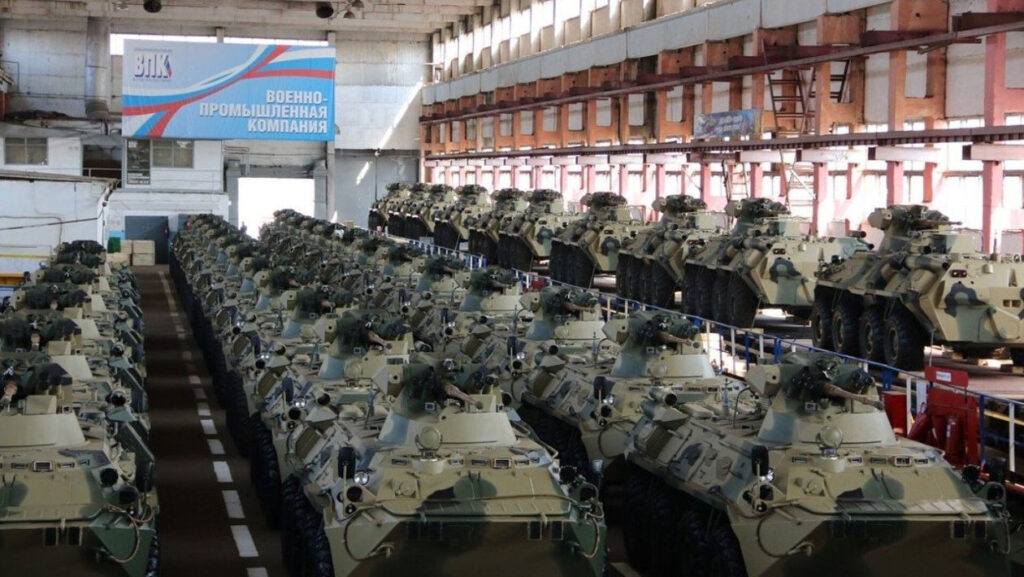
Those effective weapons, though, need trained and skilled hands and minds to operate them. And Russia made plenty of mistakes at the start of the SMO. It did not use its latest equipment, at first, and tried to use an economy-of-force mission with rather limited rules of engagement (relatively speaking) to demilitarise and de-Nazify Banderastan.
The Russians succeeded in many areas. But they also failed substantially in others. I came across an interesting post from one of the best English-language Russian Telegram channels, Slavyangrad (a portmanteau of the names of two cities, Slavyansk in Donbass and Stalingrad, today known as Volgograd, and actually moderated by more than one avowed unreconstructed Commie) by Aleksandr Kharchenko, who has seen active combat throughout Banderastan for the past year, and here is what he had to say about the use of tanks and infantry in combined-arms warfare during the early stages of the war:
I was in the spring near Izyum. They tried to liberate the fucking Kamenka with tank strikes … As a result, this tactic completely failed and the special forces cleared the village on foot. The Wagners, which have been talked about so much lately, are also advancing in small groups of infantry. Neither Popasnaya nor Soledar were taken head-on by a/ tank attack.
So what should be done? Firstly, abandon the tactics of tank breakthroughs. Secondly, each tank must be assigned a ground gunner. He must ensure coordination between the steel monster and the infantry. Thirdly, each tank must lead its own copter. The cost of such innovations will be minimal compared to the cost of machines, and efficiency will increase significantly.
This is a classic example of old or outdated Russian combat doctrines running face-first into the brick wall of reality. It is also a great example of how the Russians learn from their mistakes.
Why did the Russians make these mistakes? Part of it, in my view, has to do with the fact that Russia’s military, prior to about September 2022, was primarily a defensive force, designed specifically to preserve the integrity and safety of the Motherland. As such, its operational and combat doctrines were not optimised fully for the realities of combined-arms warfare, in which infantry, tanks, aircraft, naval forces, air defence, and C4ISR all have to work together in concert, poring through vast lakes of data transmitted through fully synchronised links between every vehicle in a theatre to commanders on the ground and at the headquarters.
This is very, very hard to do. It is multidimensional warfare that requires tremendous skill to pull off well. It also requires a level of technological sophistication and skill that very few militaries anywhere in the world can pull off – about the only two that can do it are the US and Russian ones. Everyone else seems to be figuring it out, or kind-of-sort-of-there, or, in most cases, not even in the game.
The Most Lethal Kind of Enemy
If you watch a lot of MMA – and I do, or rather, used to – then you know that most fighters, when challenged by an opponent that seems renewed or reinvigorated or achieves success with some new tactic or approach, fail to adjust. They stick to what worked before. And they end up losing.
War, like one-on-one combat, is a fluid medium of communication. What worked in one moment, will not work in the next, because the situation has changed. Those who do not learn from their mistakes, fail to adjust and adapt, and therefore simply fail outright.
Russia is doing the opposite. It IS learning from its mistakes. And that makes the Russian military extremely dangerous.
Do not be deceived by the frankly infantile nonsense the Western presstitutes peddle about Russian military “failures”. The Russians DID make big mistakes by trying to stick to an economy-of-force mission in the summer and autumn last year, when their force numbers could not sustain it. They have now corrected that mistake, and the weight of their numbers is really beginning to tell in the meat-grinder attrition battles of Soledar, Bakhmut, and elsewhere.
They also understand now that their Battalion Tactical Group is extremely powerful, capable of concentrating immense volumes of fire on a narrow front – not my words, you can find those same arguments from lecturers at American war colleges. But they have since realised that the BTG has too few infantry to protect the flanks of those big heavy machines – and therefore, BTGs are not ideally suited to true combined-arms warfare.
The Russians are fixing this by moving back to the old division-based structures they used to have in Soviet times. They are solving this issue of insufficient infantry, and are retooling their front-line combat units to match.
Stubbornness is Suicide
The Russian military is, in short, a military that adapts, and learns, and fixes its mistakes. It fights NATO and the Banderites – opponents who seem to have absolutely no humility, no reverse gear, and no ability to change strategies or approaches.
The Banderites continue to feed in thousands of men to the meat-grinder of Artyomovsk. They seem to be dumping inexperienced and very poorly trained territorial defence (read: national guard) and conscripted troops, while pulling back their most capable and experienced men to throw into a big planned offensive either toward Kremennaya-Svatovo, or Zaporozh’ye region to break through to Melitopol’ and cut off the land bridge to Crimea.
All this has managed to do, is to send thousands more Ukrainians to their gruesome and completely unnecessary deaths.
The death toll for Banderastan is horrendous. As Col. Douglas Macgregor mentioned recently in his appearance on Judge Andrew Napolitano‘s livestream, open-source data tell us with a fair degree of reliability that the hohols have suffered at least 120,000 dead – and have a further 35,000 missing. They probably have at least another 200K wounded, many of them maimed for life.
That is getting on for half a MILLION casualties of all kinds.
This is not a “strategy” of any kind. It is stubbornness and stupidity of the worst kind. I have no idea why people think Valeriy Zaluzhnyi is some sort of brilliant general or leader – as far as I can tell, he’s a complete assclown whose only “tactic” is to say yes to whatever idiotic suggestion the Crackhead-in-Chief, Bellendsky of Hy-Bandera, comes up with – and Bellendsky himself seems to get his ideas from the neoclowns running the war in Washington, Paris, London, Brussels, and Berlin.
Conclusion – Strengthening Russia
None of what I have written is a denial of the cost of this war to Russia. If we take a casualty ratio of 1:8, which is about what the OSINT data seem to indicate, the Russians have suffered between 15K and 20K dead, and probably about 50K wounded – though, with the Russians, most of their wounded have been able to return home or to the war.
That is still 20,000 or so families who have lost a father, son, husband, boyfriend, brother, nephew, uncle, or dear friend. And that is still another 50,000 or so families who have to help their men cope with the true horrors of war – with the inhuman, machine-like, remorseless, grinding, industrial-scale slaughter of the modern battlefield.
If you don’t believe me, just compare a picture of Ypres from WWI with pictures from the front line in Bakhmut. You will be hard-pressed to tell the difference. That is the kind of Hell-on-Earth the Russian troops have to deal with, every single day.
How will Russia come out of this?
Reader AuntRat very kindly sent me an excellent piece from Gilbert Doctorow, one of the few Western analysts with any kind of sense and healthy scepticism, and he points out that wars make nations – and nations with strong cultures, militaries, economies, and a true sense of purpose, emerge STRONGER from such wars:
Time spent in the Donbas by Russian volunteers, even those not directly engaged in battle, is not risk free. We all learned a week ago of the nearly fatal injuries sustained by Dmitry Rogozin, one-time RF Ambassador to NATO here in Brussels and for a number of years the head of Roskosmos. We do not know what tasks he was performing in Donbas as a volunteer, but we do know that he was caught in an artillery barrage and that he had to undergo an operation to remove metal fragments from the vertebrae of his neck.
Meanwhile, Russian cities, led by Moscow and St Petersburg, have made collective contributions of manpower to assist the war effort, something you will not read about in The Financial Times. In the time since the September mobilization, while the proper conditions for a major offensive against the Ukrainian army are not yet met, the Russians have been busy doing groundwork to ensure that there will be no further Ukrainian breakthroughs along the 1,000 km front such as happened in Kharkov oblast in the late spring. They have dug in and created second and third lines of defense consisting of well executed trenches and pillboxes. And who did much of this? It was done by the 20,000 municipal workers sent down to the Donbas by Mayor Sobyanin of Moscow and an additional 10,000 civilian workers sent by Petersburg.
News of these volunteer works has spurred feelings of pride across Russia. At the same time, the country’s resilience in the face of economic warfare by the Collective West has been evident to everyone. The policy of import substitution has turned into a broad program of reindustrialization. Success stories are featured daily on the news.
The government is giving cheap credits to manufacturing start-ups to provide encouragement. With new, high paying positions being created, it is no wonder that the Russian unemployment rate has moved down close to 3%. That all by itself favors confidence and pride in society.
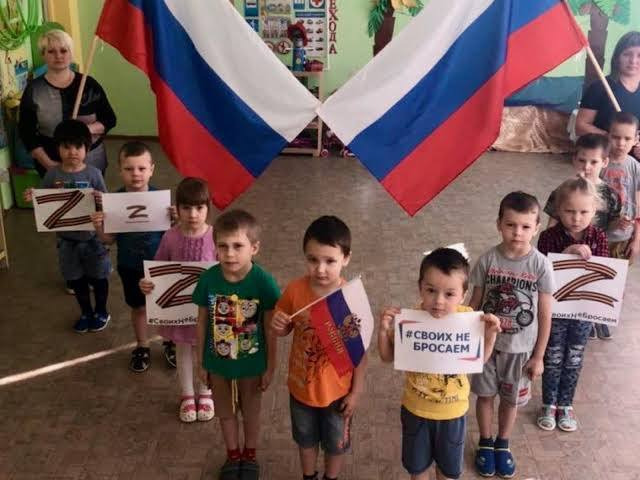
The other side of the same coin is growing contempt for Europe and the Collective West. Russian news is providing accurate, not propagandistic coverage of the energy crisis, rampant inflation and anxiety of European populations. This, in combination with the acts of vandalism and destruction perpetrated against Russian war monuments in the Eastern states of the EU, in combination with other manifestations of Russophobia in Europe in the cultural and tourism domains, has turned even the hitherto Western leaning Russian intelligentsia into patriots by necessity.
These are signs of a nation rallying together around a common identity and sense of place and purpose. This is NOT the picture of a nation falling apart at the seams due to the stresses of a war economy.
Russia will win this war. It will learn its lessons from its failures. And it will be ready to take on and destroy NATO. The preening peacocks in the Five-Sided Wind Tunnel had better worry, because this is an enemy that America cannot defeat.









1 Comment
Even the YT Channel ‘king’s and generals’ is praising Ukraine and making it seem like they are winning, or at least not losing. People still cling to the hope that Ukraine will win for some reason and they don’t know whether it is a good or a bad outcome for them.
The amount of delusion makes me want to jump off a building, but thank the Lord who is giving me much needed patience for that, because I know that spiritual war, will dwarf any other war we’ve seen in the past IMHO.