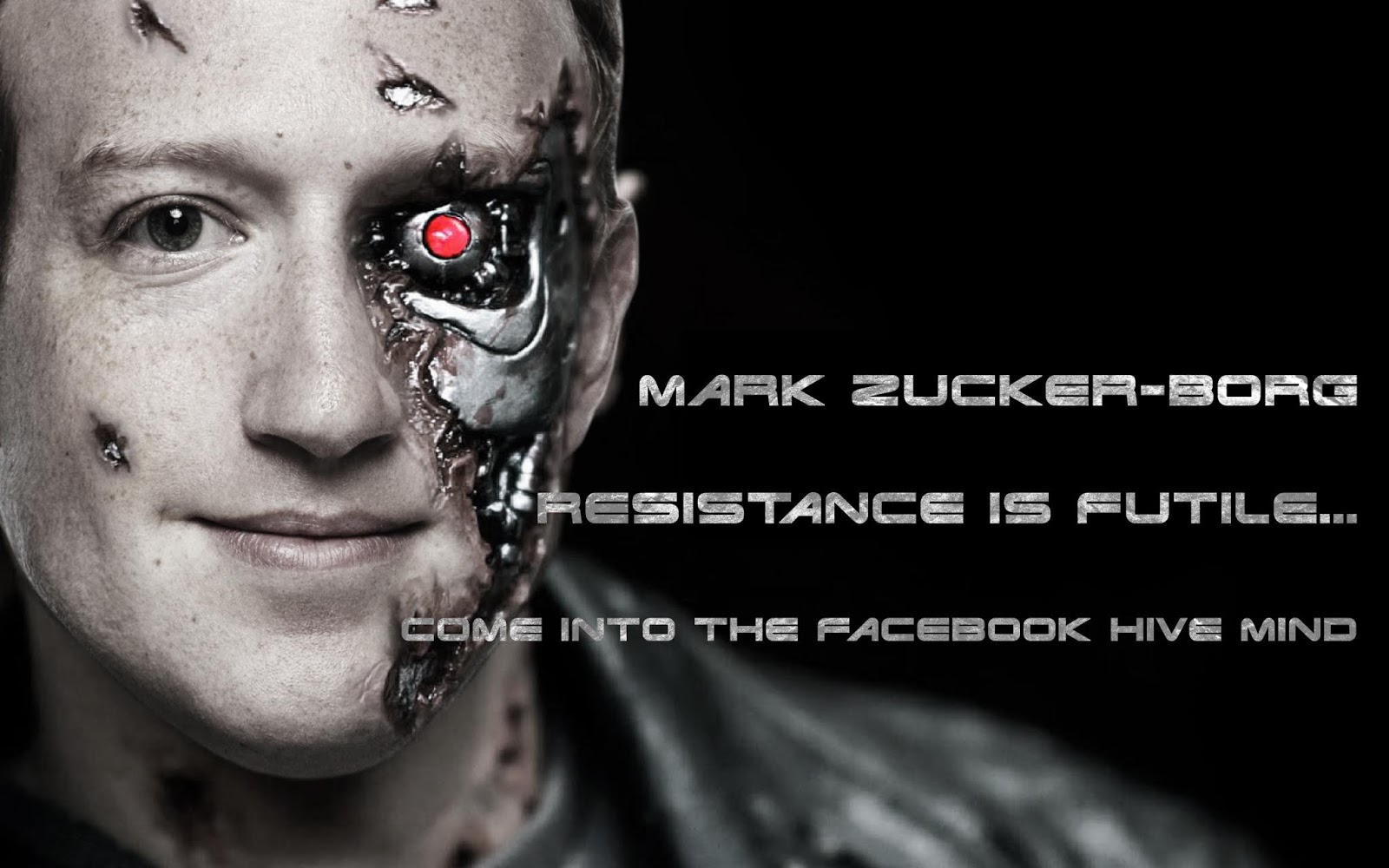
While we’re on the subject of Zuck the Uber-Gamma, it would appear that Faceborg considers itself a publisher, not a platform:
Facebook, in court filings defending itself from a lawsuit filed by activist and congressional candidate Laura Loomer, has cited its first amendment rights as a “publisher,” contradicting public claims by the company that its social media service is a platform.
The distinction between publisher and platform is central to the legal protections enjoyed by big tech companies, and is frequently cited by Republican lawmakers in their criticism of Silicon Valley’s political bias.
Under section 230 of the Communications Decency Act, tech platforms have immunity from lawsuits arising out of their decisions to host (or not to to host) user-generated content. Unlike publishers, which are liable if their writers defame someone, a tech platform is not held liable for content created by its users.
Yet Facebook appears to be jettisoning this categorization in its court filings, saying it has a First Amendment right as a publisher not to carry Loomer’s content.
[…]
This contradicts public statements made in a Senate hearing last year by Facebook CEO Mark Zuckerberg, who insisted that Facebook is a platform and not a publisher.
The reason why this is so important is because, if it is a platform, Facebook of course benefits massively from legal immunity granted to it under Section 230 of the Communications Decency Act. They are simply a public space and a platform that people can use for their own purposes, and those people are responsible for their own content – subject to the laws and codes concerning their speech in various jurisdictions. Facebook gets paid for its provision of that platform using ads and premium content revenue.
In such a situation, Facebook cannot then be held responsible if “some people did something”, so to speak, which offended others, or incited others to violence, or used the platform to spread nasty horrible disgusting lies. Only the offending parties involved can be prosecuted, while Facebook itself is simply providing a service and cannot be held liable for what people do using that service.
And that’s fine and dandy.
The key proviso here, though, is that Facebook cannot selectively pick and choose what gets posted by users. Beyond its basic requirement to obey local and international laws governing speech, Facebook doesn’t get to choose what gets posted on its platform.
What this means in practical terms is that, in France, say, Facebook has an actual legal obligation to censor posts that question or outright deny the official Holocaust narrative about 6 million Jews being slaughtered by the Nazis – no matter how persuasive the evidence for or against either side of that argument might be – because, in France, questioning the Holocaust is considered hate speech and is illegal. But in America, such speech is protected under the First Amendment and its subsequent interpretations by the United States Supreme Court. So, no matter how much you might dislike such posts in your feed, Faecesbook cannot simply stop you from seeing them outright, through means either overt or covert.
But if Faceborg is a publisher, then everything changes.
All of a sudden, Facebook becomes liable for the words and deeds that are published by its authors – which, if you think about it, is what every single user really is. If one of its authors writes something that libels someone else, the aggrieved party can sue both the author and the publisher for the infraction.
And that exposes Facebook to massive liabilities – or so I gather.
It also means that Cuckbook can selectively choose and edit what it wants to publish. Which is fine, if it is a publisher. If they want to show a very clear political bias and demonstrate a strong preference for Left-leaning thought, hey, that’s fine, because they are a publisher, and such entities can pick and choose what they want to publish.
Such privileges do not exist for platforms, which are by definition open spaces free to everyone to use unless the users break existing laws.
Now, look, I’m not a lawyer. I have readers who are lawyers, but I myself am simply going by a very basic understanding of the law as it currently stands within the USA. The laws are different in other jurisdictions and what happens in those same places is quite beyond me. In the UK, for instance, the libel laws are extremely strong and the protections for aggrieved parties are tough enough that you can’t just say whatever you want about anyone. If you defame someone, you can be sued – and if you lose, you end up paying the other party’s legal costs.
That, alone, is an extremely strong deterrent on frivolous lawsuits of the kind that plague the American legal system. The flip side of it is that free speech in the UK is a non-existent concept, because constitutional protections of the same basically do not make any sense.
Never mind that the entire concept of “freedom of speech” is essentially a direct and blatant attack upon Christianity, and always has been – the reason why “freedom of speech” has always been so heavily promoted by the intellectual elites ever since the Enlightenment is because that same push allowed them to strike down the anti-blasphemy laws that existed on the books at the time.
The reality is that freedom of speech, however it is defined and enshrined in law, is a tenuous thing at best, as a practical matter. To be free to speak, you need to have either a publisher who will push your views out into the open, or a platform from which to speak. And if what you have to say is so truly appalling, abominable, and beyond the pale that no decent person will even countenance either publishing or hosting your views, then that’s a problem for you, not him.
What makes the Faceborg revelation so important, though, is that the distinction between platform and publisher is a very clear and hard one. If a platform wants to be a publisher, that’s fine – but it cannot then reap the benefits of being both simultaneously. But that is precisely what they are trying to do. They want to have their cake and eat it too.
What they have actually done, however, is open themselves up to massive lawsuits from aggrieved parties who are treated badly by Facebook either as a platform, or as a publisher.
One can only speculate as to why a multi-billion-dollar company with, presumably, access to the best and toughest lawyers in the world, would do something so stupid as to argue that a platform is a publisher.
But I, for one, relish the thought of seeing Zuck the Cuck suffer for his own globalist ambitions and for the extraordinarily arbitrary way in which his company manages the content that it either hosts or publishes.
To be clear, it will not be difficult for the lawyers to, well, lawyer their way around this. (Y’all know that old joke about what you call 100 drowned lawyers? “A good start” – with apologies, sort of, to any lawyers who read this.) I would imagine that Faceborg’s team of lawyers will simply strangle any attempt to make the company pay for kicking people off its platform by pretending that it is a publisher.
But the fact that they have to resort to such legal skullduggery to justify their existence and their ways, should tell you that they are beginning to realise that the game is up. If they were honest, they would not have to hide behind all of this duplicity.
They will continue to get away with it for a good long while, of course. Facebook is in fact a profitable tech company and makes quite a lot of money and – much more importantly – has piles of cash lying around to fund its misbegotten existence. Companies like that do not simply fold and collapse overnight.
But eventually their internal contradictions always overcome them. We are already beginning to see it happen in the tech industry – slowly but surely, converged tech companies are seeing their ability to deliver actual services for their customers evaporate. It turns out that giving people what they want, when you have an army of SJWs swarming around preventing things from getting done in the name of “social justice” and “MUH FEEEEELZ”, is actually quite difficult.
Yeah, whodathunkit, right?









2 Comments
I think that, more importantly, Tax categories change between a Platform, which is a free service and entitled to minimal taxes, to a publisher, who is required to pay HUGE sums in taxes on each and every 'product' that it publishes.
If It is successfully proved that Facebook is and always has been a publisher, which is what they are claiming, they will owe Uncle Sam AND the EU potentially TRILLIONS of dollars.
An excellent point which I missed, and which makes the Faceborg statement even more spectacularly stupid.