
As I have mentioned a few times, I got back from a two-week trip to Russia and Central Asia recently. It was a fantastic trip, involving stays in Moscow, Dagestan, and Kyrgyzstan, and plenty of walking, driving, and hiking around some of the most amazing natural scenery I have ever seen.
The pictures that follow are from my travels through Dagestan, Moscow, and Kyrgyzstan, and should give you some idea of just how big and powerful a country Russia really is. The picture up top is of the Burana Tower complex in northern Kyrgyzstan, very roughly a 2hr drive from Bishkek. It is presently a 20m tall construct, rebuilt several times, but it used to be about twice that size. The tower and surrounding cemeteries, mounds, and plains, are all that remains of a city called Balasagun, established by the Karakhanids about 1,200 years ago, give or take.
Given that Westerners look at Russia with horror and suspicion, rather as the Men of the West in Tolkien’s Legendarium regarded the dark eastern lands of Mordor, and given the way that tower looks, I have to say, it is a rather fitting picture for the poast.
Onward we go, then, exploring Mordor and its native population of Orcs (or Orks, for those of you with a WH40K persuasion).
Go East, My Son
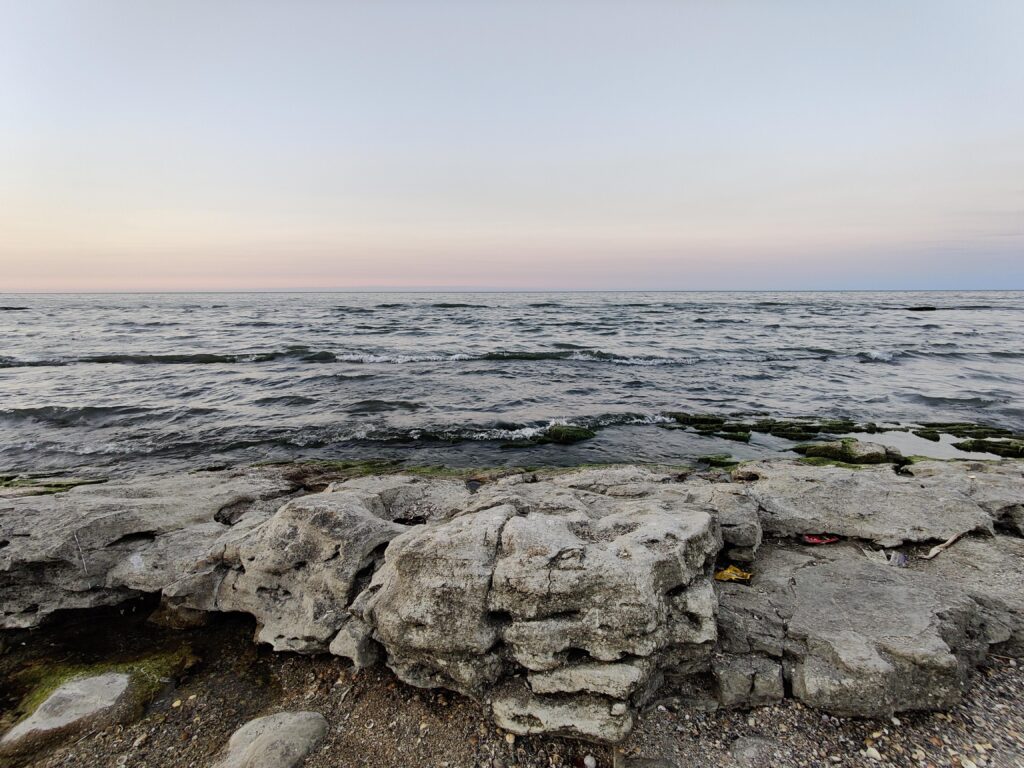
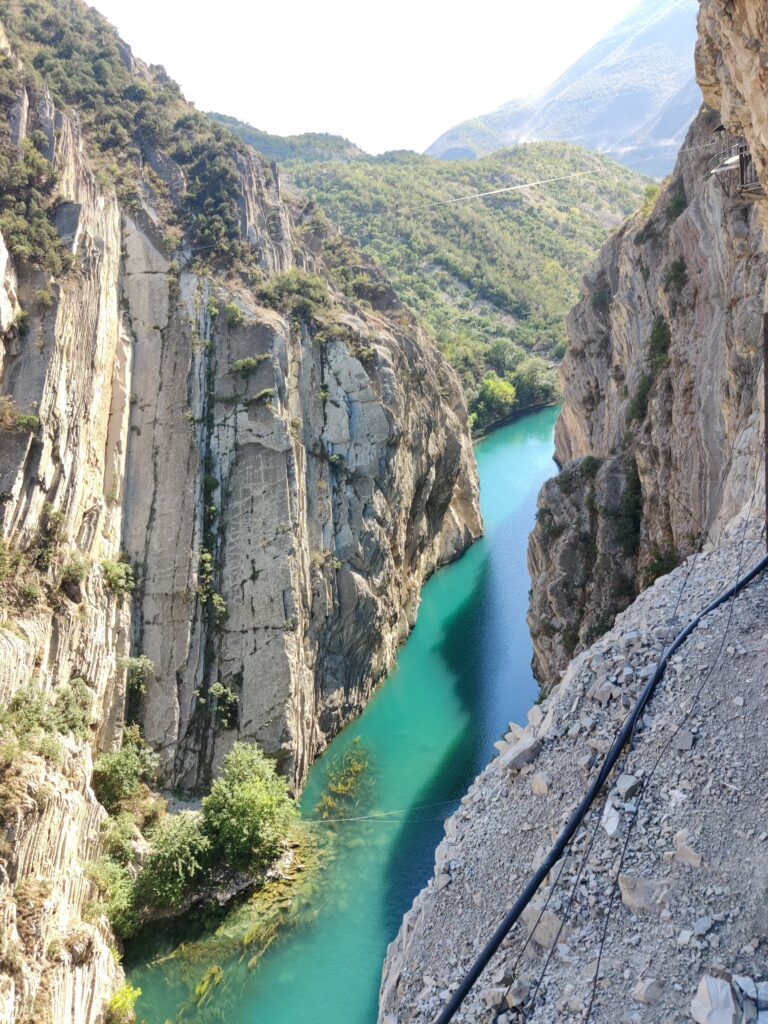
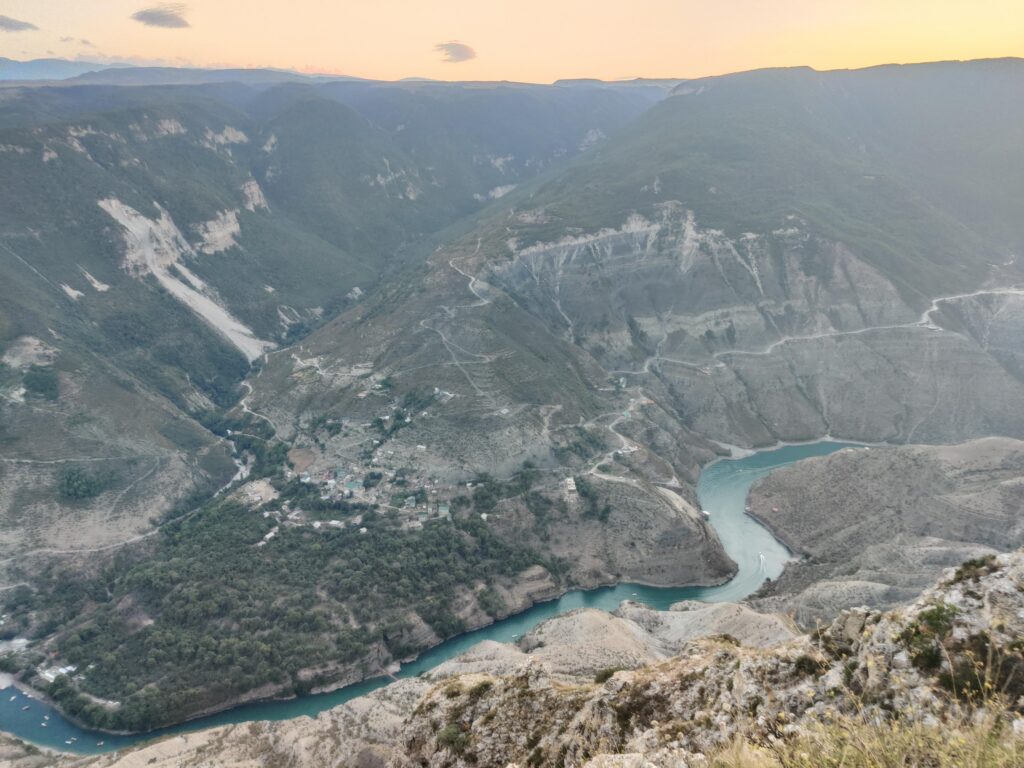
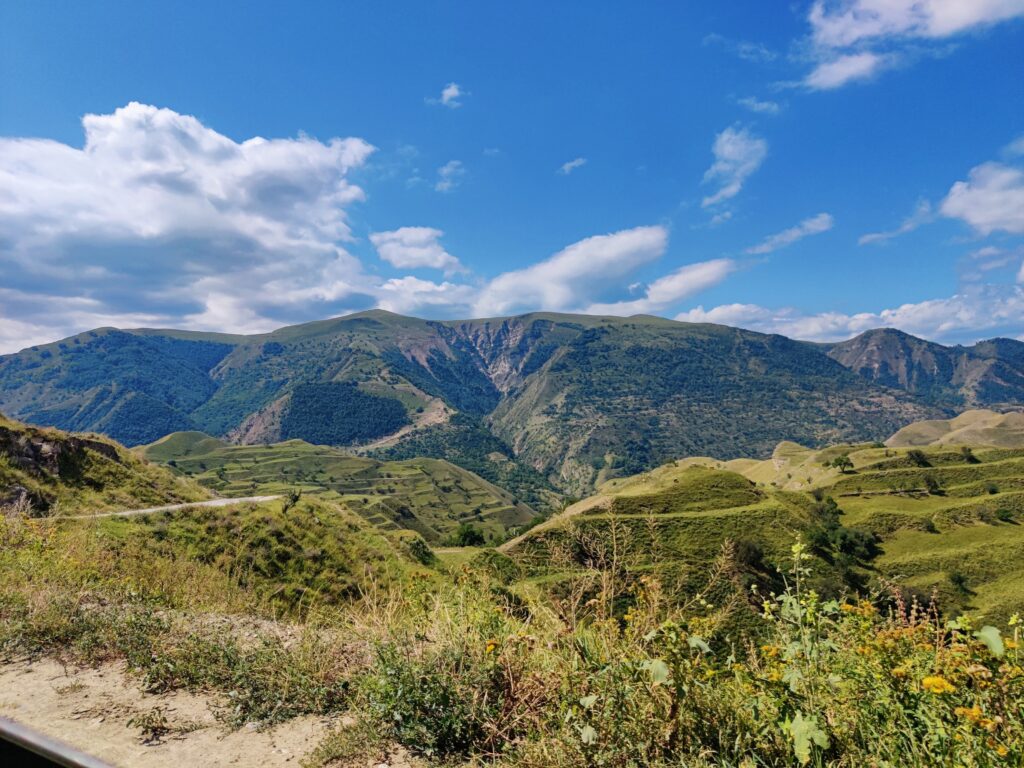

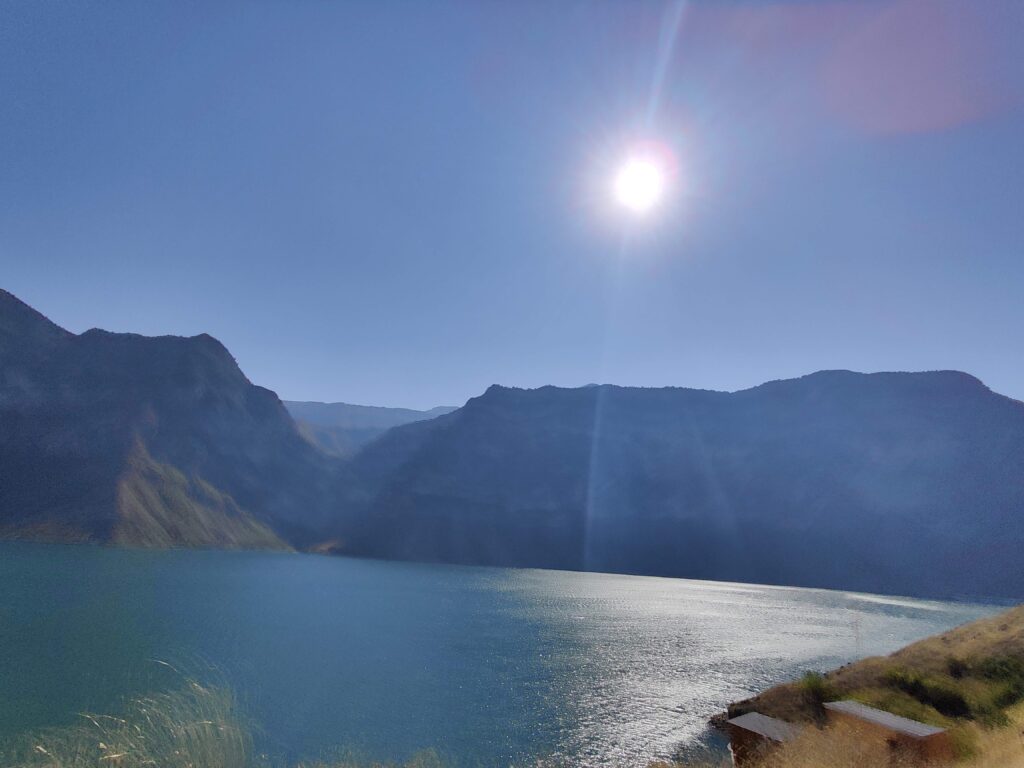
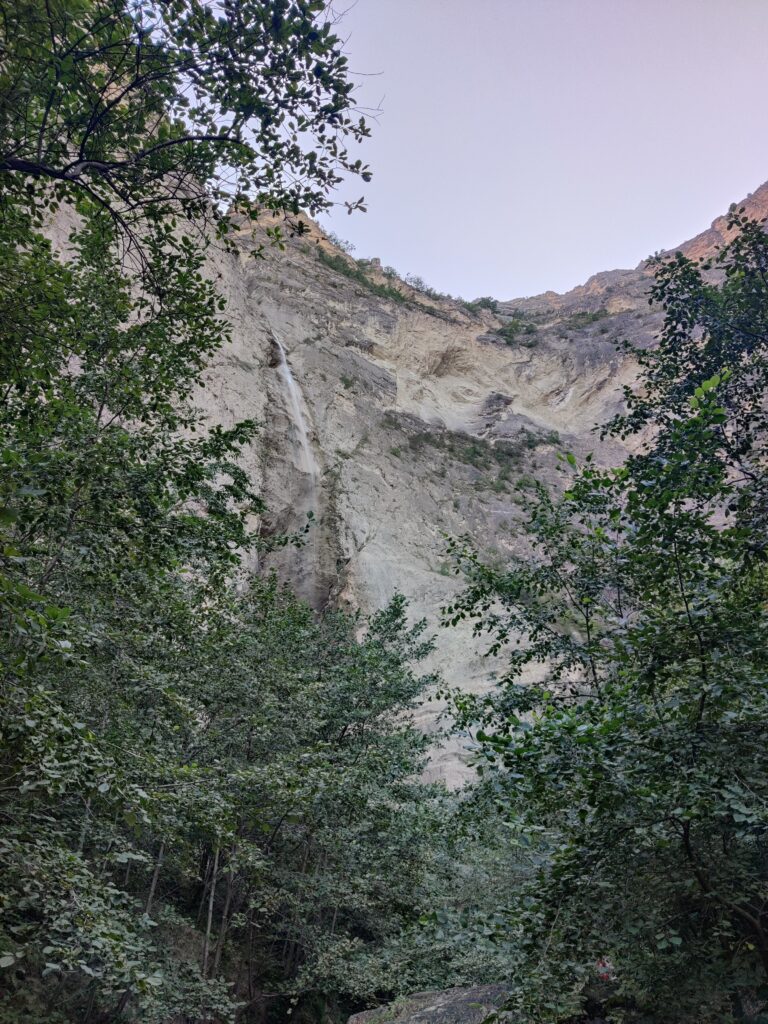
I went on that trip for R&R, to be sure, but I also went to Russia with the specific intention of seeing for myself what the effects of MUH SANKSHUNS WERKIN REEL GUDDER!!!!11!!!! have been on the Russian economy. I wanted to see whether there was any truth to the insistence of Western presstitutes and whorenalists that Russia is on the verge of collapse, and that the Russian people are weary of war and ready to overthrow the Kremlin “regime”.
Of course, anyone who reads my work, follows my Telegram channel, or listens to my podcasts, knows full well my personal position on the subject. (On a good day, when I feel like being nice about it, I would like to see most Western presstitutes hanged for their lies. What I think on a bad day, is not fit for printing.) The Western Military-Media-Industrial-Congressional-Complex has nothing to offer but lies and nonsense. I have long maintained that Russia is doing just fine – my connections in the country have told me as much, and have repeatedly shown me the evidence of that fact.
But I had to see it for myself. So, when Russia finally implemented their long-delayed – literally by years – e-visa scheme, I immediately applied and booked in a trip.
I had to fly in via Istanbul, and spent a night there – thanks to the idiotic Western bans on Russian aircraft, and the retaliatory measures taken by Russia, direct flights from Western capitals and cities and Moscow or St. Petersburg, which were once completely normal, are now impossible. You have to go via Istanbul, Dubai, Belgrade, or (God help you) Cairo.
From there, I travelled on to Moscow the next day, stayed overnight, and flew out to Makhachkala, the capital city of the Republic of Dagestan – an autonomous republic in the North Caucasus that answers directly to the Russian government, but is for all intents and purposes an Islamic republic with its own largely devolved government.
The next six days were some of the most fun-filled and pleasant of any holiday I have ever spent.
Dagestan sits on the shores of the Caspian Sea, the world’s largest inland body of water. Unlike Lake Baikal, it is a proper salty sea. If you drive down south from Makhachkala, you will eventually end up in Azerbaijan, and if you drive south a bit more, you’ll end up in Iran. To the northeast lies Kazakhstan, and to the west and north is the rest of the vast expanse of western Russia. Directly adjacent to Dagestan, to the west, lies Chechnya, another Islamic republic.
Wandering around Makhachkala feels rather like walking through some of the smaller cities of India or Indonesia. The infrastructure is much less evolved and steady than what you find in Moscow or St. Petersburg. However, you will find the streets are, by and large, quite clean and well maintained – unlike India, where the locals cannot seem to figure out basic hygiene.
The people of Dagestan are some of the kindest, friendliest, and most hospitable you will meet anywhere. Despite being an Islamic country, the Avars – the largest group of native peoples in that part of the Caucasus – have a well-deserved reputation for being welcoming to strangers. Even their Islamic beliefs do not make themselves felt too strongly. As long as women obey their dress code and are modest in their apparel and appearance, they can walk around without headscarves or veils of any kind.
Indeed, I can count on the fingers of my hands the number of times I saw a woman in the full body-bag, the niqab or hijab. You might be surprised to learn, actually, that alcohol shops and even bars and pubs are quite common in Makhachkala. It is not at all unusual to meet Dagestanis drinking the local hooch, too – Dagestan is famous for its local cognac, just as Serbia is famous for its plum brandy (rakije).
I actually met a Dagestani who was quite clearly hammered on my first day there. We were walking along the shores of the Caspian, and one of the locals and his buddy passed by us. The first guy greeted me with the usual “asalaam aleikum“. Since I have lived around Muslims for quite a while, I answered in the standard way – “wa’aleikum asalaam“. That chap looked quite surprised, and then turned to me with his buddy in a “hail fellow, well met” moment, and started talking at me in rapid-fire Russian. His friend was absolutely shitfaced and insisted on trying to invite me to drink with them.
It was all in good fun, we managed to extricate ourselves without too much trouble. But this is actually pretty normal for Dagestanis. It is quite normal for a Dagestani Avar to invite a stranger to a meal or a cup of tea. They are not a wealthy people, in general, but they are kind and decent in ways that you have to see to believe.
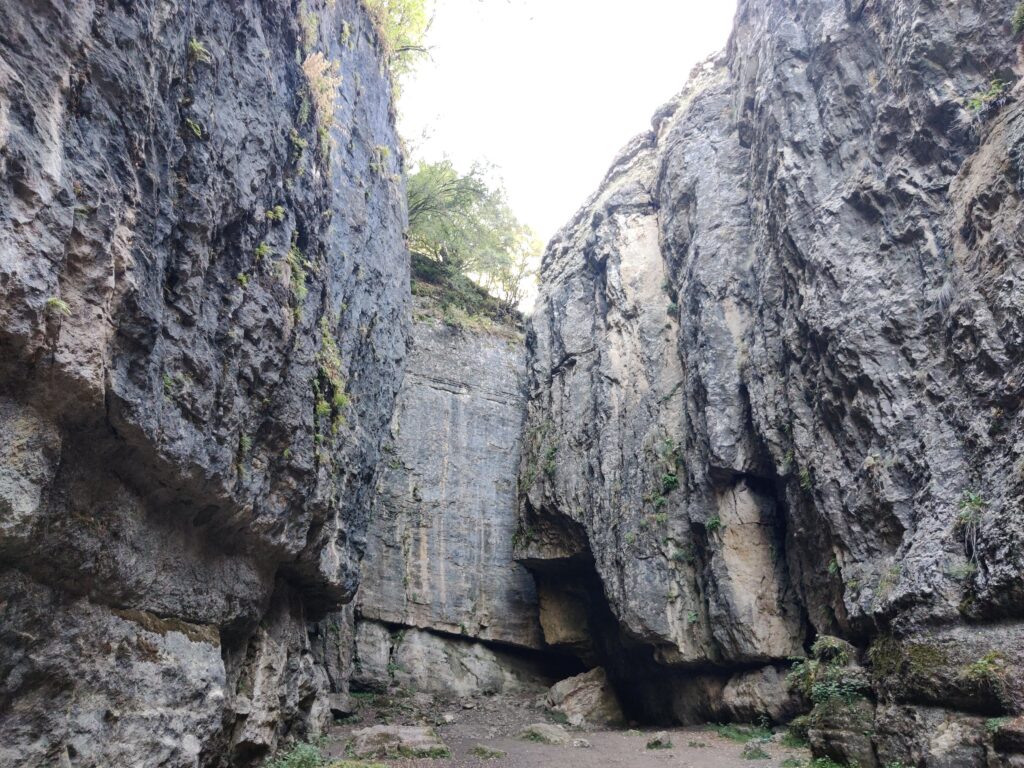
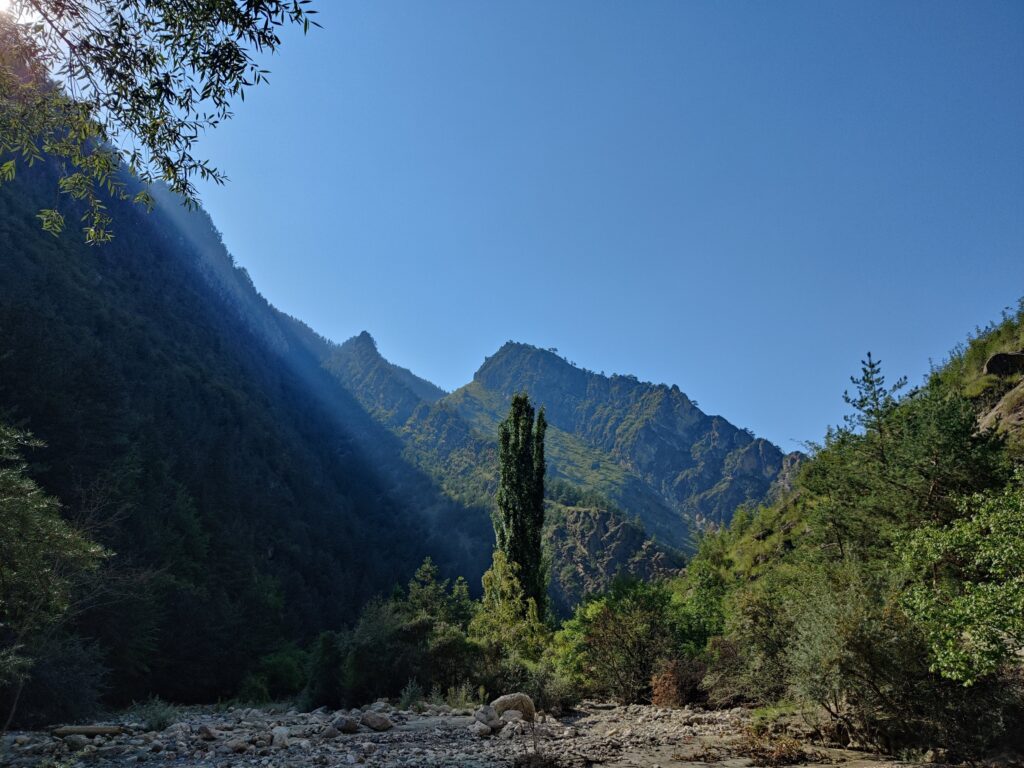
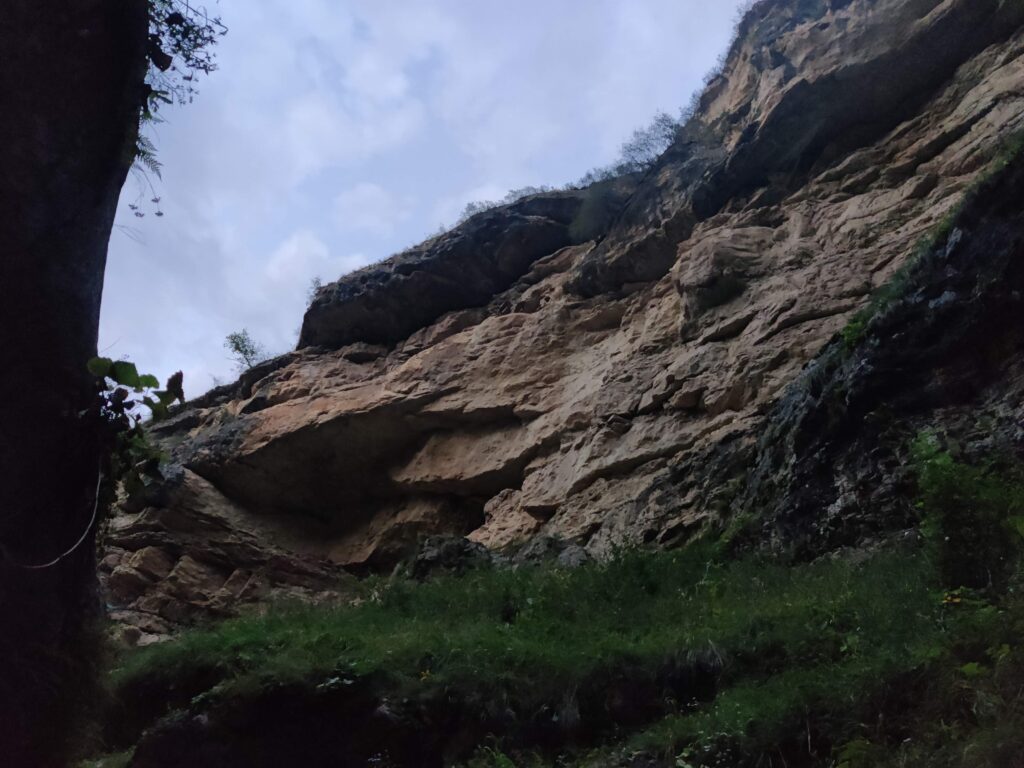
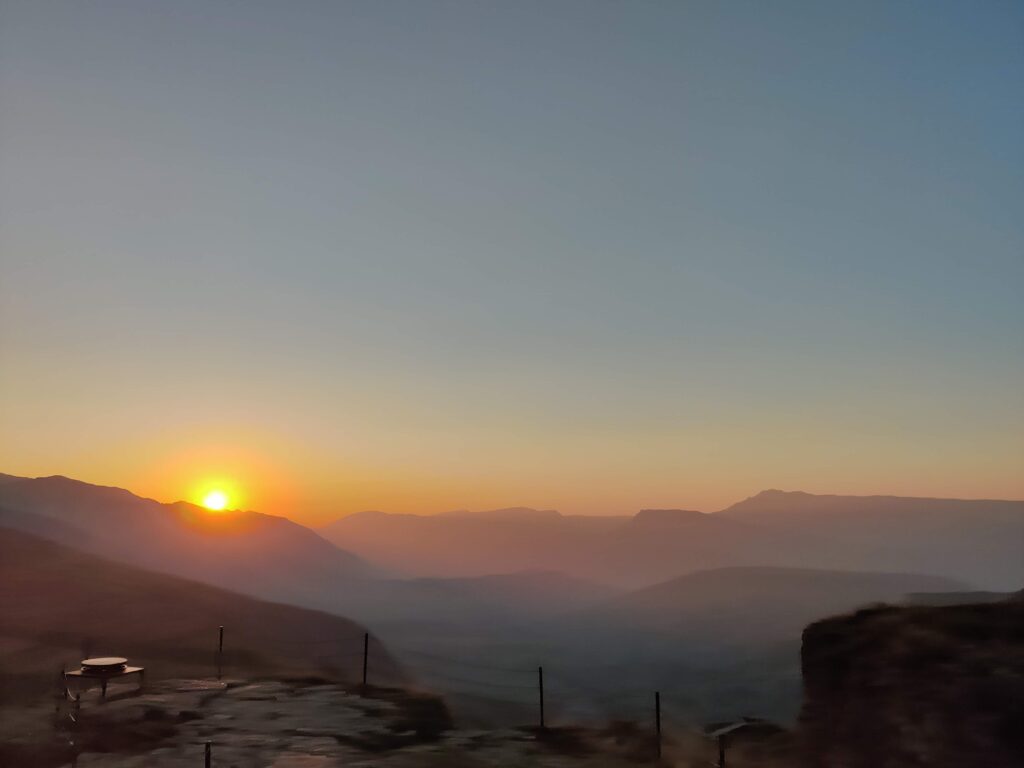
From Makhachkala, we proceeded into the Caucasus Mountains, and spent four days exploring the various canyons and gorges of the region. Our tour guide was a local student who showed people around his country for fun and money during the summers. We visited places like Sulak Canyon, Saltin Gorge, Karadakh Canyon, Khunzakh, Gunib, Chokh, Gamsutl’, and a whole bunch of other places.
We barely scratched the surface of what Dagestan contains. I would love to go back. It is a genuinely astonishing and beautiful country, with amazing people to match.
A Taste of Dagestan
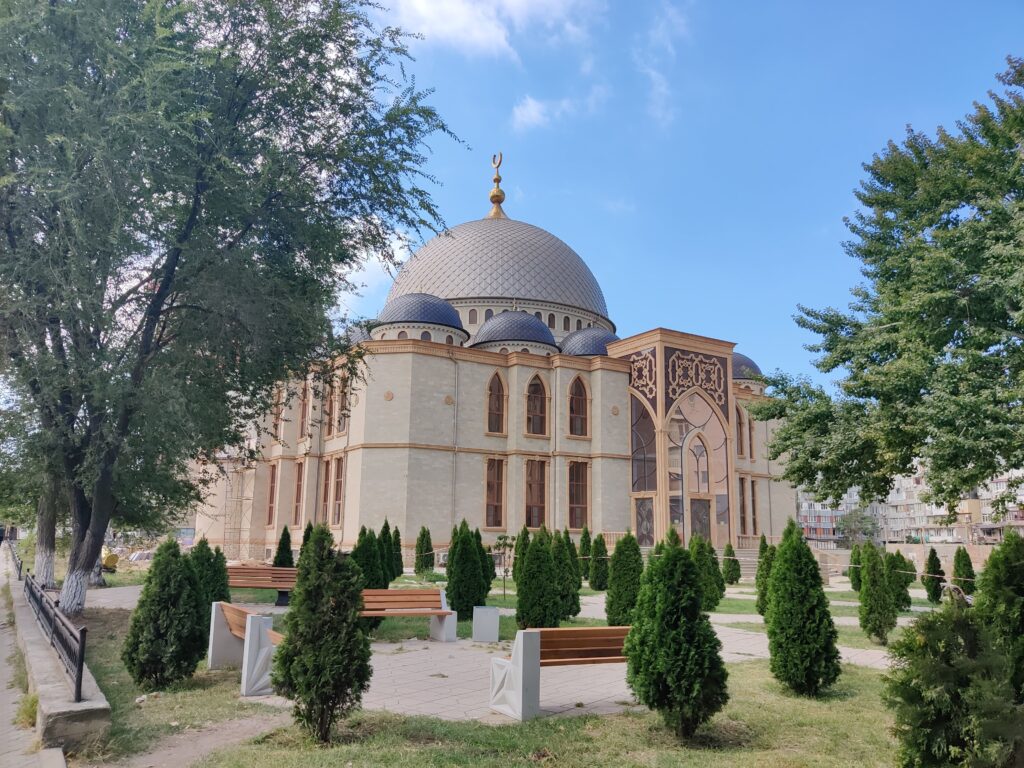
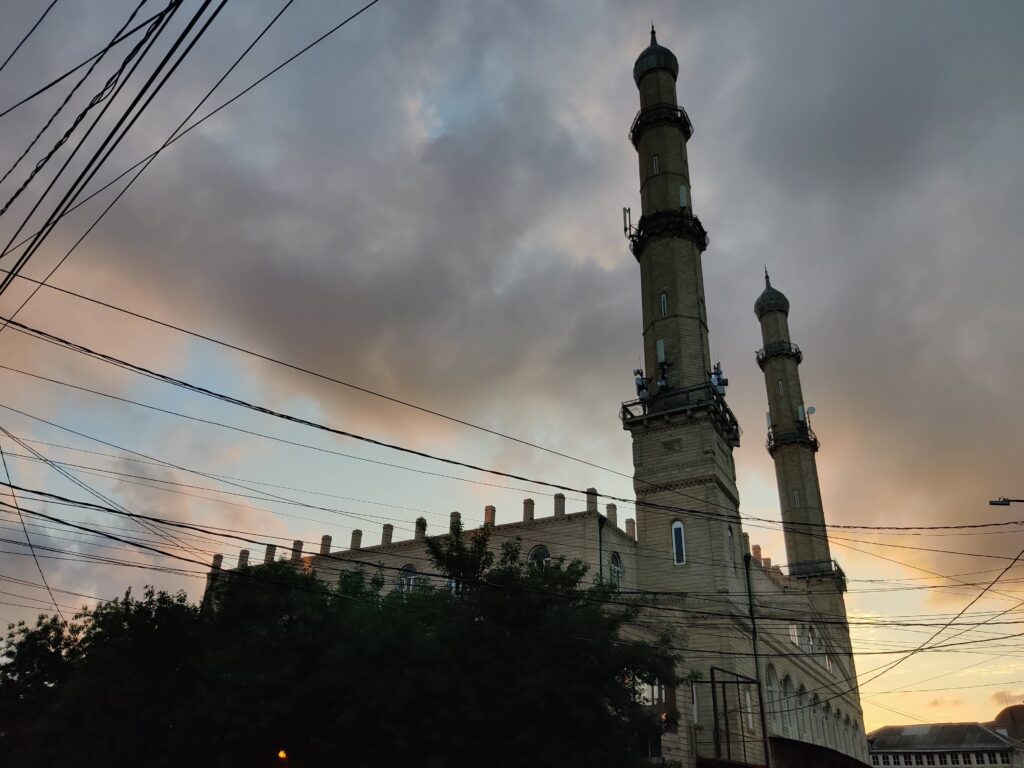
Dagestan has some of the most astonishing and pristine natural beauty I have ever seen. I highly recommend travelling around the region during the summer, especially, when the weather is good.
A word of warning if you do choose to go there, however – you MUST speak at least basic Russian. Without knowing and understanding how to ask for food, pay for things, count numbers, check directions, and figure out how to navigate around, you will be hopelessly lost in a part of the world where very few people speak English – and fewer still care to learn.
The people of Dagestan have a deep and powerful connection to their land, their country. I spoke with our tour guide about this on our last night together. He said he will never leave his land, because the mountains, rivers, and valleys are his home. He spoke about one of his cousins, who travelled to the West, and now lives in the FUSA – and he stated very clearly that he could never follow the same course, because his cousin lives as a refugee, practically, while he lives with his own people in his own country.
Our guide was practically fearless when walking across mountain paths with steep drops – he gladly took photos of us and with us, even though one single false step could mean death. He had no problem jumping off 12-foot drops into the clear lake waters below, despite the presence of submerged rocks just past the jump-point that could break a man’s leg if he mistimed his jump. The man genuinely loved his land and believed it would never hurt him as long as he respected it.
This is a common attitude among Dagestanis. They love their land – as they would say, in Russian, здесь наша земля, наша страна, наш народ, тогда зачем мы должны испугаться? (This is our land, our country, our people, then why should we be afraid?) They have a deep and powerful spiritual connection with it. For them, they cannot live without the mountains, the clean air and water, the open skies, and their unique culture and language.
It is rather a bit like Montana is for Americans – Big Sky Country – but with a far more powerful attachment to the land and people.
Despite this, the Dagestani people are proud to be part of Russia. You will see this everywhere in every part of Dagestan, from Makhachkala to Derbent to the smallest villages. Several hundred years of living as part of the Russian Empire, and then the USSR, and of learning Russian as their official language in school, has made them very much a part of the Русский Мир – the Russian World. There is very little by way of Islamic separatist sentiment in Dagestan – they got that beaten out of them during the various wars in the Caucasus in the 18th and 19th Centuries.
They also have no patience whatsoever for the Wahhabist nutbaggery that you find so common in other Izzlamist parts of the world. While they are profoundly and deeply mistaken about the realities of their fake religion – and I say that with all the respect and love I can muster for the Dagestani people, whom I firmly believe to be some of the kindest and most decent I have ever met – they also have no interest in fundamentalist philosophies. They are as tolerant as Muslims can be of other faiths – and they see no contradiction whatsoever between being Muslims, and fighting for the Orthodox Christian nation that is Russia.
Blood of Heroes
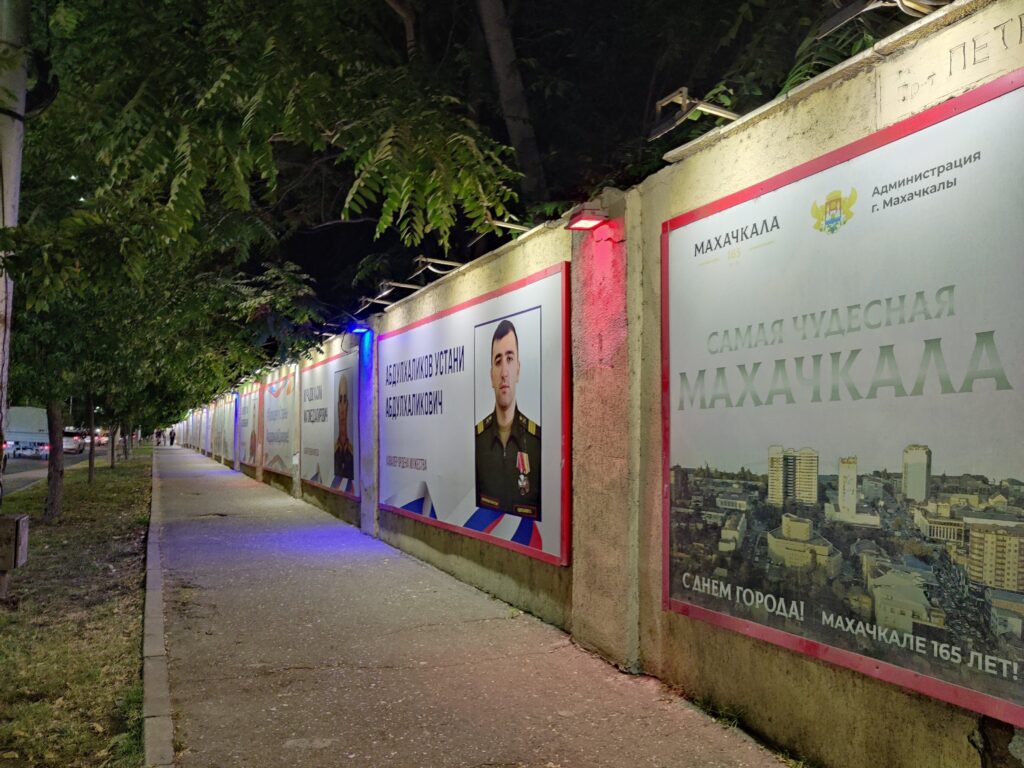
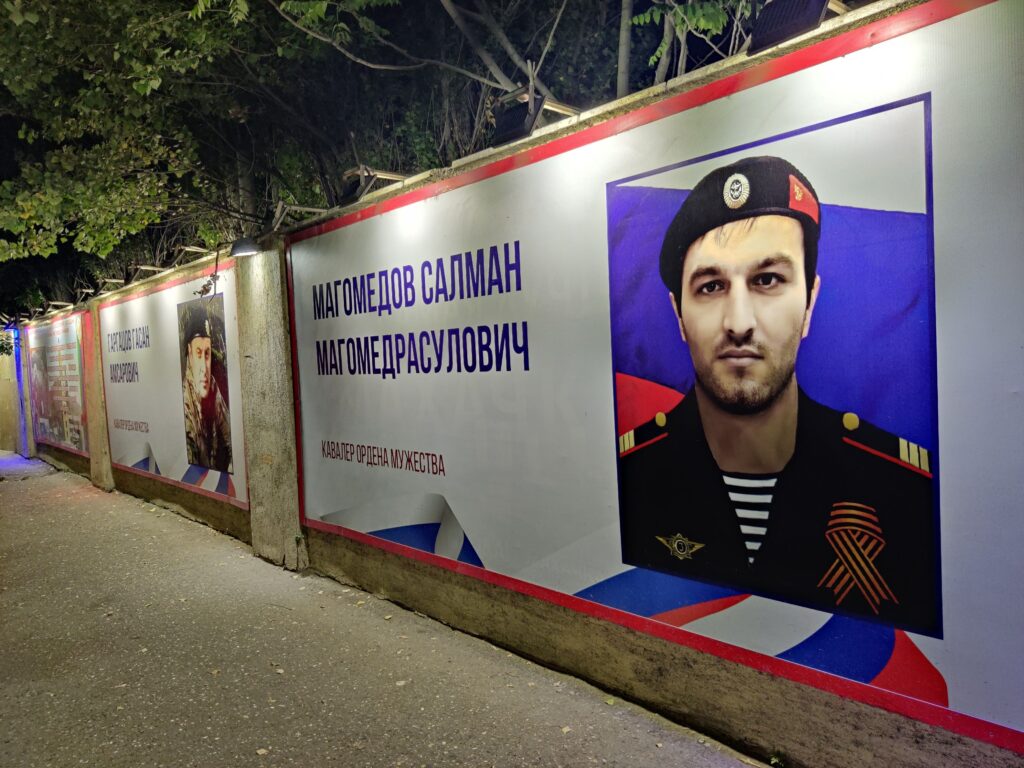
Speaking of fighting for Russia – Dagestan is one of the biggest sources of contract soldiers and volunteers for the Russian military. You will find signs of this everywhere in Dagestan, and in particular within Makhachkala.
The first two pictures you see up there are of the main avenue in Makhachkala. Along that road, you will see pictures of men who have received the Order of Courage, a state award of the Russian Federation, for vaolour shown in the field of battle. There are dozens, perhaps hundreds, of such pictures.
I asked our tour guide about those men, and he told me that not all of them are dead – many are still very much alive. He also told me that Dagestanis want the war with Ukraine to end – he actually called it a war, as do most Dagestanis and Russians outside of official circles – but he has NO sympathy whatsoever for the Ukrainian government. My reading of most Dagestanis is that, like most Russians, they regard the Special Military Operation as an existential fight for Russia, and the Dagestanis are deeply proud to serve in the Russian military to bring that fight to its inevitable and terrible conclusion.
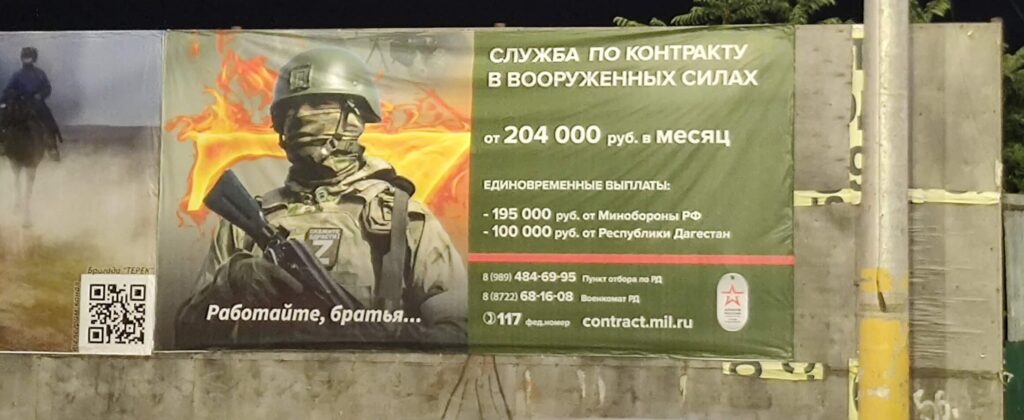
That brings us to the third picture above, the ad for contract military service. The poster reads as follows:
Contract Service in the Armed Forces
From 204,000 rubles per month [about US$2,000/m]
Joining Payments:
- 195,000 rubles from the Ministry of Defence of the Russian Federation [about US$1,950]
- 100,000 rubles from the Republic of Dagestan [About US$1,000]
Keep that in mind – this is for entry-level service in the Russian Armed Forces. My understanding of such things is that these salaries compare quite favourably with salaries in Western armed forces.
This should tell you something very important: service in the Russian Armed Forces now pays about as well as being a doctor or a teacher in Russia does. In other words, military service, under contract, is now a respectable, decently-paying profession with real prospects for career advancement and technical knowledge.
This is radically different from how things used to be, particularly after the fall of the USSR. Back then, the Russian military was horribly underfunded. Its soldiers, sailors, and airmen often went without pay for months at a time. Government service was a mug’s game.
Today, however, the Russian youth can look at military service as an honourable profession that leads to good things in life. They get to use the latest technologies, the most capable military platforms in the entire world. And they get to be the men their culture and society wants them to be.
This has profound implications for the future of Russian society. And that is not the only such poster I saw – similar posters were all over Makhachkala, and in Moscow, too.
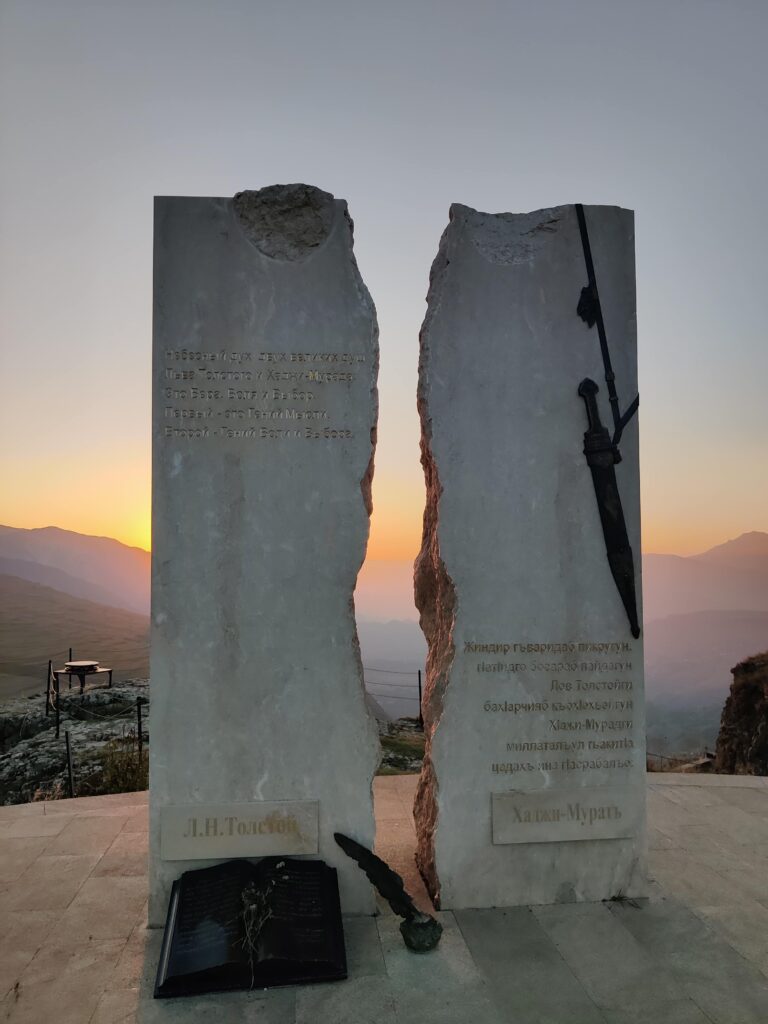
This brings us to the realities of the complex but very close relationship between Dagestan and Russians. The last picture you see is of the monument to Leo Tolstoy. He wrote a novel, way back in the day, called Khadji Murat’, about an Avar rebel leader who formed an uneasy alliance with the very Russians he was fighting against, because his Islamic enemies were a far greater threat. In the process, the Russians came to honour and respect the Avar leader as one of their own – and he brought peace to his people and land.
The Dagestanis regard themselves as Russians. They fight and die for Russia, for the President of Russia, for the people of Russia. They elect their own President, for sure – the President of Dagestan is a powerful man who has tremendous influence over his country. But he swears loyalty to the Kremlin, and to President Putin himself.
If you go to the city centre in Makhachkala, you will see the main square surrounded by banners that say, За Россию! За Победу! За Президент! За Мир Без Нацизма! (For Russia! For Victory! For the President! For a World Without Nazism!) And that is precisely how the Dagestanis themselves feel about the war. While their men respect the Ukrainian people, they regard them as brainwashed fools, led astray by Western propaganda – and they have no respect whatsoever for the Banderites and neo-Nazis, whom they regard as worthy only of outright extermination.
The Soviet Legacy
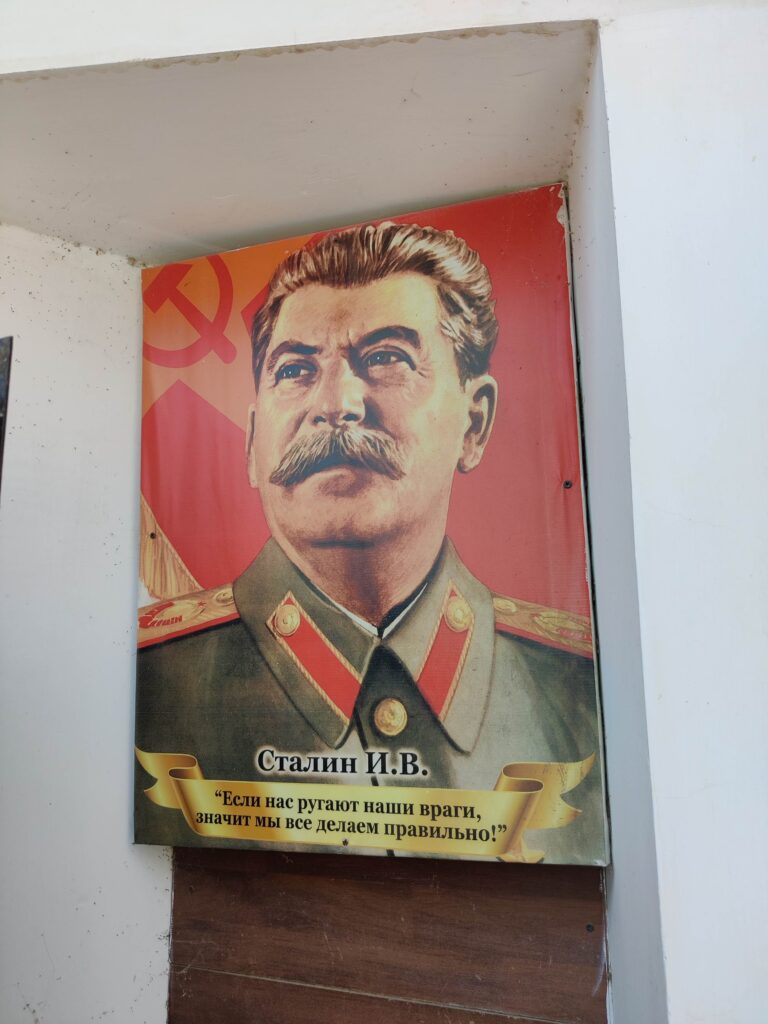
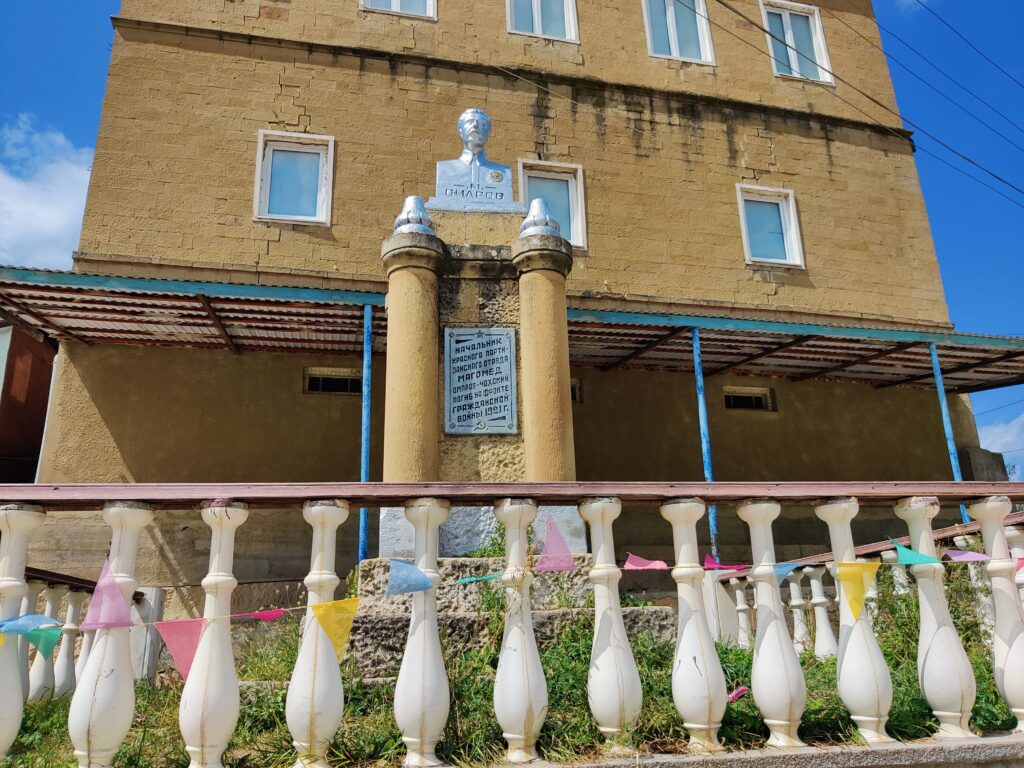
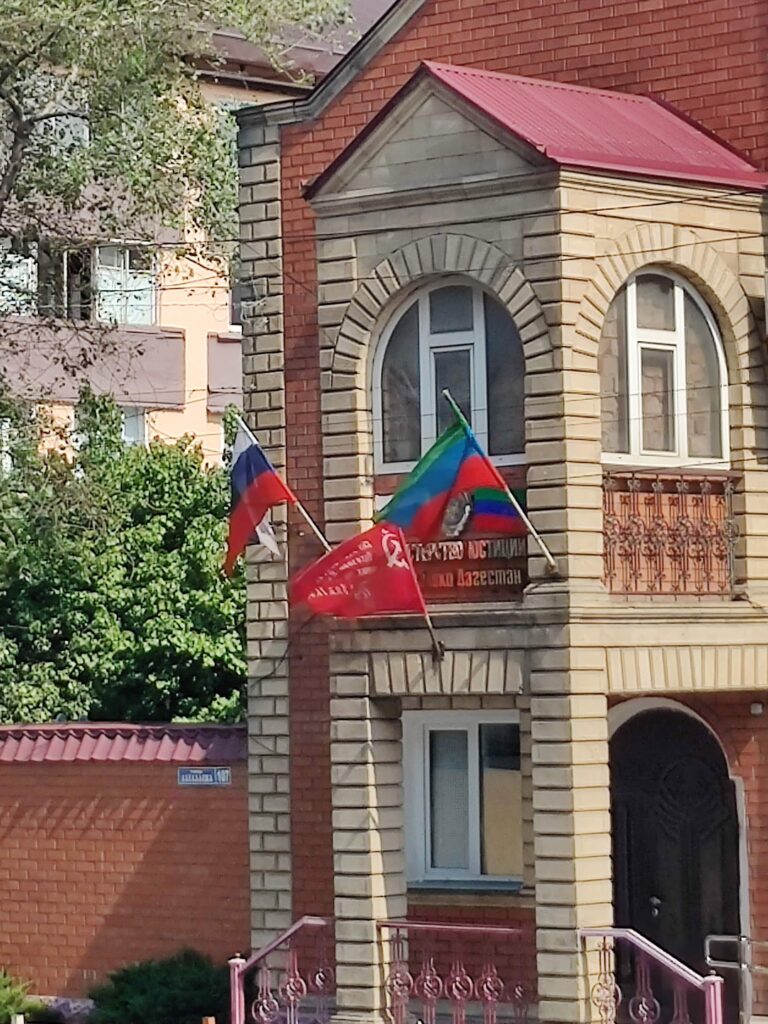
Travelling through Dagestan, you do understand just how strongly the Soviet legacy is in the region. It is not at all uncommon to find posters of Stalin and statues of Lenin in cities and villages across the republic.
The first picture you see above is of a poster of Stalin at a truck stop near Gunib, I think. The second is of a local hero from the very remote mountain village of Chokh, who died fighting for the Soviets in the Russian Civil War in 1921. The third picture is of the Soviet Victory Flag, which the Red Army waved over Berlin when they conquered it in 1945.
This gives you some idea of the complex and difficult relationship Russians in general have with the legacy of Communism.
Very few people in Russia want to go back to the bad old days of Bolshevism. They like the fact that they have modern conveniences and appliances today – and that they can feed themselves, which the USSR never could.
(It is a fact that the USSR could never produce sufficient food for its own people, despite owning some of the most fertile soil anywhere in the entire WORLD. Soviet agriculture was notoriously inefficient and unscientific in its approach – and, of course, the Soviets bought off the friendship of many shithole countries around the world by exporting their grain to them for free. Today, the situation is completely different – Russia is the world’s largest producer and exporter of wheat, and is totally self-sufficient in food.)
Even the Communist Party of the modern day, which is really the only effective opposition against President Putin’s United Russia party, is radically different from its past iterations. Today, the Communist Party supports the Orthodox Church and embraces Russian nationalism – it simply wants to nationalise much more of the country’s industries to a much greater degree, which the Russian people generally do not want.
Despite the extreme and terrible failures of Communism, and despite the persecution brought by the Bolsheviks against ethnic minorities up and down the USSR in many cases, the fact is that MOST nationalities and republics in the USSR actually benefited significantly from Soviet investments in technology, manufacturing, agriculture, engineering, education, and a dozen other fields. For this reason, many of the people of the Russian republics regard Lenin and Stalin with great respect, if not necessarily fondness.
While they do not want Bolshevism to return, they do understand and appreciate the fact that, without Bolshevism, modern Russia, as it is today – strong, free, independent, and respected by the entire world – would not exist.
Москва, Мы Любим Тебя!
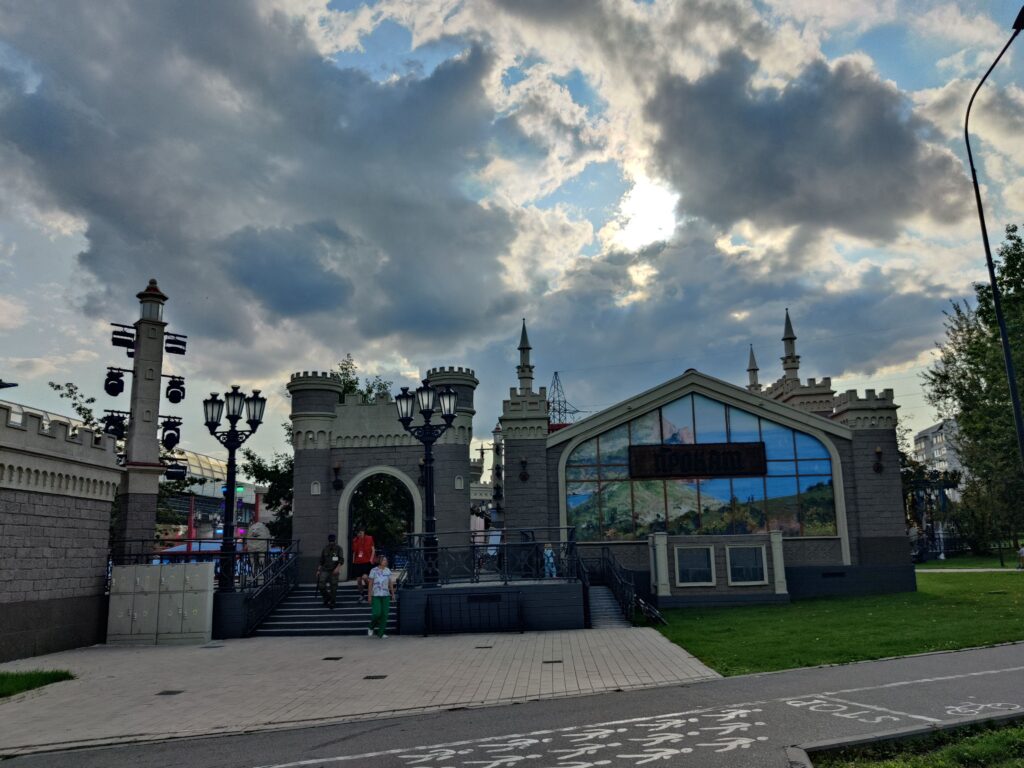
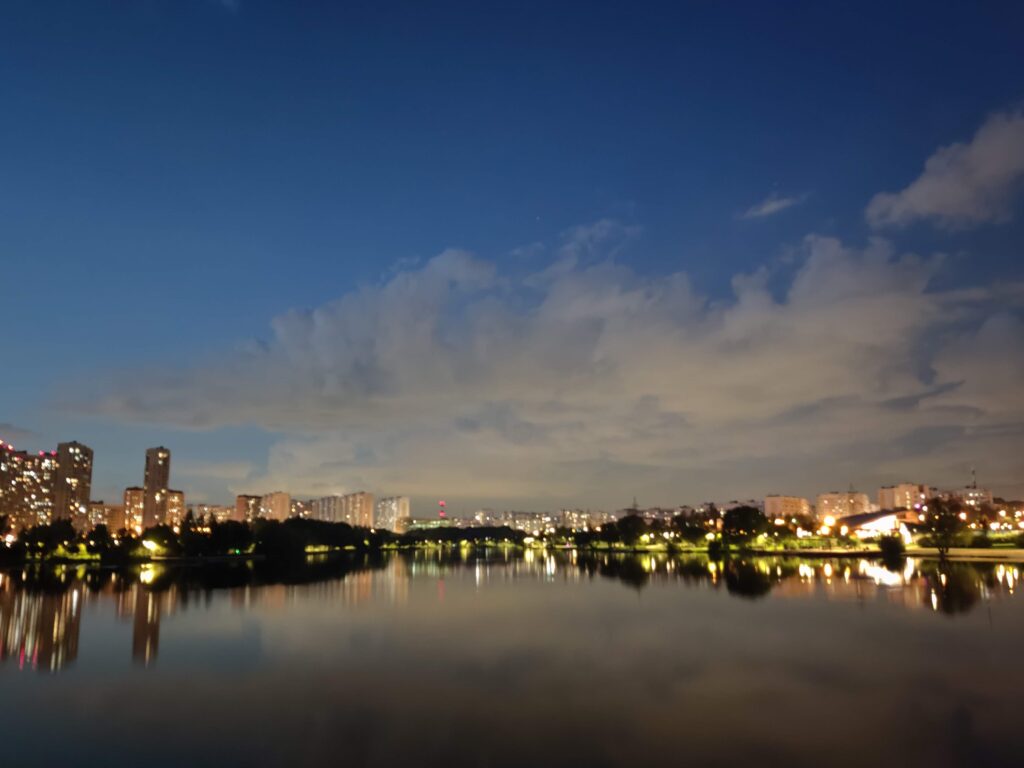
I have visited several of the world’s greatest and largest cities in my life – not all of them, obviously, I have never been to Tokyo, Los Angeles, Rio de Janeiro, Vienna, Berlin, and about a dozen others that I could name off the top of my head.
Nothing I have ever seen, in more than 30 years of travel, compares to Moscow.
There is simply no way to describe Moscow adequately to someone who has never been there. It is overwhelming in its size and scale. The city alone encompasses some 13.3 million inhabitants – a mind-blowing number even by the standards of, say, London or New York. The entire urban area and region comprise something like 18 million people.
Yet, there is really no part of the city that I can call “bad” or “dangerous”. I am sure such areas do exist – it is a gigantic place, after all – but I have travelled all over southern, eastern, and western Moscow (not so much in the north), and I have never once felt unsafe.
The streets are clean and well maintained. The city government goes to great pains to sweep them regularly – and the western Russians are a fastidiously clean people, in general.
The infrastructure of Moscow is amazing. Their metro system is the best I have ever seen. It is fast, timely, and covers a vast territory. Where you cannot go with the metro, you can go with a bus. And where you cannot go with a bus, Moscow allows the use of e-scooters and e-bikes without too many problems.
MUH SANKSHUNS WERKIN’ REEL GUDDER!!!
Anyone who goes to Moscow expecting to find a backward, collapsing, or decaying place, will be in for the shock of his life. Moscow is clean, organised, efficient, and packed to the gills with people – you actually get sensory overload from being in Moscow for too long, in my view.
I should also say a word about the shops while I’m at it. I spent a bit of time wandering around a local shopping mall in southern Moscow – nothing fancy, just a regular suburban centre. The shelves of the local Перекрёсток were groaning with produce. There was NO shortage whatsoever of any staple good or food product.
Now, if you go to an electronics store, or to buy makeup (as Russian girls are wont to do), then you will certainly see some Western brands are no longer as available as they once were. It IS more difficult, and more expensive, to buy some Western brands. UNIQLO, the Japanese clothing brand, has closed down all of its stores in Russia and moved out, which is very unfortunate, because Russians love that brand and its high-quality products. L’Occitane, the French skincare products house, initially closed down a bunch of stores, then decided to stay in Russia, kind of on the down-low. Their prices, which were never low to begin with, have gone up.
The SANKSHUNS!!!! have simply made high-end luxury goods more expensive. They have done NOTHING WHATSOEVER to hurt the actual Russian economy.
When I flew in to Moscow, I specifically spent some time looking out the window during the approach into Vnukovo to see how much construction was happening on the ground. Moscow is busier than I have ever seen it, in terms of new buildings coming up. The area of southern Moscow where I stayed, has seen vast new construction opening up, with very fancy new flats built over the past 3 years – and the pace of construction is accelerating.
I get the distinct feeling, being in Moscow, of a city buzzing with energy and power, and of a people full of optimism, hope, and potential.
As for how Russians view the West – I assure you that Grandpa Grumpuss is absolutely correct when he says Russians view Europe and the FUSA with utter contempt. The ONLY thing the FUSA and the EUSSR have going for them nowadays, is a higher general level of salaries. Russians are not fools. They are some of the most historically literate people I have ever met, and they are quite well aware of what is happening both within their country and outside it.
Because of this awareness, they do not view the West with envy any longer. Rather, they regard Westerners with utter contempt. They want nothing to do with so-called “the liberal Western rules-based order”, which as far as they can see leads to nothing more than anal sex rights and child molestation. They are resolutely opposed to such madness, and want nothing more than to be left the hell ALONE, to develop their culture and their nation as THEY see fit.
Westerners must pay attention to this and respect it. The Russians will not tolerate meddling in their affairs, and they have absolute revulsion for neo-liberal Western “values”. Their economy is evolving at amazing speed – their payment systems are as good as, if not better than, anything I have seen in the West, and their domestic products match or exceed the quality of their Western analogues now.
The Epic of Manas
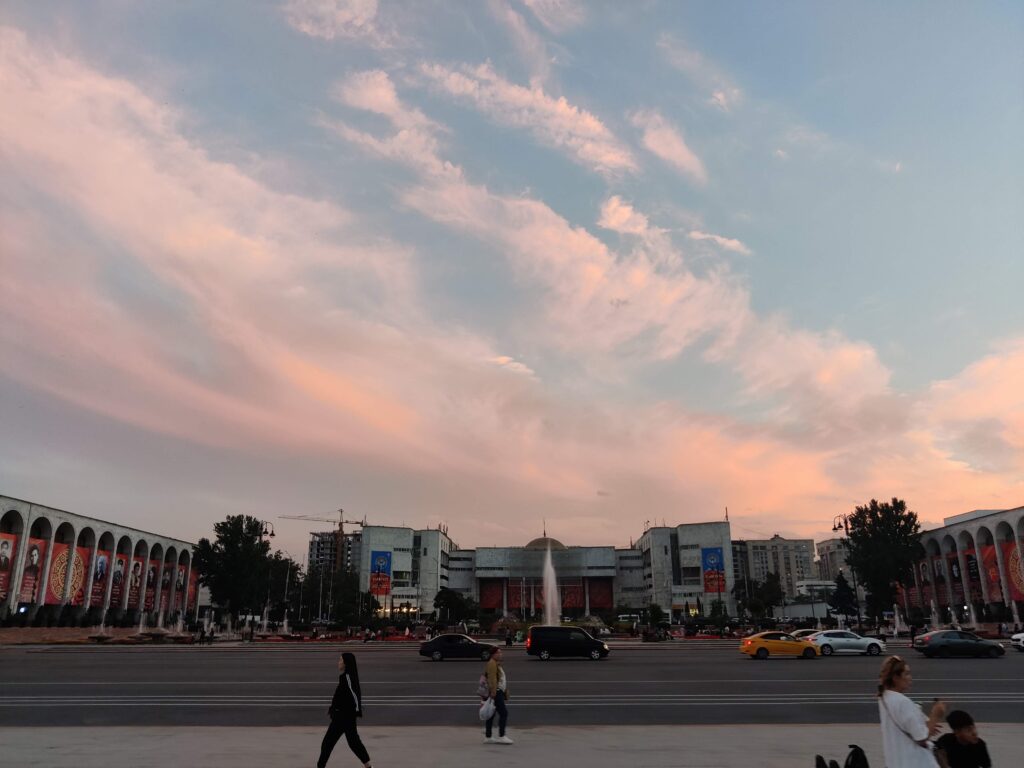
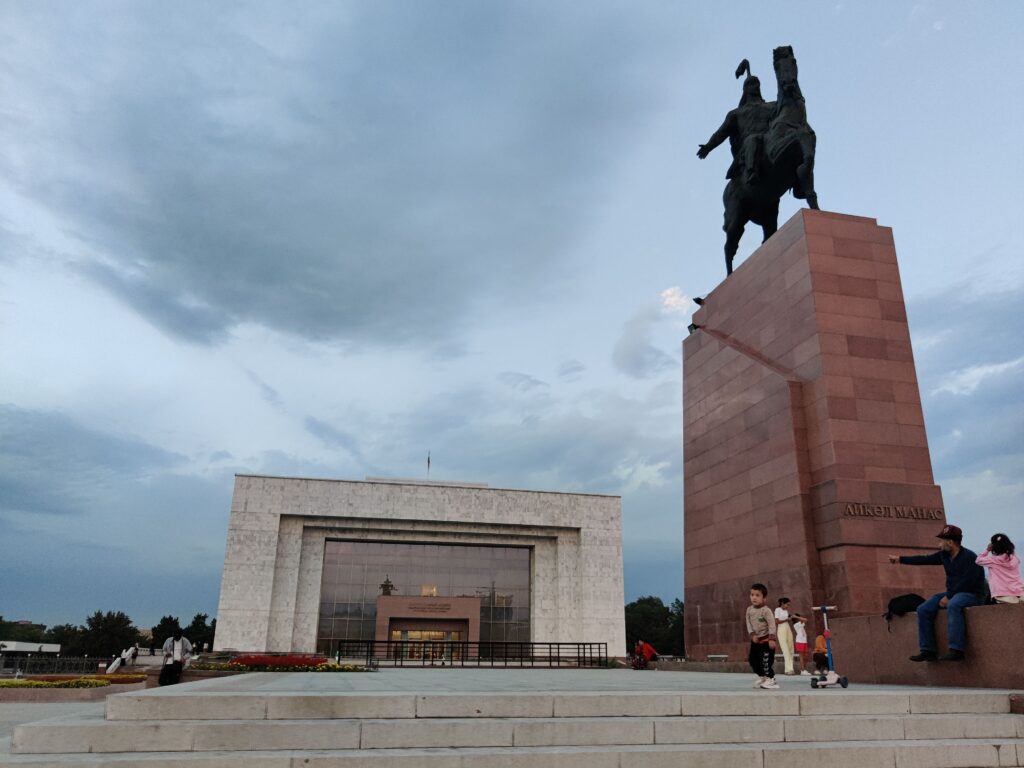
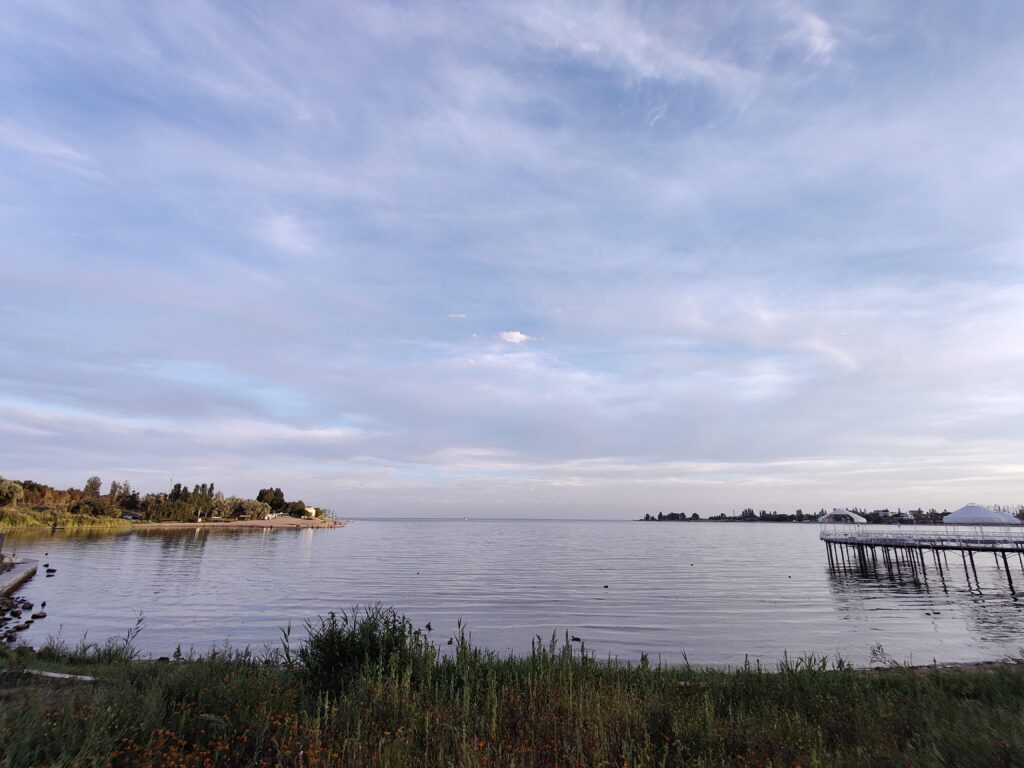
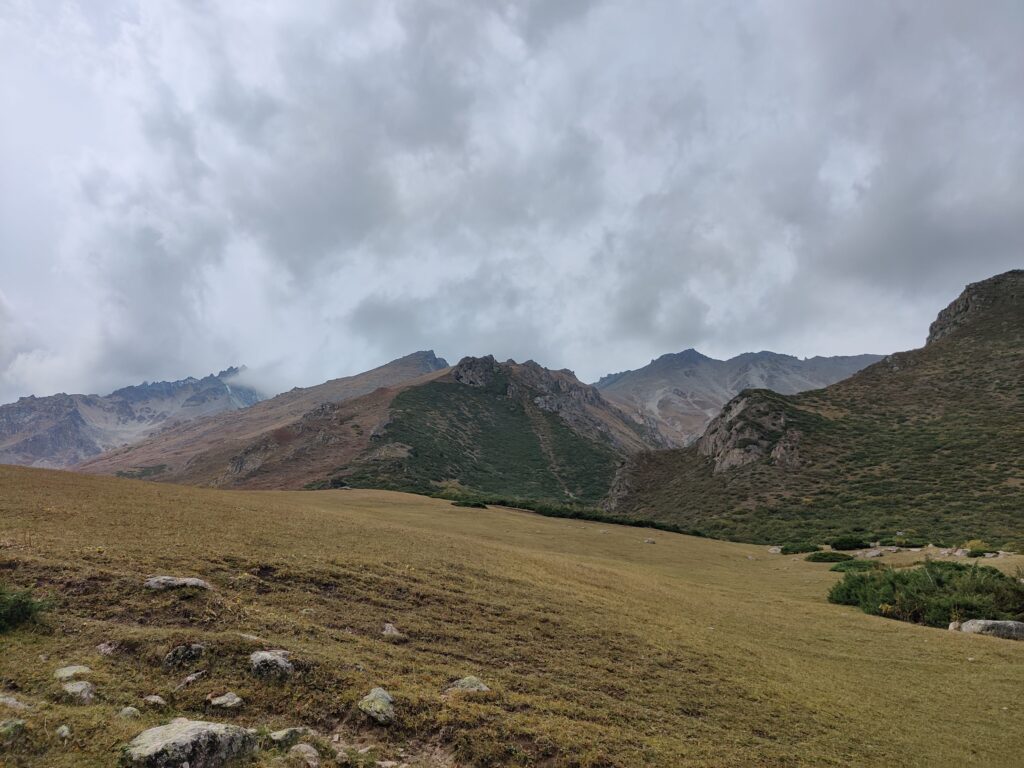
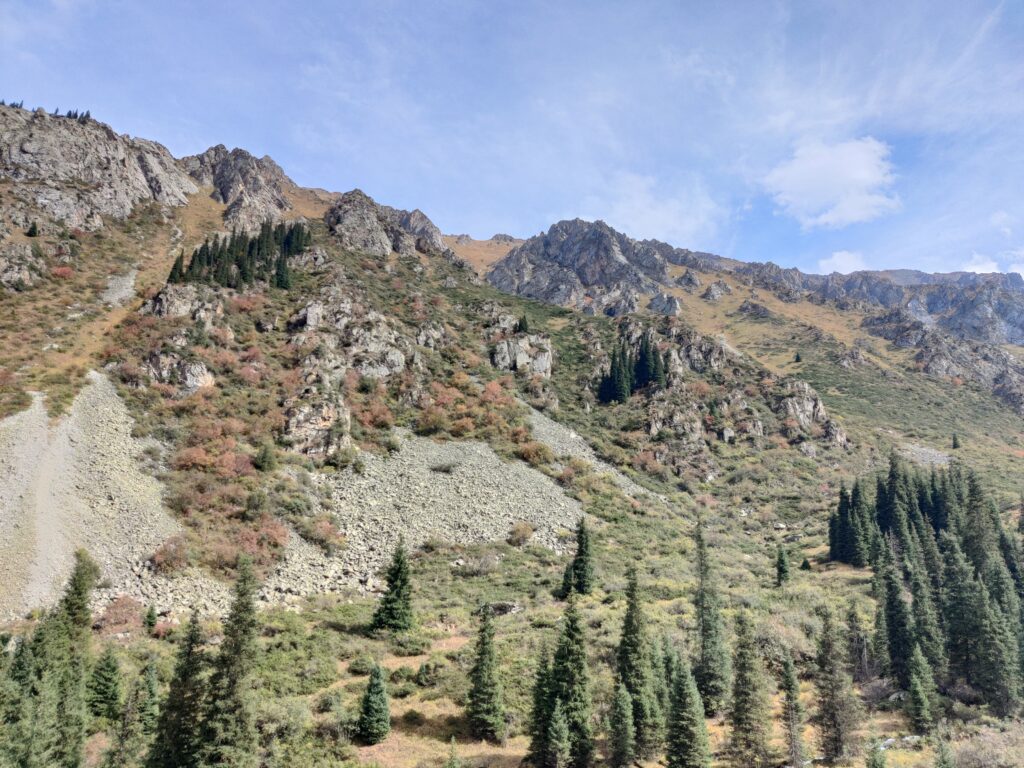
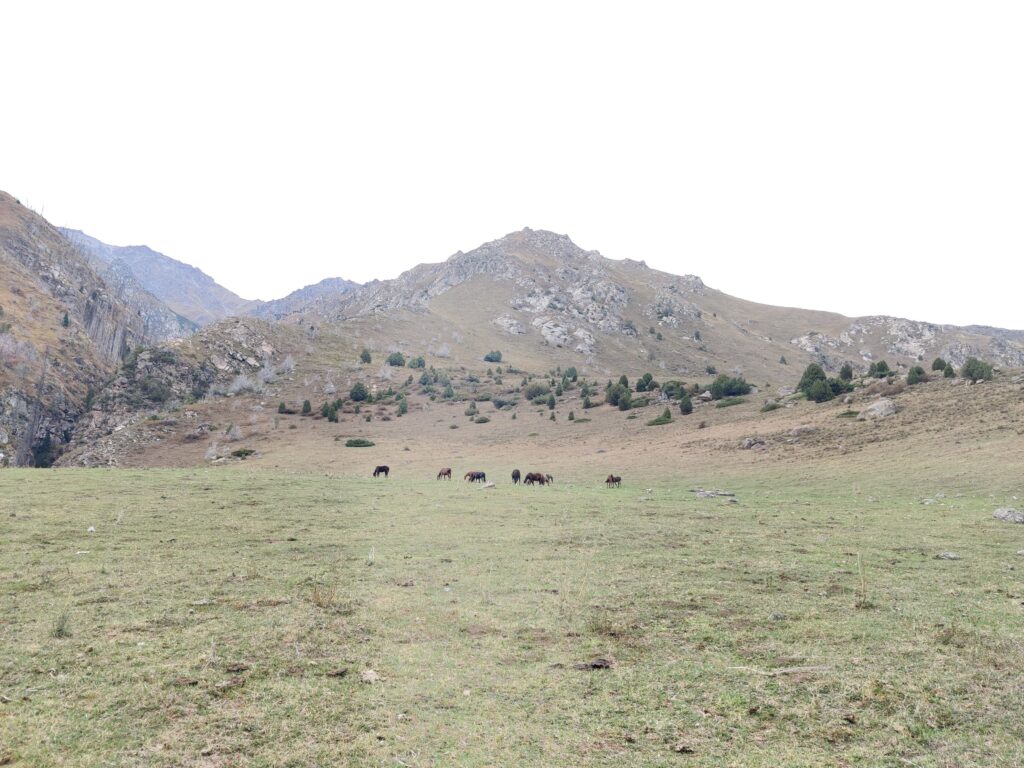
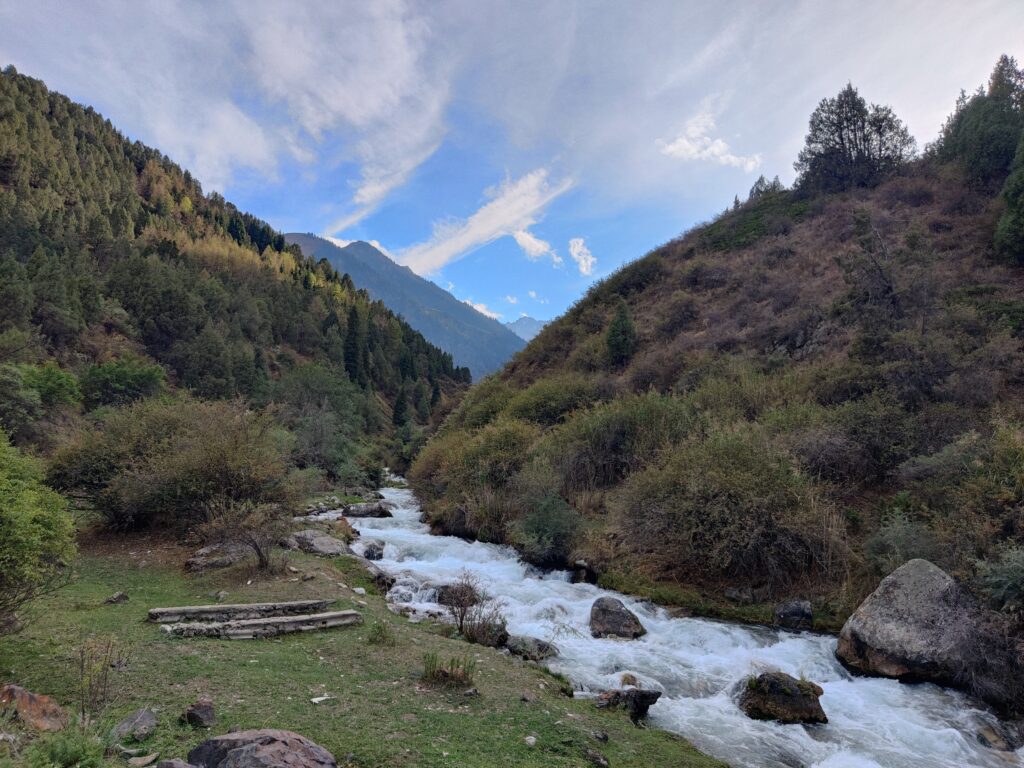
After spending a few days resting and visiting dear friends in Moscow, we travelled on to Kyrgyzstan. This is a relatively small and unpopulated Central Asian republic to the southeast of Moscow, about a 4hr flight away. The capital city of Bishkek sits in the Ala-Too mountain range, a subsidiary or extension of the much larger Tian Shan mountains. Kyrgyzstan was an important part of the ancient Great Silk Road from China to Europe, and you can see the cultural and economic heritage of that in the people of the country.
The Kyrgyz people are Asiatics, with a distinctly Chinese look to them. They speak what is apparently a Turkic type of language, with significant commonality between it, Uzbek, and Kazakh – apparently, the peoples of the three countries can pretty much understand each other’s native tongues.
Reading Kyrgyz is an odd experience for someone trained to read an speak Russian. The Cyrillic alphabet can accommodate Kyrgyz just fine, but it seems completely weird for someone used to reading a script according to Russian rules.
The Russians regard the Kyrgyz as, frankly, rather stupid. This sentiment has some basis in fact. If you go by national and regional IQ readings – which correlate very strongly with education levels and food security – you will see that the Russian national average IQ is around 96. (It is almost certainly higher, probably more than the average White American IQ of 103, in western Russia, particularly in the urban centres like Moscow and St. Petersburg.) The average Kyrgyz IQ, by contrast, is about 79.
This is roughly the spread between the average White American, and the average Black. Anyone who has ever tried to speak with the Dindus in America, knows full well what a futile exercise that can be. That is the level of communication gap between Russians and Kyrgyz.
Intelligence notwithstanding, the Kyrgyz as a people are generally quite friendly, hospitable, and decent. They are, again, Islamic, but they do not seem to be very hardcore about it – indeed, based on what I saw there, they are actually more relaxed about their faith than the Dagestanis are.
The real value and appeal of Kyrgyzstan lies in its stunning natural beauty. Kyrgyzstan is a country of mountains, rivers, steppes, lakes, and plains. It is a land of horses, sheep, and cows. This is true hiking and horse-riding country – it is perfect for long expeditions across the steppes and into the forests and lakes.
On my last full day there, we went on a LONG hike up into the mountains, for an 11Km hike up to a lake. I must say, I do not really see the point of hiking – it is basically really painful and unpleasant walking. But, the mountain and river views were absolutely spectacular, and the air was amazingly clean.
This is particularly important given what Bishkek is like. It is a bit like Mexico City – nestled up in the mountains, which means that during winter, the smoke and dust of the city has nowhere to go. As a result, during winter, Bishkek becomes one of the most highly polluted cities in the world. In January, the city government generally forbids children from going outside, such is the awfulness of the pollution.
There is a large contingent of Russians in Kyrgyzstan. This is partly due to the presence of large Russian state-owned energy companies in the country – I saw quite a few Gazprom-owned buildings while I was there, and I know that Rosneft, Naftogaz, Rusal, and a number of other large Russian conglomerates have branches in the resource-rich country. However, many Russians are also there because they fled Russia to escape mobilisation. Travelling to Kyrgyzstan, for Russians, is like travelling to Armenia, Belarus, or Kazakhstan – they do not need visas to do it. In fact, they can travel to Kyrgyzstan with just their domestic passports – it is a lot like travelling within Russia, with a minor added layer of security.
As a result of its strategic position in Russia’s “underbelly”, and on the old Great Silk Road, Kyrgyzstan is unfortunately an unhappy target of Western, particularly American, attempts to establish presence and influence in the region. The Burana Tower complex, for instance, is part-funded by American and European Union money. The American Embassy in Bishkek goes to considerable lengths to bribe, bully, and “persuade”, as only Americans can do, the local governments to collaborate with them on economic “projects”.
However, as far as I can tell, these initiatives are largely failing. While I spotted quite a few Western tourists in Kyrgyzstan – far more than I ever saw in Russia – they were by and large elderly types being driven around to see the approved tourist traps. The true powers in the region are Russia, China, and Turkey, and their influence is most obvious when looking at the presence of banks and financial institutions.
In fact, Bishkek has a quite shocking number of banks – including quite a few local ones. There are Western-owned banks, such as the Kyrgyz-Swiss Bank, along with Turkish ones, like Demirbank, with strong local presences, but there are also a few Russian-Kyrgyz collaborations, and the Chinese are making headway in the market too. This is a country clearly at a crossroads between the West and the East – and it is more and more leaning toward the latter.
Conclusion – Unbent, Unbowed, Unbroken
Everything I saw during my trip tells me Russia is getting stronger and more powerful, along virtually every single relevant measure. Western SANKSHUNS!!! have completely and totally failed. Where Western brands once held sway, they are rapidly being replaced by Chinese or Russian domestic ones – such as with cars, where Volkswagens and Toyotas are quickly giving way to Ladas and Geelys.
The Russian people have come through the absolute worst the West could throw at them – and they have shrugged it all off. They are returning to the culture and the values of their fathers and grandfathers. You can see it all around you in Russia – they have a newfound faith in themselves, a new confidence and optimism about the future of their country.
None of this is to say Russia is perfect. It assuredly is not. There are profound and deep social problems within Russia. They have serious problems with divorce, their childbirth rate is still lower than the Russian government would like, and they do, in fact, have a major problem with central Asian migrants – particularly Tajiks, who are a lot like the Afghans in their inability to behave like civilised and normal human beings.
Yet, I get the distinct feeling from the Russian people that they have a handle on their issues. The single biggest problem with Russians used to be their massive inferiority complex. They used to believe, after the USSR collapsed, that Russia’s way of life was inferior to the West’s, and many of their smartest and most capable people fled to the West to build new lives there.
Today, however, they look at the West with utter contempt – and even the “liberals” who live in the West now, look at what is happening with the tranny-buttsecks-kiddie-fiddling nonsense with absolute horror.
Just the other day, I was talking (in Russian) with someone who came over to the West in search of better opportunities. I asked her if she wanted to stay in the West, or if she wanted to go back to Russia – she regularly goes back to visit family and friends there. She answered that, in the past, she would have seen her future in the West, no questions asked. But now, after seeing what she has seen for the past 3 years, she is thinking seriously about going back to Russia at some point.
That is because Russia is now a land of opportunity, with real scale and scope for expansion, where smart people can make a serious difference. The Far East, for instance, has only about 15 million people living east of the Urals, as President Putin said – that is 10% of Russia’s population, living on something like 50% or more of its territory. There is VAST room for growth, especially with respect to infrastructure and business opportunities.
These opportunities no longer exist in the West, which has lost its collective mind, thanks to insane Green policies, atheism, nihilism, socialism, and outright dumbocracy. These issues, thankfully, do not exist in Russia – which truly has become the Ark of Western Civilisation.
I am not joking about that last part. In Russia, despite its MANY problems, you will find what we once considered “normal Western values” in full force. The Russian soul is real, it exists, and it embraces faith, family, and country as its core values. This is what the West once regarded as sacrosanct. Russia still does.
My trip to Russia and Central Asia made one thing very, very clear: the future lies in the east, in Mordor. Gondor is failing, and has failed – and will never recover. We live in a very strange world, where the Numenoreans and Orcs somehow switched places while we weren’t looking.
However it happened, the Russians have chosen their path. They will continue to develop their civilisation-state, no matter what anyone says. They will live as they see fit. And that is precisely how it should be.









6 Comments
Sanctions are the homage political whores pay to pacifists, globalists, and leftists. They never work for their officially intended purpose. They never have. One seriously doubts they ever will. The nearest they’ve ever come to working was in getting someone to attack us so that we could make war on them (Japan) the way the lefties wanted us to. Indeed, the ridiculous way we let the Chinese convince influential tarts like Clare Boothe Luce and her mega-cuckolded husband reminds me of the bullshit propaganda coming out of the Ukraine (oh, sure, the Russians are lying, too, but we’re not being fed a steady diet of their lies) reminds me of nothing so much as our approach to the Ukraine. One has little doubt but that much of that aid, as with China in 1941, is disappearing into private pockets, too.
Military pay: 2000 a month is comparable to most western pay and, in terms of PPP, quite a bit higher. Note, though, that military pay, in any army of which I have any experience or observation, is complicated. I do not have experience of the Russian Army so I cannot say how complicated it is there. But we have some pay records of the Roman Army and the thing that jumps out from them is…complicated; additions for this, additions for that, subtractions for something else and for that over there. I was an adjutant for a not very large battalion is SOCOM and spent about a third of my time fighting with finance over the exceptionally complicated pay there.
And then there are the contributions. When I was a private in the 101st, on payday, fifty fucking charities would form a C in the day room and we’d have to go through and give each of them a little something…out of some 288 dollars a month…which explains a good deal of why I hate charities to this day. I have seen some references to the Russians also extracting some “voluntary” contributions. The only good thing about CFC – another corrupt charity – is that it let us close the dayrooms to all the panhandlers.
And then there are the allowances and special pays. Everybody has them, from language to combat to separation to rations to dive to airborne to flight to God alone knows what. When you add that complex factor in, our pay is a lot higher than it looks but some armies are a lot lower than appearances suggest. The British Army, for one example, pays about a third more than we do, but gets taxed more, while the ration scale is sufficiently disappointing that they seem to spend more of their greater pre-tax pay eating on the economy.
So, short version, you would need to ask a Russian soldier of some experience just what that 200k rubles a month actually means in-hand.
I don’t disagree on any particular point, sir. All I will say is that, to my knowledge, the Russian standard income tax rate is 13% for incomes under 5M rubles p.a. (very roughly US$55,000), and goes up to 15% for anything higher than that, for all domestic earners based in Russia. And their VAT is 20%, though that gets passed through to the end consumer.
So, relative to American tax rates, as far as I am aware, the average Russian soldier pays less in taxes. All of the other contributions and such – I have no idea, but it would be worth asking.
https://www.youtube.com/watch?v=kgEIpvhaty8
What kind of music is on in the shops and public spaces in Moscow?
Have they purged the Western pop sound from their spaces?
Thank you for the write-up, pictures and details on the soldier pay. Great read.
Based on what I heard, mostly Russian pop music, these days – not so much by way of Western stuff, though you do hear it from time to time. Russia actually has a quite vibrant domestic pop/rock scene – lots of local talent running around there, with a pretty substantial market, given basically all of the FSU countries speak Russian to some degree or other.
There is quite a bit of variety to it, too. When I was down in Dagestan, there was a LOT of local pop music infused with what I can only call “Caucasian rhythms” – hard to describe, but if you listen to this at some length, you’ll get an idea of what I mean.
(I’m not saying it’s GOOD music, mind you – I can’t stand most pop music – but it isn’t Western.)
Note, too, that the 2k a month might be all up, all the pay and allowances, a likely combat tax advantage, combat pay, rations, all that, but only in the combat zone. Only a Russian soldier’s going to be able to tell you.