
As I have pointed out several times over the past 10 months, since pretty much the beginning of the Russian Special Military Operation in 404 – Country Not Found, the gulf between the Western/Ukrainian war of perception, and the Russian war of reality, is immense. If you follow both wars – as I do – then you will notice very quickly that they seem to have very little in common.
The proponents of the War of Perception insist Ukraine’s autumn offensives were highly successful, resulting in serious Russian losses that exposed major problems with their warfighting doctrine. This line of thought has affected think tanks and military writers across the entire Western world – even those who should know better, such as LtCol (USArmy-Ret) Alex Vershinin, a writer for the Royal United Services Institute (RUSI).
LTC Vershinin is in fact an experienced combat veteran, with, as he himself would put it, “eight years as an armor officer with four combat tours in Iraq and Afghanistan and 12 years working as a modeling and simulations officer in NATO and U.S. Army concept development and experimentation. This included a tour with the U.S. Army Sustainment Battle Lab, where he led the experimentation scenario team”.
His credentials in the field of warfare are therefore considerable – I would argue, impeccable – and his last major piece for RUSI, back in July, in which he talked about the return of industrial-scale warfare, was thought-provoking and very interesting – if blinded by a lack of knowledge of the power and depth of the Russian military-industrial complex.
As for RUSI itself, the organisation claims to be “the world’s oldest and the UK’s leading defence and security think tank”. This means it is undoubtedly a product of the very flawed thinking of Western intelligence and military thought for the past 20 years and more, which the Russian SMO has clearly shown to be totally unsuited for classical large-scale combined-arms warfare.
This shows itself most clearly when even highly experienced warfighters write through the lens of the War of Perception and try to judge the War of Reality. We see this most clearly in a piece that LTC Vershinin wrote for the Russia Matters site in which he talked about very different tactical and operational approaches taken by Ukraine and Russia in the recent fighting.
I will go through this piece in some detail, and provide context where I can from my own knowledge of the war, based on the videos and analyses that I have seen from both the Russian and Western sides of the conflict. Suffice to say, I think there is a lot of missing information and quite a few half-truths in this piece which need elaboration.
In other words, this is going to be something of a, limited, old-fashioned Fisking.
Oh, and one other point – I am not going to do your homework for you beyond the basics. If you want to challenge the points I make because you think I’m making stuff up, you are welcome to do so by using your elite MAD GOOLAG SKILLZ to do some simple searches. Or, you could just join my Telegram channel, and you’ll see why I write what I do – and why I have such a visceral loathing for the Banderites, the Bankovaya regime, and their Western GloboHomoPaedo Pharisatanist handlers in Washington, London, Paris, Brussels, and Berlin.
But, if you are going to get annoyed with me for not exhaustively providing links to everything that I talk about, that is your problem, not mine.
Let’s get started.
Fiskery
Not Starting Off Well
The war in Ukraine has dragged on for nearly 10 months. After an initial Russian cavalry dash seized over 20% of Ukraine, Russian forces then smashed into determined Ukrainian resistance, ending in an embarrassing retreat from Kyiv.
This entire line of “MUH RUSHIAN RETREET!!!” assumes, entirely incorrectly, that the original Russian objective was to take Kiev (or, as I call it these days, “Queef” – and will continue to call it that until the day it returns to rightfully Russian control.).
Can someone please explain to me how the Russians planned to assault and storm a city of 3.4 MILLION residents, almost all of them hostile to Russia, covering a land area roughly comparable to that of New York F***ing Shitty, with at least 50,000 Ukrainian troops well embedded and fortified within it, with barely 60,000 troops? Last time I checked, that kind of attack is termed “suicide” by most military planners.
Here is the reality. The Russians NEVER INTENDED to take Queef. They actually intended to pin down Ukrainian forces in the city while their main force assaulted Ukrainian positions in Donbass, Zaporozh’ye, and Kherson. In this, they succeeded brilliantly. They then pulled those forces around Queef back through Belarus in anticipation of a peace deal in late March – which the Ukrainians scuppered by staging a false-flag incident at Bucha, using that as an excuse to renege on all of their pledges made at the Istanbul peace talks.
This is the context which LTC Vershinin is missing – as are most of his Western compatriots looking at things as a War of Perception.
From then, the war became an attritional contest between Russia on one side and Ukraine fighting at the head of a Western coalition on the other. During the summer, Russian offensives captured Lyman, Lisichansk and Severo Donetsk. In the fall, Ukrainian offensives recaptured Kharkiv province and Kherson city, shrinking Russian control to roughly 50% of the territories they had captured since Feb. 24, according to one estimate.
The core assumption here is that Russia is interested in fighting a war to acquire territory. This is a fundamental mistake, and a very stupid one, given President Putin’s explicitly stated aims.
The goals of the SMO, as stated by President Putin at the very outset on Feb 24th, are:
- Demilitarisation of Ukraine
- Denazification of Ukraine
- Ensuring the security and safety of the Russian-speaking minorities in Donbass and wider Ukraine
- Neutrality for Ukraine with no possibility of joining NATO
Those aims are being achieved, steadily and surely. NOWHERE IN THIS LIST OF OBJECTIVES do you see anything which says, “take territory and hold it”, unless that territory happens to be inhabited by ethnic Russians.
Obviously, the situation on the ground has changed considerably since Feb 24, 2022. Today, Lugansk, Donetsk, Zaporozh’ye, and Kherson regions are now part of Russia – which means these territories are now under the protection of the Russian Federation. Yet Khar’kov Oblast’ is not. Neither is any of the territory across the Dnieper. Which means the Russians have no obligation to hold territory in these areas.
They ARE under constitutional obligation to return to Kherson City and retake it, and to liberate the remainder of Zaporozh’ye region. But they are under ZERO obligation to take and hold territory at all costs.
The bottom line is that Russia measures success against its original goals – not against how much territory it takes.
The opposing sides have adopted two opposing strategies: Russians are fighting a traditional firepower-centric war of attrition; Ukraine is pursuing a terrain-focused war of maneuver. These opposing strategies are as much a product of national resource availability as a deliberate choice. As freezing ground ushers in the winter campaign season, both sides will follow their strategies into limited offensives.
Where, exactly, is the manoeuvre involved in sending thousands of men to die in meat-grinders? That, after all, is precisely how the Banderites fight.
The Ukrainians have lost at least THREE DIVISIONS – that is something on the order of FORTY-FIVE THOUSAND men – in taking back most of Kharkov region and Kherson City during their Khreat Khokholite Kharkov and Kherson Khounteroffensives. They basically punched air in both offensives while losing thousands upon thousands of men, and large amounts of their equipment. By some reports, they have already burned through almost ALL of the Western equipment sent to them, especially the Soviet-era tanks and BMPs and IFVs given to them by former Warsaw Pact nations.
Furthermore, to my understanding of the idea, “terrain-focused war of manoeuvre” is a literal oxymoron – a complete contradiction in terms. Manoeuvre warfare is, by definition, focused on wiping out the enemy, not on holding terrain.
The point of manoeuvre warfare, as far as I understand it, is to “out-cycle” your enemy – out-think him, move faster than him, hit him where he is weak, cut him off, penetrate deep into his rear areas, and destroy his army piecemeal. Doing so requires a highly mobile, well-trained, outward-looking, professional fighting force with independence of thought and action, and a very capable officer corps that understands how to solve problems on the fly.
This is the exact opposite of everything the Ukrainians have right now. And the “strategy” that LTC Vershinin articulates, makes no logical sense on its own merits.
The hohols are brave and capable fighters, to be sure. But they have a weird mix of old Soviet and new NATO warfighting doctrines, which do not mix well. The old Soviet way emphasises numbers and firepower and officers leading from the front – the NATO doctrine emphasises small-unit actions, heavy use of infantry, and officers leading from behind.
So far both strategies appear to work. Ukraine has recaptured large swaths of territory but exhausted itself during the fall offensive. It suffered frightful losses and depleted key stockpiles of equipment and ammunition. There is still capacity to replace losses and establish new combat formations, but those are rapidly withering.
Only ONE of those strategies works, is working, and will work. How, exactly, can one claim a strategy has “worked”, if one’s fighting power is destroyed in the process of executing it, while the enemy’s fighting power increases over time? Nor can one claim Ukraine is “winning” the war, when its economy is collapsing, Western aid is drying up, and Ukraine can’t even keep the lights on.
I believe that neither side will achieve spectacular territorial gain, but the Russian side is more likely to achieve its goals of draining Ukrainian resources while preserving its own.
I actually agree with this. I would go further and state bluntly that Russia is winning and WILL WIN this war.
The Ukrainian “Strategery”
The Ukrainians’ terrain-focused war of maneuver is constrained by two factors: limited artillery ammunition and equipment production, and coalition considerations. Ukraine started the war with 1,800 artillery pieces of Soviet caliber. These allowed firing rates of 6,000 to 7,000 rounds a day against 40,000 to 50,000 Russian daily rounds. By now this artillery is mostly out of ammunition, and in its place Ukraine is using 350 Western caliber artillery pieces, many of which are destroyed or breaking down from overuse. Meanwhile, Western nations are themselves running out of ammunition; the U.S. is estimated to produce only 15,000 155mm shells a month.
Agreed – though the Russians now report that Ukraine is firing off perhaps 4,000 rounds a day, so hohol artillery volumes are clearly down. Zaluzhnyi confirmed this in his recent interview with The Economist, in which he noted that the Ukrainian army needs ammunition.
This constraint has forced Ukraine to adopt mass infantry formations focused on regaining territory at any cost. Ukraine simply cannot go toe to toe with Russia in artillery battles. Unless Ukrainian troops close to direct fire fights with Russian troops, there is a significant chance that they will be destroyed at a distance by Russian artillery.
Very true. Actually, these words disguise, if anything, the true horror of the war Ukraine faces. The power and lethality of Russian arty is something to behold – and that is before we get to the terrifying effects of the Russian Tos-1A Solntsepyok (“Sunburn”) short-ranged heavy flamethrower, which spits out thermobaric rockets.
The pictures and videos I have seen would sicken most people – they are the stuff of nightmares. And the Ukrainians cannot easily answer any of it.
And, again, note the logical inconsistency. Mass infantry formations which take territory at any cost, are not manoeuvre-based formations. They cannot be, in a modern context.
Ukraine’s second constraint is the coalition nature of its warfare. Since running out of its own stocks, Ukraine is increasingly reliant on Western weaponry. Maintaining the Western coalition is crucial to the Ukrainian war effort. Without a constant string of victories, domestic economic concern may cause coalition members to defect. If Western support dries up due to depletion of stock or of political will, Ukraine’s war effort collapses for lack of supplies. In some ways, Ukraine has no choice but to launch attacks no matter the human and material cost.
That is true. It also directly contradicts the notion that Ukraine is using an effective strategy, manoeuvre-based or otherwise. Any strategy in which one has to use men as bullet- and arty-sponges, and which destroys one’s own army just to achieve a very bloody and ugly temporary stalemate, IS NOT A WINNING STRATEGY.
Ukraine built an infantry-centric army of highly motivated conscripted troops with limited to no training.
“Highly motivated”? Excuse me? Has LTC Vershinin seen the hundreds of videos floating around on both Russian and Ukrainian Telegram channels of angry, hungry, tired, and deeply demoralised beaten national guard and territorial defence formations complaining about lack of gear and food and ammo, and about the cowardice of their officers?
I will give the Ukrainian troops their due – they ARE brave fighters. There are videos from their side of Ukrainians who speak of having lost 90% of their unit and fatalistically saying they will fight on to the end nonetheless. But to argue that conscripts sent into these meat-grinders are “highly motivated”, is a complete misreading of the situation – especially when you consider the data from the front telling us that the average age of the Ukrainian fighters is now approaching 40-50.
They support the core fighting force of the prewar professional army and about 14 new brigades equipped with Western-donated weapons and vehicles.
Fourteen new brigades amounts to anywhere between 44,800 and 77,000 men, depending on how you count a brigade. Yet, much of that fighting power has already been spent. As I stated above, Ukraine wasted at least three divisions’ worth of men in the autumn offensives for very little except territory – much of which was tenuously held at best by the Russians. And their retaking of Kherson City has been a serious poison pill for them – the Ukrainians are STILL, to this day, unable to form a serious civil administration in the city.
And that is before we get to Zaluzhny’s recent interview in The Economist, in which he admitted he has about 200K combat-ready troops – lining up almost exactly with estimates by realists like Col. Douglas Macgregor and Maj. Scott Ritter.
Bottom line: Ukraine’s manpower is heavily spent and their men are dying by the hundreds every day, for very little gain. By some estimates, including the latest Russian ones, the Ukrainians are losing up to 2 battalions every day now, mostly in the meat-grinder of Bakhmut.
On the battlefield, strike groups attack quickly, penetrating deep and fast, then hand over captured areas to draftees to defend. This tactic worked well in areas where the shortage of Russian manpower prevented a solid front, such as in the Kharkiv region. In the Kherson region, where Russia had sufficient density of forces, this tactic resulted in large casualties and little progress, until logistic issues caused Russia to retreat.
Where has this ever happened, except in Kharkov region? The video evidence tells a radically different story.
Here is what actually happens on an almost daily basis. The Ukrainians send their forces in against well-entrenched and capable Russian troops, and are routinely destroyed. The pattern of Ukrainian attacks is tediously predictable – they send in lots of men, those men get shelled and shot to pieces, they retreat in disarray.
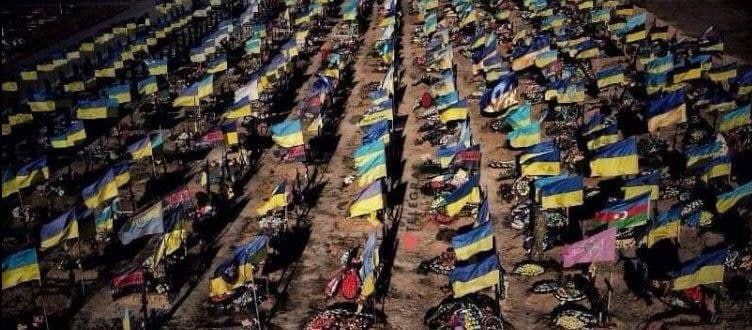
The Kharkov offensive worked because Ukraine punched through very thinly defended Russian lines. The Russians faced serious manpower issues in the summer, because up to 50,000 of their contract troops refused to re-up and went home – as was their right. Those manpower problems are now well on their way to being resolved.
The reality is that every single time the Ukrainians have encountered fully-staffed and well-entrenched Russian positions, held by professional Russian and Allied soldiers, they have been BEATEN BADLY.
The Achilles heel of this strategy is manpower. Ukraine started the war with 43 million citizens and 5 million military-aged males, but according to the U.N., 14.3 million Ukrainians have fled the war, and a further 9 million are in Crimea or other Russian-occupied territories. This means Ukraine is down to about 20 to 27 million people. At this ratio, it has less than 3 million draftable men. A million have been drafted already, and many of the rest are either not physically fit to serve or occupy a vital position in the nation’s economy. In short, Ukraine might be running out of men, in my view.
Ukraine IS running out of men. That is a fact, not a view. The Ukrainian population is almost certainly under 20 million by now, and large segments of that population are not suitable for military call-up. In fact, Ukraine’s available manpower pool has shrunken to such a degree that Russians are now reporting teenagers, women, and old men being sent with very little training to die in the front lines.
The Russian Asskickery
The Russian forces are limited by manpower
Not anymore.
but strengthened by massive artillery and equipment stockpiles enabled by a robust military industrial complex.
True.
While there have been numerous reports in Western media that the Russian army is running out of artillery ammunition, so far there’s been no visible slacking of Russian artillery fire on any front. Based on these factors, the Russian side has relied on a traditional firepower-centric war of attrition.
With some very important new developments and key differences. The Russians now fight full-on combined-arms warfare – coordinating between their artillery, aircraft, infantry, armour, and naval forces. They do not do it perfectly – no army does. But they do it well enough to give the Ukrainians and their Western backers absolute fits.
Furthermore, consider the following: the Ukrainians have the full benefit of Western arms, intelligence-sharing, satellite imagery, and the full C4ISR complex that NATO can bring to bear. The Russians can make NO decent-sized movements without them being detected by NATO and passed on to Ukraine.
Yet the Ukrainians are almost completely incapable of doing anything with that information, other than feeding thousands of men into the slaughter-pens of Artyomovsk and Donbass.
The Russians are fighting a real war, combining attrition with manoeuvre – that is why they are now edging around both Artyomovsk and Avdeevka to encircle both areas, cut them off, and destroy their opponents piecemeal.
The goal is to force an unsustainable casualty rate, destroying Ukrainian manpower and equipment, while preserving Russia’s own forces. Territory is not important; its loss is acceptable to preserve combat power.
Which is literally exactly what I’ve been saying for months.
At Kyiv, Kharkiv and Kherson, the Russian army refused to fight under unfavorable conditions and withdrew, accepting the political cost to preserve its forces.
So how does this square with the narrative presented just a few paragraphs earlier about a Russian “defeat” at Queef? Especially in light of the context I presented, which is not open to question? That is literally what actually happened – how LTC Vershinin missed those facts, is quite beyond me.
To execute this strategy, the Russian army relies on firepower, particularly its artillery. Each Russian brigade has three artillery battalions compared to just one in each Western brigade. Paired with correction by massed quantities of UAVs and quadcopters, Russian artillery pulverizes Ukrainian forces before infantry mops up survivors. It is a slow, grinding war, but with a casualty ratio that is significantly in Russia’s favor. Russia couldn’t attack because it lacked the manpower to secure the flanks of advancing troops. Up to now, Russians could only advance in Donbas, where advance did not extend the frontline. Even here the intent was more to draw in Ukrainian forces and destroy them rather than capture the city of Bakhmut. Mobilization has the potential to overcome Russia’s manpower shortages and enable offensive operations, while equipping its forces is possible due to the mobilization of industry. Precision munition production is also up, despite consistent doubt in Western press. Video of strikes by Russian “Lancet 3” loitering kamikaze drones is up up by 1,000% since Oct. 13, according to one estimate, indicating a major increase in production.
All true, as far as I know, except for the notion that Russia couldn’t attack. That is false. The Russians DID attack, effectively, and did destroy Ukraine’s army quite thoroughly in the early stages of the war. Throughout the summer, they fought a reconstituted army bolstered heavily by Western aid. Today, Russia is fighting a third iteration of that same army, this time heavily staffed by Western mercenaries and foreigners fighting under Ukrainian flags, plus the full weight of NATO SpecOps operators running rampant all over 404. That does not mean they are not attacking, though.
Colonel Rasputitsa and General Winter
If the Ukrainians decide to launch a major offensive, they could do so in two places, in my view. The first is in the north, in the Kharkiv region, but limited crossing over the Oskil River generates the same logistical challenges the Russians faced at Kherson. The second is in the south, to cut off the Russian land bridge to Crimea, eventually capturing the peninsula. This is unlikely to succeed. The Ukrainian army would be attacking in terrain ideal for Russian artillery. It could become a repeat of the battle at Kherson, but without Russian logistics difficulties, stemming from a limited number of crossings over the Dnipro River, with just as little gain and the same heavy losses marked by whole mechanized companies wiped out, endless scenes of ambulance convoys and new cemeteries all over Ukraine. The levels of attrition would play right into Russian hands. The political pressure on the Ukrainian government to justify the losses taken from Russian artillery in Donbas by retaking territory elsewhere, as well as the pressure from the Western coalition, may drive Ukraine to attack regardless.
In my personal view – and I could easily be wrong, since the Banderite General Staff seem determined to slaughter their own people – there will not be a Ukrainian offensive this winter. They do not have the logistical capabilities. Ukraine’s economy is near collapse – it is only being held up by American money, while industrial output has plummeted by up to 70%, based on some of the reports I’ve seen.
Moreover, Russian forces have heavily entrenched in Zaporozh’ye, preventing anything short of a massive armoured and coordinated punch to Melitopol’. That is not going to happen now. Even Zaluzhnyi himself admits this – in his interview, he said he wanted 300 tanks, 600 IFVs, and 500 howitzers. No army in Europe has that much equipment to give. All of NATO does not have that much to give without catastrophically weakening itself. It is an impossible wish list that will never come to be.
For the Russian leadership the question is: When and where to attack? The timing depends on Russian artillery ammunition stocks.
Here, for perhaps the first time in the entire article, we have something interesting to talk about. Note what the Neo-Tsar himself said about ammunition stocks in Russia:
As he says, Russia is using up ammunition at a high rate. If they are using 40-50K artillery rounds per day, that means they are consuming 1.2-1.5M rounds per month. The entire Western MIC is barely capable of producing 1.5M rounds A YEAR, GLOBALLY. The Russians, by contrast, appear to be able to produce up to a million rounds every MONTH – though I suspect that’s probably a big stretch for them at the moment. Yet, they are continuing to expand production.
Even The New York F***ing Slimes admitted recently that, in its latest spate of missile attacks on Ukrainian infrastructure objects, the Russians used missiles of very recent manufacture, which means the Russians are in no danger of running out of missiles anytime soon. They can make and move their own ordnance with few issues, on a scale the West cannot match.
So, basically, the ability to arm and feed their troops, does not appear to be an issue to the Russians – and actually, you should see what the Russians issue to their troops as “dry rations”, the day-packs are quite amazing.
Ukraine is going to run out of cannon fodder long before Russia runs out of shells to turn them into bloody bits of mangled meat and charred bone.
If they are high, Russia may attack in winter, otherwise it may stockpile and attack in spring after the mud season. Timing is also driven by the training requirements for the mobilized reservists. Longer training increases the effectiveness of the reservists and reduces casualties, thus lowering political risk for the Kremlin.
The Russians are going to attack, for sure. It is a question of when, not if. I do not know the answer to that question – nor, I wager, does anyone else beyond the Russian General Staff.
Ultimately, the pressures that the Russian leadership views as most important will decide the outcome. Will the pressure from domestic politics for a quick victory win out, or will military considerations favor delaying until the end of spring mud season in March/April? So far, the Kremlin has gone with military considerations ahead of political ones, suggesting that Russia will launch only a limited offensive this winter.
The domestic mood in Russia is even more hard-line than that in the Kremlin. The majority of Russians understand full well they are now fighting an existential war against the entire combined West. They do not want Ukraine defeated – they want it SMASHED, and they want NATO DESTROYED. THAT is the reality on the ground in Russia, except among the 10-15% of the population that is still the “liberal intelligentsia” – for whom the rest of the population has unreserved scorn, by the way.
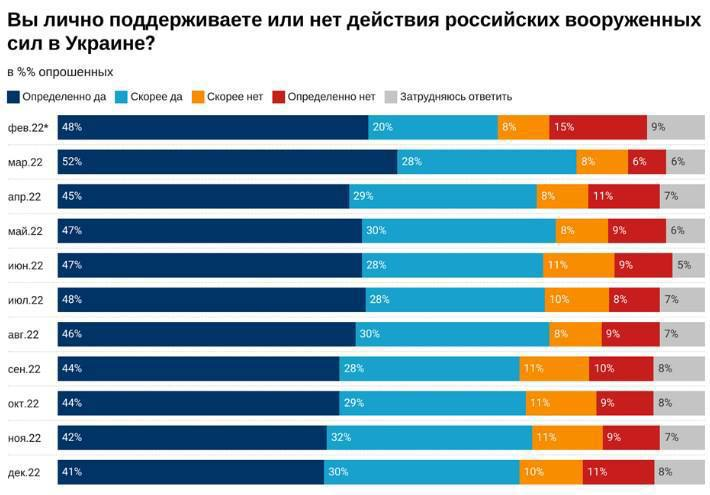
In fact, Putin is the only major restraining force on the hardliners in his own government. If they had their way, Russia would have already stomped through Ukraine, wiped out its civilian infrastructure, destroyed its economy, and unleashed Hell itself upon NATO.
Thank God Putin is in charge.
Location is another factor. The Kharkiv front is heavily wooded, restricting the effectiveness of firepower, and it is strategically meaningless without attacking the city of Kharkiv. This major urban center would take months to capture at very high cost. A limited attack to regain the Oskil River line would improve Russia’s defensive line but present no strategic gain. In Donbas, the Russian army is already maintaining pressure. Extra manpower and artillery units won’t speed up that offensive much. For the Russian army, the Zaporizhzhia front holds the most promise. The Pologi-Gulai Polie-Pokrovskoye railroad is ideally placed to supply a Russian offensive driving north from Pologi. Eventually capturing Pavlograd would allow the capture of Donbas by cutting off two main railroads and highways supplying the Ukrainian army in Donbas and attacking the Ukrainian army there from the rear. The open terrain is ideal for the Russian firepower-centric strategy, and a chance to draw in and destroy the last of the Ukrainian operational reserves and further attrite its manpower is directly in line with Russian objectives. Lastly, the hard frozen ground would make new defensive positions hard to dig without heavy equipment. The limited attack vicinity of Ugledar could be a shaping operation to secure the eastern flank of the future offensive.
See what I wrote above about the SMO’s objectives. The core objective right now is to secure the Donbass region. Once that is done… who knows??? My guess – and that is all it is – is that the Russian army will then turn to sweeping the Ukrainians back to the Dnieper, and then will turn to securing Zaporozh’ye, retaking Kherson City, and moving on to Nikolaev and Odessa, thereby locking up the entirety of the Black Sea and turning Ukraine into the landlocked shithole it so thoroughly deserves to be at this point.
But that’s just what I think. I really have no clue what Russia will do after winning in the Donbass.
Final Remarks
Wars of attrition are won through careful husbandry of one’s own resources while destroying the enemy’s. Russia entered the war with vast materiel superiority and a greater industrial base to sustain and replace losses. They have carefully preserved their resources, withdrawing every time the tactical situation turned against them. Ukraine started the war with a smaller resource pool and relied on the Western coalition to sustain its war effort. This dependency pressured Ukraine into a series of tactically successful offensives, which consumed strategic resources that Ukraine will struggle to replace in full, in my view. The real question isn’t whether Ukraine can regain all its territory, but whether it can inflict sufficient losses on Russian mobilized reservists to undermine Russia’s domestic unity, forcing it to the negotiation table on Ukrainian terms, or will Russian’ attrition strategy work to annex an even larger portion of Ukraine.
Finally, some good sense from the article. This is all true and correct. Russia is destroying and wiping out not only Ukraine, but NATO – and doing so quite effectively, might I add. Italy, France, and Germany have all signalled they are tapped out and can no longer supply serious military aid. Only the USSA and its pet poodle, the UK, want to continue supplying heavy weapons, training, and materiel to the Banderites. Everyone else is saying, no mas!
The fundamental question of this whole exercise, though, remains:
Why do people make the mistake of thinking the Ukrainians are engaged in manoeuvre warfare? More importantly and generally, why, if manoeuvre warfare is effective – and it is – are the Russians able to nullify and blunt it so well?
Enter the MOSSMOUSE
To answer these questions, we must turn to another actual military expert – another bird-colonel, also from the US Army, also retired, and also known for writing extensively on the subject of war.
That would be LTC Tom Kratman (USArmy-Ret), who has been very critical of manoeuvre-warfare theory as elaborated upon by its more theoretical proponents. Some years ago, in a piece titled “Indirectly Mistaken Decision Cycles“, he argued that many of the examples used to illustrate the supposed effectiveness of pure manoeuvre or 3GW warfare, are actually not good examples at all. Furthermore, he argued that a number of other factors affect the outcome of battles, and manoeuvre is only one of them.
With respect to attrition warfare, in particular, LTC Kratman had this to say:
Speaking of attrition— eventually— the US Armed Forces, and most of our allies, recognize nine Principles of War: Mass, Objective, Security, Surprise, Maneuver, Offensive, Unity of Effort (aka Unity of Command), Simplicity, and Economy of Force. I think there are at least three more: Attrition, Annihilation (which is a Russian Principle of War), and Geometry (or Shape).
This can be summed up with the rather unwieldy acronym, MOSSMOUSE – or MOSSMOUSEAAG, if you want to be pedantic. And now, when you apply this exact acronym to the way the SMO has gone so far, you begin to understand exactly why the Russians have been successful. They have applied most (not all) of these Principles of War – whereas the Ukrainians have been unable to apply more than one or two.
The Russians did not have Mass (numbers) at the beginning of the SMO – but they do now. They did, and do, have clear Objectives, as well as very good to excellent operational Security (though their air defence is not perfect – no such defence is). They also had Manoeuvre – the pinning efforts they used in northern Ukraine in the early stages of the war were classic manoeuvre warfare.
But they also made some serious mistakes. They did NOT have Unity of command – the Russians had at least four different distinct commanders, one in charge of each sector of the war. They have fixed this, by appointing “General Electric” – that is, Gen. Sergei Surovikin, whose understanding of the art of war appears to be profound, and whose ruthlessness with respect to the enemy, combined with his insistence on preserving Russian fighting power, has led to the destruction of Ukrainian infrastructure and the grinding, brutal, horrific, but slow offensive in Artyomovsk.
Nor did the Russians have Simplicity on their side. They are fighting a complex, multi-dimensional war against all of NATO, not just against Ukraine. They know it, what’s more. That doesn’t make the war any easier.
They DO have Economy of force – the entire SMO, up until about October, was exactly such a mission. And they do have Annihilation – this is classic Russian doctrine, it is deeply embedded into their military tradition.
In other words, the Russians are fighting using sound Principles of War, with many different tools and techniques, in a multi-dimensional way, adapting their style of war where necessary and according to the dictates of the situation and battlefield. The Ukrainians have only one basic approach – throw bodies at the problem and hope the enemy runs out of bullets, and if that doesn’t work, then burrow into cities and use civilians and buildings as shields.
Unsurprisingly, only one of these players is actually effective at destroying an enemy army.
The Russians fight along very Clausewitzian lines, as I have stated for months. They believe strongly is using military power to achieve political objectives – and they believe that the best way to achieve political objectives, is to annihilate the enemy’s army and ability to resist. That is why they do not care about territory, much, and prefer to destroy the enemy army over taking and holding ground.
Conclusion – Losing Battles to Lose a War
This, then, is the reality of the 404 War:
The Russians are winning. The Ukrainians are losing. They are dying by the thousands for a proxy war that NATO wants to fight to bleed Russia dry – but that too is failing. Russia is now united in a singular purpose. Its military-industrial complex is spinning up, and its vast industrial capabilities have now been unleashed.
It is NATO, not Russia, that is being bled white. It is NATO, not Russia, whose weapons are failing on the battlefield. And it is NATO, not Russia, which will emerge from all of this greatly weakened, perhaps terminally so.
The fact is that Russia now controls territories that contributed something like 80% of Ukraine’s pre-SMO GDP. Ukraine’s industrial production has absolutely cratered, its power output has collapsed by over 50%, and its population has shrunk by at least HALF in just a single generation (based on the data from the last census taken all the way back in 2004).
What is left of Ukraine, is not worth the effort NATO is putting into it.
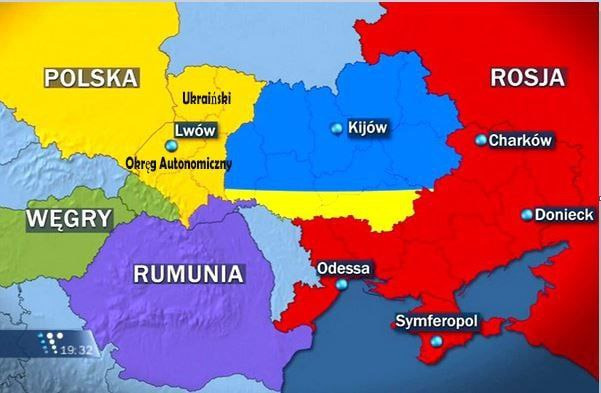
The result of this war will be a broken, beaten, physically annihilated 404, land-locked and basically worthless. I expect the Poles, Hungarians, and Romanians will eventually take back their own historical territories, nibbling away at what is left of Banderastan west of the Dnieper, while Russian locks up the Black Sea and extends its Tauridian region all the way to Transnistria on the Moldovan border.
I am confident, therefore, in predicting that this war will end with a conclusive Western defeat, and a greatly strengthened and energised Russia. But this is merely the opening phase of a much wider war between the Empire of Lies, based primarily in the Godless and broken Western world, and a broad coalition of nations, some of which are Christian, but all of which reject the evil GloboHomoPaedo ideology the West peddles.









2 Comments
I think your assessment of a comprehensive victory for the Russian Federation is correct, but I don’t think it will be swift. Not because the RF lacks the resources to achieve it (they could overrun Western Ukraine and most of Europe in a few weeks), but because a swift victory could lose them the war. The USSA is the real enemy the RF is fighting. All the other compatants are just proxies. The RF may be able to defeat NATO on the European continent but that leaves the USSA with the option it’s always used since Korea – declare victory and go home. Unless the USSA can be dragged, bloodied, broken and bleeding to the negotiating table, to accept or negotiate peace terms, the war will not be over. The RF lacks the resources to invade the USSA so the most practical option, given the disparity in industrial might and the fact that the USSA is a ‘sea-power’ and the RF isn’t, would be to prolong the war and ‘bleed the enemy white’ and trigger an economic collapse.
Oh I agree entirely, it will not be a swift victory. Nor do the Russians actually WANT a swift victory, at least, not at the top leadership level. The reason why is straightforward – the Russians recognise that attrition and annihilation are their strengths, and they understand that wearing down the USSA is to their great advantage. They know the USSA lacks strategic depth, whereas Russia can escalate at its leisure. This grinding approach to war suits Russia very well, not least because the Russian leadership – if not necessarily the people – are highly sensitive to casualties.