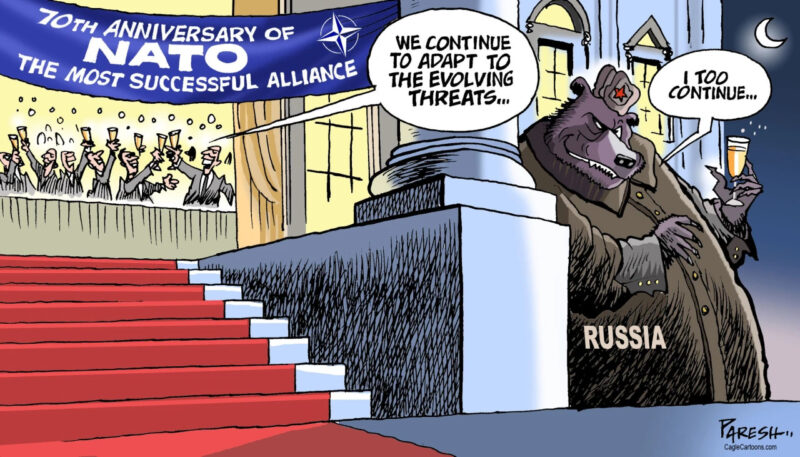
I am very pleased to present another guest post by our good friend, Dawn Pine, who wrote in with a translation of an article appearing in Israeli media by a chap named Nitsan Saddan. The article talks extensively about the Russian use of missiles in the Special Military Operation in Ukraine. Both TMB and I have some thoughts to add to this, which we do down below, respectively. My thanks as always to our friend for his sterling contributions to the site.
Russia’s missiles are failing in Ukraine; Why is it bad news?
Introduction
Forget everything you knew about Russian technology: Even Putin’s most advanced and costly weapon misses, disintegrates – and runs out with no option to rebuild. Where did that Russian missile crisis came from, how did it become a political threat, and will it end or escalate the war?
Article body
Hello, this is your Captain speaking [TMB – the article is part of a column named “The Captain”, it is about aerospace issues – planes mostly]; The Ukraine war keeps on confusing intelligence specialists, since its beginning. What should have been a “hit and run” to subdue Ukraine and annex lands in the east, became a meat grinder devouring multitude of Russian troops. The failure and preservation of lands led Putin’s army to do weird stuff. For example, they have been firing anti-aircraft missiles at buildings for 2 months now.
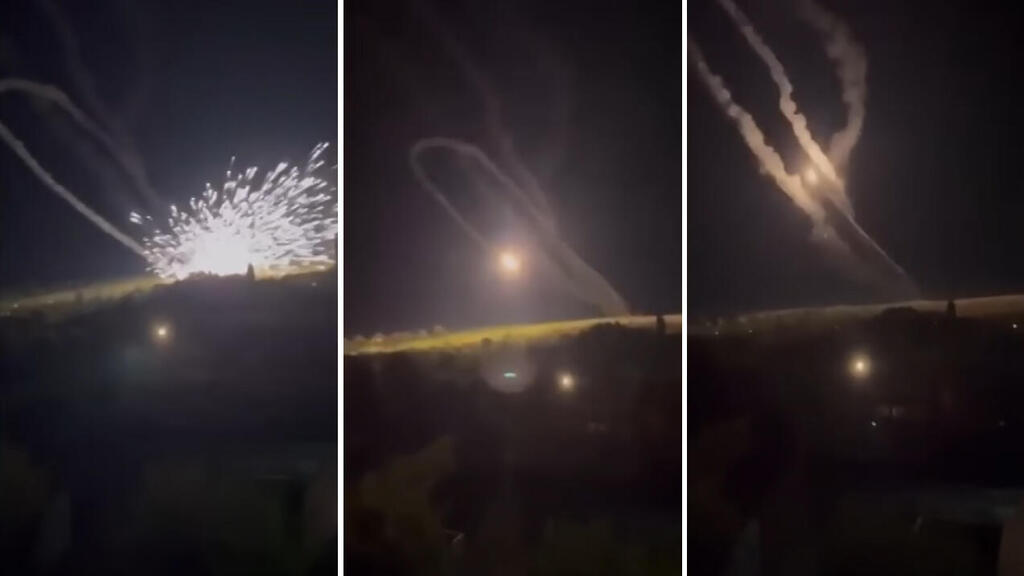
It’s not only weird, but ineffective: Advanced S300 batteries fire more and more missiles on Ukrainian cities – and though they lethal to aircrafts, they keep missing the buildings. What goes up must come down – So instead of hitting power plants and quality targets, they light up the neighborhoods.
What’s up with Russia? Are they running out of cruise missiles and accurate armaments? Or maybe is something wrong with them? The answer is YES on both accounts: Using AA (Anti-Aircraft) is a symptom of a very worrying problem, an unexpected missile crisis.
It’s that bad, that it is rocking Russian politics, Russian deterrence, change what we know about the Russian strength – and may even mark the end of the war. Today we discuss this crisis, and learn a thing or two about precision missiles.
Yes, missile precision is the Alpha and Omega of this story: The ability to remotely target enemy infrastructure replaces the need to send tens of thousands of troops deep into enemy territory – thus preventing the war from becoming long, expensive and bloody in a level jeopardizing the government who started it. One cannot win big wars today without long range precision missiles.
How accurate is enough? Weapon precision is measured in CEP- Circular Error Probable. In other words, what are the odds of hitting one target with one missile. It is a circle around the target in which at least 50% of the weapon will hit for sure.
Example – WW2 bombers drop bombs with CEP of more than 300 meters, while the US cruise missile Tomahawk has a CEP of ~10 meters. No wonder that in 1991, the US was able to shatter Saddam Hussain’s Iraqi war machine long before any American boot had Bagdad dirt on it. Precision weapon really simplifies and shortens wars.
Russia knew it well, and never imagined it has a missile accuracy issue; for years they developed and enhanced cruise missiles and other precision weapons to hit the mark and make life easier.
At first it was meant to carry nukes or destroy ships, later they developed precision armament for land infrastructure – and they brought the top to the Ukraine war: The fist at the end of Putin’s long arm, assembling 3 groups of precision missiles.
The first are the cruise missiles launched from heavy bombers, starting with the KH101. It is a stealth missile the size of a large van, deploying wings upon launch and lights a jet engine to speed at 900 Km/h. It can fly up to 4000 Km, while maneuvering in valleys – then going up near the target for final identification and planting a lethal 400 Kg of explosives.
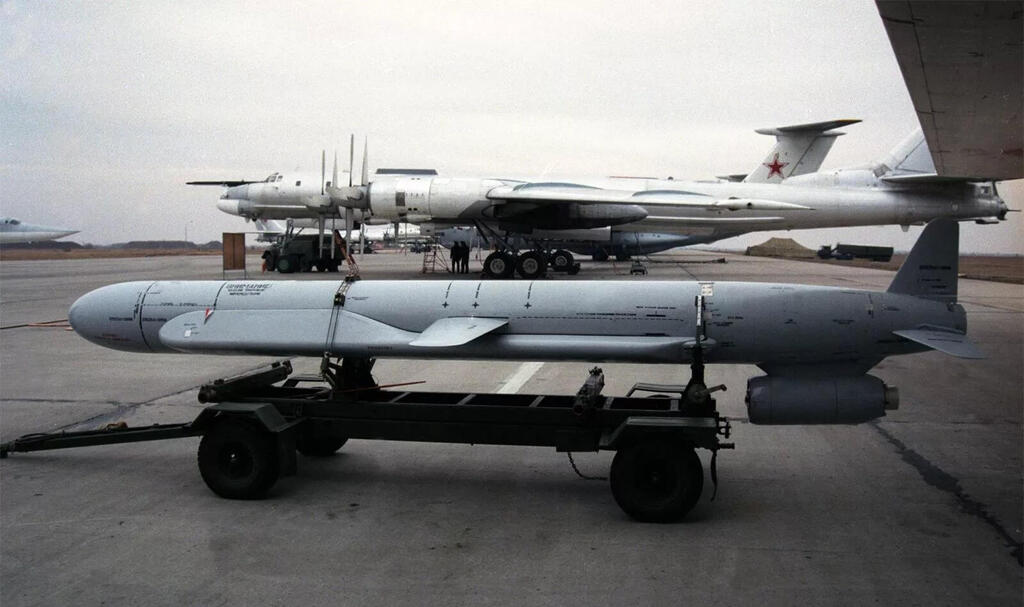
Guidance includes satellite navigation, radar mapping of the terrain and a smart camera for the final stage. According to Russia, its CEP is 10 meters. All that sophistication comes at a dear price: US$13M per single missile.
The second family are cruise missiles launched from marine vessels – boats and submarines, headed by the 3M54 Kalibr. This is another big missile that can reach the range of over 2000Km. It flies low, navigating with a complex inertial system that calculates variances based on acceleration and movement.
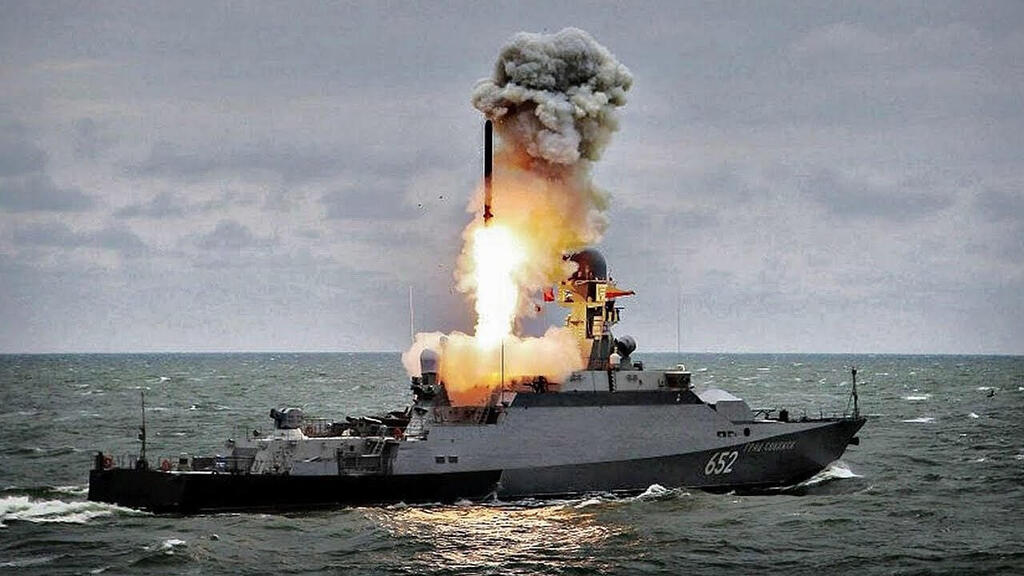
The system also scans the terrain and activates radar near the target. All that fancy stuff provides CEP of 20-50 meter. That doesn’t sound accurate, but good enough when one needs to hit large targets such as fuel refinery, power plant or army base. It’s one heck of fancy piece at 6.5M$ a piece.
The third family is very familiar here in Israel: The ground to ground missiles. The first Gulf war saw Scud missiles falling everywhere in Israel – The grandfather of the clan, and his grandkids are highly accurate. Starting with the 9K720 Iskander that has a CEP of 5 meters and a range of 500 Km.
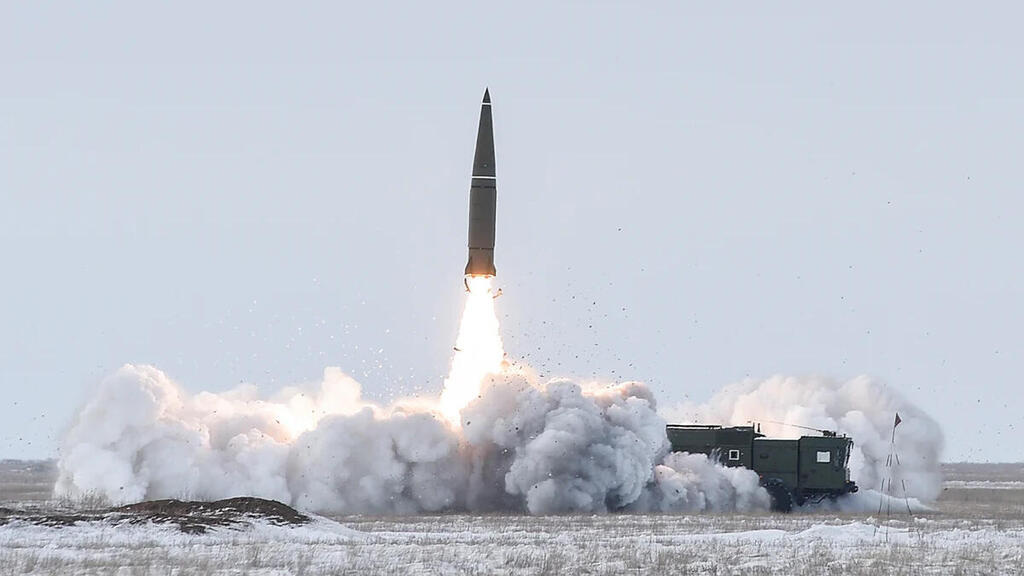
It is a ballistic missile and not a cruise one – it flies an arch trajectory and path corrections are done only on its way down. It hits in a massive kinetic impact that can crush bunkers with a payload of 700 Kg of explosives.
At a price of US$3M a piece, it is considerably cheaper compared to the cruise missiles – which enables a more extensive shooting. When Russia announced it in 2006, it was defined as the worlds’ most accurate missile of its kind. Moreover, all the analysts and experts around the world thought of it as a highly lethal weapon.
What good are they in the field? At the start of the war, Kh-101 were launched in dozens on Ukrainian infrastructure and most of them hit. Later the screw up became epic: in 25% of the launches they just don’t – for instance it didn’t deploy the wings and fell down like a bird having a heart attack. [It is important to note and understand that the Kh-101 is a subsonic air-launched cruise missile, while the Iskander is a surface-launched ballistic missile that hits at up to hypersonic speeds. As such, I have no idea why the author is attributing failures of Iskanders to Kh-101s – Didact]
Sometimes the launch is good, jet engine fires but the stumble along the way, get lost, miss a turn and plant themselves in a field. In other instances they reach near the target, but something breaks up only to miss the target by 100 meters and more. And the weirdest? Performance anxiety: the missile hits the mark, but doesn’t go boom.
The marine Kalibr missiles fail more often: they fall at sea, or flunk the final approach.
The best is saved for last. The Iskander land missile launches great, flies well and mostly hits the mark, but just doesn’t go boom and has an extremely high unexploded percentage.
Those sophisticated missiles are not alone: standard laser guided bombs lose their lock, anti-radar missiles miss or go for the wrong antenna – everyone fucks up just the same as the best of the catalogue.
Even if Putin’s’ accurate missiles would have delivered what the engineers, Ukraine defense became good at catching them: Cruise missiles fly low, and in a flat terrain such as the Ukraine they are easily spotted.
Soldiers learned to spot and report them to the regional network, which alerts warriors carrying shoulder-fired missiles. That is how a lot of KH101 were shot down before getting to town.
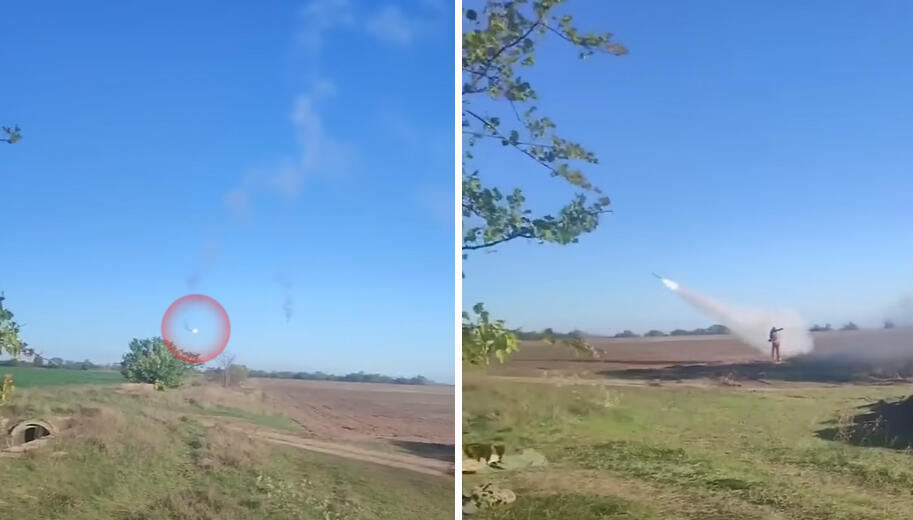
The marine cruise missiles are also vulnerable to shoulder-fired missiles, and are very easy to kill: The Ukrainians just follow the ships and see the launch as it happens, so there is a very long time to track, lock and launch counter missiles.
The Ukrainians claim to kill 50-100% of all Caliber rounds [TMB – questionable numbers, but still there is a good chance that a high number was killed] – so Russia had to launch much more rounds to increase the chance of one of them hitting the marks. How did it happen that Russia’s missiles fail like that?
Reason one is that it was never tested in real war. Russia exaggerated its missiles abilities, but actually operated them under a very controlled environment: For example, in Syria it launched cruise missiles on ISIS to impress Assad in investment and technological superiority.
Those cruise missiles were never operated against an army fighting back, or even tested in scenarios simulating it. You know, the kind of enemy that can assess missiles trajectory and launch points, identifying and killing them on the way. The Russians were sure as hell surprised when Caliber missiles were knocked out in the air before reaching the shore.
The second reason is that the logistic envelope was never tested in battle: the operational load flows from the front to the back, so more mistakes are made in preparation, handling fuses and engines when tech teams are under pressure.
But if those two reasons are considered “own screw-up” the third takes the cake: Apparently Russian accuracy is not that accurate. The missiles weren’t developed right, were not built right and don’t get the job done – and no one knew about it.
Current analysis indicate the writing was on the wall. Take the Iskandar, the most accurate missile on Putin’s team: February 2021 saw Armenia complaining about the Iskandars it purchased especially accuracy and fallouts. Armenia claimed only 10% of the launches were able to destroy the targets, what makes the missile highly unreliable.
The Armenians aren’t just talking their asses off: The missile were operated against Azerbaijan at Nagorno Karabakh County, an actual armed conflict.
After a short while Armenia went back on its claims, estimated due to massive Russian pressure. Weapon deals create inter-state dependence thus playing a critical role in international relations. Russia would not have anyone badmouthing its missile, even if it is true.
Ukraine war broke the rules: This time it was Russia operating its most advanced weapons, and it can’t silence itself. The equipment wasn’t accurate enough, wasn’t quality enough – and that bothers every nation which already bought advanced Russian weapon.
But missile quality is only the first half of the Russian missile crisis. The second half blows into godzilic proportions: When the war started at February of 2022, Putin and all his generals were sure that it’s a matter of a month, month and a half tops.
As of this article [TMB – was published on December 10] it has been going on for over 9 months, and no end in sight. During that period Russia fired 9 fold more missiles to discover their lack of accuracy – which created the rational that “if one of five hits – let’s fire five”.
And they are running out of missiles: We are unsure what the actual reserves are, but the reality in the field shows that they are. Example, late June, a missile hit a mall at Kremenchuk and 16 civilians died.
The impact documentation shows it was an anti-marine KH22 missile, which became operational in 1962; near the target it activates a radar to pinpoint the ship it needs to blow up, and so it went for the mall metallic roof. Russian army won’t fire hose things unless it had the right available armament.
Also, Russia can’t just manufacture new accurate missiles: For years it has based itself on chips bought in the west to build the advanced guidance systems.
Since the invasion there are sanctions blocking access to those parts. Russian inventory almost ran out; currently the rate of manufacturing KH101 is 2 a month, so it has to procure precision missiles abroad.
The most famous supplier is Iran; the Islamic republic excels in developing cheap and effective weapon systems. There are also field proven: Every Shiite terrorist organizations are getting those systems, which are operated against advanced armies such as Saudi Arabia and Israel.
Iran did not open the warehouses for Putin; the advanced missiles are being manufactured, meaning it will take time till they reach the field and impact.
This is why anti-aircraft missiles are launched at buildings: S-300 inventory is estimated at 8000 missiles, and it is possible to use them as ground to ground for 400 Km. Accuracy is horrible at CEP of over 100 meters – so the targets are not hit or destroyed.
All of this sounds like good news for Ukraine, right? If those “precision missiles” aren’t accurate, there are proven methods to hunt, track and kill them mid-air and Putin is out of inventory – the war might shift to lower gear, won’t it?
Sadly – NO. The S-300 horrible accuracy just makes the Russians fire more of them. Technology won’t work? Statistics to the rescue. That explains why most missiles fall in neighborhoods near the power plants and facilities in the bitten Ukrainian cities, killing people literally every day.
The S-300 cannot be hunted down with what Ukraine has: They were meant to get long range aircrafts, flying at a whopping 8000 Km/h. That is not a viable speed for shoulder-fired missiles, and even western anti-aircraft such as NASMAS can’t do it.
So the Russian missile crisis is hurting everyone globally: Russia can’t advance their war, because the missiles lied on their CV. Russian customers don’t know whether to advance ongoing deals or look for a supplier that actually tested the equipment. And the poor Ukrainians keep on dyeing in an unnecessary war , the kind that precision armament would have shorten, made more efficient and less lethal.
There is light at the end of the tunnel: Russian missile’s embarrassing performance may freeze or even abort international weapons’ deals. Russia depends on those deals, not just for influence and politics: in the years 2017-2021 it produced 18.6% of the global weapons, ammunition and military equipment globally – we’re talking serious cash here.
The numbers are troubling. Russia is only second to the US in military export, but is going down, not to say spiraling down; estimates are that the sum of 2022 weapon deals will be 10.8B$, a soaring 26% decline from 2021 and 40% compared with 2020.
It has loads of big clients – for example India, Egypt and in China 80% of the military procurement comes from Russia. Those nations are not in war as of now, and can’t just up their budget. Now they are in position to back from weapon deals with Russia, or make it on their own terms. Those moves may weaken Russia internationally, but mostly will hurt financially more than any sanction. Then maybe Putin will wake up and give up the unnecessary war.
Have a safe flight!
The Male Brain Comments
The writer is obviously anti-Russian, but that doesn’t mean we can’t learn a lot from the article. The analysis is spot on technically but not from an international perspective.
Wars are not won with only precision weapon, as Israel learned in the last 20 years. You need a foot on the ground. One thing I will give the writer – the international arena is becoming very complex and Russia as a player is not winning in the military export part.
We are also missing the Ukraine part – they also fired missiles (even at Poland).
Didact’s War College

Before I continue, I would like to thank our good friend again for his contributions here. As he rightly pointed out in his note when he sent this over, the Banderastan War between Russia on one side, and the 404th UkReich and the Empire of Lies on the other, is of intense personal interest to me. The contents of this post correlate directly with my own interests in some of the tactical and technological developments we have seen here.
I also want to make it very clear that what follows is my dissection of the original writer’s ideas and arguments. It is not a reflection of my opinion of the sender, or of the writer himself (well, unless otherwise stated, in the latter’s case).
The overriding lesson I take away from this article is that it is remarkable to me how people can look at the exact same set of facts and come to diametrically opposite conclusions and interpretations of the same data.
I am especially astonished by the fact that Israeli writers and bloggers keep repeating the same mistakes as their Western counterparts. I have always had a high opinion of the competence and skill of Israeli intelligence services – not so much their motives, see e.g. the attack on the USS Liberty and its subsequent cover-up – but articles like this make me wonder what the hell Israeli journalists and bloggers are smoking when they write things like this.
I can easily run through every single thing the writer put down, and dismantle it, based on everything that I have seen and cross-posted on my Telegram channel over the past 9 months. It is clear to me that the original writer, Mr. Saddan, only pays attention to purely Western sources – whereas I am able to look at both Western and Russian sources and look at two different but largely overlapping sets of data.
Let us start with the vast number of factual errors in this article, clearly coming from a strongly anti-Russian bias:
“Vast Russian Casualties”
This is the single biggest lie of the entire war. Western (((media))))))))) sources insist the Russians have lost close to 100,000 men in the fighting. There is ABSOLUTELY ZERO EVIDENCE coming out of Russia of anything like this scale of casualties.
People think Russia is some sort of totalitarian dictatorship where information is heavily censored and the media has to toe the government line. This is absolutely untrue. I know for a fact, having lived there and having maintained close contacts with Russians living in Moscow today, that the Russian people are easily able to get information from the Western world, should they so choose, and are unusually well informed about the situation in the wider world.
This freedom of information also carries over into Russian social media. And nowhere on the RuNet – whether on Telegram, VKontakte, Odnoklassniki, or even Western platforms like WhatsApp and Instagram – is there any real evidence of tens of thousands of Russian casualties.
Back in early September, Sergei Shoigu, the Russian Defence Minister, claimed that Russia had suffered close to 6,000 dead up to that point. This ONLY counts Russian Army fighters – it DOES NOT count the dead from the LDNR militias, the Rosgvardiya organisation, or the Wagner ORKestra (i.e. the private military contractors who are now essentially an army-for-hire). That number was subsequently basically confirmed by an independent BBC investigation that looked at open-source intelligence coming out of Russia about burials of military personnel across the RF.
The LDNR militias suffered quite high casualties early on in the war – I estimate around 10,000 or so – due to the fact that they are not professional military and did not, until recently, have top-line equipment. Likewise, the Rosgvardiya and Wagner troops also took their fair share of casualties. So the total number of Allied dead is probably around 20,000.
That is a high price to pay, to be sure. But it was borne disproportionately by the LDNR militias, not the Russian Army. And it is nowhere close to the number of Ukrainian dead – which, as far as I can tell, is easily 120,000 by this point. This can be corroborated by the hideous videos that I keep seeing of jam-packed Ukrainian cemeteries full of fresh graves, with hundreds and sometimes thousands of men buried in one place at one time.
The truth of this war is the Russians have been fighting most of it with a 3:1 numerical inferiority – and have been dishing out between 6 and 10 dead for every one of their own. These force ratios spell disaster – for Ukraine, not Russia.
Russians Don’t Use S-300s Against Ground Targets
This is one of the dumbest tropes to come out of the war. The Russians simply do not waste air-to-air missiles firing on ground targets. It is an idiotic assertion with zero proof. Moreover, Russian air defences no longer use the S-300 – they have long since switched over to the upgraded, uprated, far more effective S-400 and even in some cases S-500 standard, the latter of which is now being rolled out across the Russian Armed Forces.
For the Umpteenth Time, Russia is Not Running Out of Missiles
This trope is becoming incredibly tiresome. Russia demonstrated just today that it is fully capable of launching massive salvos of precision-guided missiles (PGMs) – they launched 72 against various infrastructure objects in Ukraine, and contrary to Banderite claims, they were highly successful in neutralising their chosen targets.
The hohols claim the Russians fired 72 missiles and their own air defence means shot down 60 of them. Yet, at least 15 different locations within Ukraine are now without power, light, heat, and running water – more than that, actually. So clearly, either the Russians have invented some bizarre new kind of Mexican Jumping Bomb, or they are rather a lot better at ploinking targets within 404 – Country Not Found than the Banderites are willing to let on.
My bet is on the latter.
Furthermore, The New York F***ing Slimes, which is staffed by whores and scum who thoroughly deserve hanging and/or impalement (not necessarily in that order), nevertheless managed to tell the truth for once when they admitted a couple of weeks ago that the Russians are firing off missiles at Ukraine that were manufactured in October. So, clearly, the Russians have an ability to crank these things out that the West never understood or anticipated.
Very few people who have not lived in or travelled through Russia, actually understand just how VAST the country’s manufacturing capacity is. Nor do they understand how Russians prepare for wars. They never adapted to “just-in-time” and “Kanban” methods of manufacturing, the way the Western MIC did. They have retained the Soviet-era mindset of keeping huge amounts of slack and excess capacity in their economy, which they can gradually switch back on and begin churning out staggering quantities of munitions.
Today, the only country on Earth that can outproduce Russia in military hardware, is China – the world’s undisputed manufacturing superpower. To argue that Russia is running out of missiles and ammunition, therefore, betrays a fundamental and extremely foolish ignorance of the true size and power of Russia’s economy.
Russian Missiles are Inaccurate and/or Fail Really Often
Where, exactly, is the evidence for this? We have FAR more photographic and video evidence showing Ukrainian S-300 anti-air missiles corkscrewing around and blowing up, or falling down on residential buildings, than we do of Russian ones.
Furthermore, the Kalibr IS NOT a purely naval missile, though it can be launched from naval platforms – it is a cruise missile that can be launched from aircraft, ground-based launchers, or ships. It is the Russian subsonic equivalent of the American Tomahawk – but, unlike the Tomahawk, is rather more up-to-date.
The reality is the Russians have an array of missile designs that is superior to that of the West. They have subsonic munitions such as the Kalibr, high supersonic ship-launched missiles like the P-800 Oniks, bridge- and carrier-killers like the monstrous Kh-22 (a 12m-long terror-beast), and hypersonic air-launched missiles like the Kh-47M2 Kindzhal (deployed to devastating effect in Yavorov in western Ukraine earlier in the war) and the 3M22 Tsirkon ship-launched missile, which has been successfully test-fired against moving targets and can kill American aircraft carriers. Many, if not most, of these weapons systems have been used and tested in the Banderastan War – and all have proven effective.
Then there is the issue of whether or not Iskander missiles are actually accurate. Here, I cannot speak intelligently, since I have no data one way or another. I leave it to Mikhail Khodarenok, a retired Colonel who worked on the Russian General Staff, to point out the serious problems with this view – it appears to come from the hearsay commentary of Nikol Pashinyan, the Armenian head of state, after his failed attempts to defend Nagorno-Karabakh against Azerbaijan, and seems to have no basis at all in fact. Based on everything I have seen of Pashinyan’s feckless leadership, I am willing to attribute his gripes about Russian weapons to his inability to mount anything like a decent defence against the Turkish-allied Azeris than to actual defects in Russian weaponry.
Let us say for argument’s sake that the writer is correct, and Iskanders are in fact wildly inaccurate and highly unreliable. Does this automatically mean the rest of Russia’s missile arsenal is the same? Assuredly not – the data and evidence are clear to see.
The article also makes a big deal out of the supposed inaccuracy of Russian weapons by bringing up the example of a mall in Kremenchug in which 16 civilians died. I happen to have seen the camera footage from that attack – it was all over Russian and Ukrainian Telegram, and it shows very clearly that the Russian missiles hit the back of that shopping mall, that civilians ignored the air raid warnings, and that the hohols stashed military equipment in civilian areas, which they have done since the very beginning of this war.
The Russians comprehensively destroyed the Ukrainian military back in March. Ever since then, the Ukies have fought like beaten Nazis and terrorists always have – by hiding among civilians, using them in human shields, and using their enemy’s restraint, humanity, and adherence to the Laws of War against them.
Putin Gambled on a Quick Victory
The author proceeds from the assumption that Putin wanted and expected a quick war. I have heard and seen multiple commentators argue that the Russians suffered a MASSIVE intelligence failure when they believed that Ukraine would simply roll over and play dead when Russia surrounded Kiev (*Queef), and that Russia would just walk straight through the country.
To me, this is nonsense. The Russians knew damned well the extent of the fortifications in the Donbass – their troops had been fighting, in an unofficial capacity in many cases, next to the LDNR militias for years, and they knew full well just how formidable the Ukrop defences were. The entire opening gambit of the war was a high-risk, high-reward play that FAILED.
Here is the real story.
Putin wanted to force a quick negotiated settlement to the war. He was under no illusions that the task would be easy. What he did NOT anticipate, because he could not, was the extent to which the West, under daemonic control, would seek to destroy Russia through its Ukrainian proxy. That is when the Special Military Operation turned into a long, grinding, horrendous war of attrition – in which the Russians HAVE SUCCEEDED in destroying the bulk of Ukraine’s army.
Don’t take my word for it. Go lookup General Valeriy Zaluzhnyi‘s interview with the kitty-litter substitute known as The Economist – a neolib-controlled tabloid rag that was once respectable. In it, the Chief Grand Beardy Todger of Ukraine’s Armed Forces basically admits he has only 200,000 fighting men left – out of an original army of over 500,000 if you add up the territorial defence and neo-Nazi militia stormtrooper units. The remainder of his army is untrained and raw reserves. The Ukrainian army essentially ceased to exist within the first two weeks of the war, because it had been effectively decapitated.
This number correlates nearly perfectly with Col. Douglas Macgregor‘s own estimate of roughly 194,000 combat-effective Ukrainian troops in the entire country. Again, keep in mind that, before the war, the entire available manpower pool of the Ukrainian armed forces was well over 500,000.
No army IN HISTORY has ever survived losing 60% of its fighting strength in 10 months. Ukraine’s military will not survive it either.
It was only reconstituted after massive Western rearmament and remilitarisation efforts – and has since been bled dry, losing at least two DIVISIONS‘ worth of men in EACH of the Khreat Khokholite Khounteroffensives in Kharkov and Kherson regions, with very little loss to the Russian side.
Today, the Ukromacht is made up of very badly trained conscripts, either very young or very old, and they are being steadily force-fed into a meat-grinder in Bakhmut and elsewhere along the front lines. Zelebobik the Crackhead feeds them in by hand, and the Russians simply crank the handle. The pictures from the front lines are hideous – the kind that will give the sensitive among you nightmares for weeks.
This is not the picture of a Russian military that is incompetent, badly led, or poorly trained. It is in fact a vision of a highly professional, cohesive, well-trained fighting force that knows the business of war and understands the dirty, nasty, horrible means by which to turn men into bloody piles of charred meat and broken bone.
Concluding Remarks
I could keep going in this vein for another 10,000 words, quite easily, but ain’t nobody got time to read that shit, so let’s cut to the chase here:
- Russia is winning this war, and is winning it decisively;
- Ukraine is running out of resources, men, and time;
- The West has no ability to keep Ukraine supplied with the necessary materiel and resources to permit it to fight back;
- Russia’s missile strikes are highly effective, devastating, and destructive;
- Ukraine’s power system cannot take much more punishment and will collapse if they do not sue for peace
- Crackhead Zelebobik’s time at the top of the 404th UkReich is coming to an end;
- Russia now controls 20% of Ukraine’s territory, containing roughly 70-80% of its GDP – if that is “losing”, I don’t want to know what winning looks like;
- Every single prediction of Russian failure with respect to missile production and manpower has, itself, failed;
Russia has utterly destroyed the most powerful US-friendly military on the European continent. It has done so while utilising barely 20% of its full military power. The West has gutted itself economically and industrially, and is in the process of demilitarising itself, while desperately trying to hold off the Russian advances. They are failing. Russia is succeeding. THAT, my friends, is the true picture on the ground.









1 Comment
The hohols claim the Russians fired 72 missiles and their own air defence means shot down 60 of them. Yet, at least 15 different locations within Ukraine are now without power, light, heat, and running water – more than that, actually.
.
that’s still a significant portion of the fired ordinance either failing outright or getting intercepted. i mean, unless by “more than that” you mean something like 40 power grid targets getting taken out. i would count anything under a 50% success rate as a Russian loss, given the production expense for most of these. you want to use something as an r-strat weapon, the cost needs to be down in the 5 figures.
.
not that the Ukrainians are going to care how ineffective the Russkie weapons are if they’re freezing to death.