Exactly 100 years ago, at 11am on November 11th, 1918, the guns fell silent across the battlefields of Europe as Allied French, British, and American forces coordinated with their Imperial German enemies to end what was, until then, the most terrible war that anyone had ever seen.
Silence fell across the trenches that crisscrossed the fields of the German border territories where the Allies had dug in, tearing up the once-rich and fertile soil with the hideous scars of a war that would ultimately claim upwards of 16.5 million military and civilian lives. Nobody knows anything like the exact number of dead; in the end, men fell like the winter wheat under the weight of the icy blasts of the north wind, and many – far too many – lay where they fell, never to know even the dignity and decency of a proper burial.
Silence fell upon the hellish shell-blasted landscapes of the Argonne province, the main campaign area of the final major offensive of the Grand Army led by Marshall Ferdinand Foch. Where once there had been verdant, lush, green forests full of life and beauty, there was now only a nightmare landscape that looked like the surface of an alien hell-world.
Silence – blessed, deep silence, seemingly a gift from God Himself – fell across the towns and villages situated near the artillery batteries that had been used to such devastating effect on both sides.
The war was over. Not won, not lost, simply… finished.
Looking back a full century hence at the end of the Great War, from the perspective of a generation that has never really had to experience the hell of war directly, one has to ask: what was it all for?
It is not an exaggeration to say that the Great War was the defining conflict of the 20th Century. Even more so than the war that followed it, because WWII was essentially the direct result and the horrible but absolutely necessary and inevitable consequence of the failed peace that came about from its predecessor. Every single aspect of the world as we know it today comes from all that happened in the build-up to the war, during the war itself, and in the aftermath.
It was this war that destroyed, with almost complete and total finality, the old monarchical systems of Europe. That failure was so terrible and so catastrophic that the people of the nations of Europe turned to anyone and anything that could offer them order, sanity, and hope amidst the chaos and the carnage.
It was this war that showed the complete failure of the entire theory of war that had been fashionable throughout European schools of military thought up until that point, and which resulted in a new and far more terrifying method of industrial-scale warfare that fundamentally changed warfare from something which happened “out there”, to a dehumanised and dehumanising game of methodical, industrialised, wholesale slaughter that took place in the towns and cities, among the very people who were supposed to be protected by the armies doing the fighting.
It was this war that wiped out an entire generation of the flower of European youth. Even with the end of the war, rampant disease, starvation, and economic collapse would wrack the continent of Europe for at least the next five years. The survivors were so traumatised by what had happened that, for the next twenty years, they sought accommodation and appeasement of any and all forms of evil, sold out their most treasured and cherished principles and ideals, and happily paid any price, no matter how fearful, to avoid the possibility of a new war.
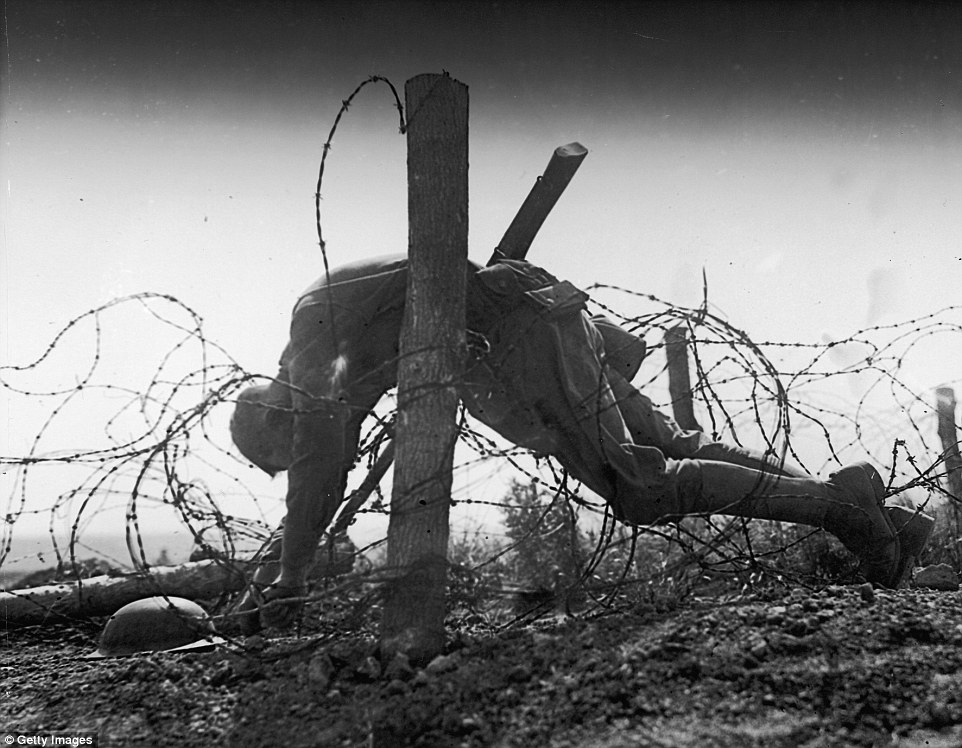
The images of that war live on to this day, one hundred years later. Virtually none of those who fought in that war still live – they have almost all long since gone on to their well-deserved rest, joining their fallen brothers in the halls of Valhalla. But their descendants see images from the war like the one below, and we wonder how it is possible that the world could have gone so askew as to permit such madness.

And yet, for those with any sense or understanding of the events leading up to the war, for quite some time it seemed as though European civilisation had reached the absolute apex of its refinement and culture in the decades leading up to the catastrophes of WWI.
From 1870 to about 1910, the established order of Europe was clear. The Germans, reunified under Prussian control and direction, had soundly beaten their age-old nemesis, the French, avenging their terrible defeat in 1806. Under the leadership of the legendary statesman Otto von Bismarck, the Second German Empire immediately set about creating and cementing a web of diplomatic alliances and treaties designed to isolate France and keep Germany strong through intricate balance-of-power politics.
Agreements were signed with the monarchies of England, Russia, and the Austro-Hungarian Empire. Chancellor Bismarck developed and followed his own personal philosophy of realpolitik, working hard to ensure that Germany would be seen as a good and responsible power on the world stage. He did everything he could to keep Germany out of dangerous entanglements with the smaller and rebellious nations of the Balkans, which late in his life threatened to suck Germany into a terrible crisis.
The years between 1870 and 1910 were forty golden years of peace, prosperity, and plenty for most of the nations of Europe. The notable exception was Russia, which lagged centuries behind its European rivals in terms of technology and military prowess, and discovered this to its own rude and terrible shock during the Russo-Japanese War, in which the core of its navy was destroyed by what was up until that time considered an insignificant power.
Yet the continent of Europe waxed powerful and happy. Life seemed good for the peoples of Europe, and the years of peace seemed endless under the leadership of the wise and powerful kings and elder statesmen who ruled over the various European nations.
Perhaps the best example of the sheer opulence and culture of that lost era could be seen at the funeral of King Edward VII of Great Britain in 1910. Nine kings from the greatest of all of the European nations arrived in London to bid one last farewell to their fellow sovereign – and, thanks to his mother, Queen Victoria, relative and even cousin – in the greatest display of solemn pomp, ceremony, and grandeur ever observed in Europe until that time, and most likely since.

That funeral represented the very apex of the power and achievements of the old order. The monarchies of Europe had succeeded – or so it seemed – at creating a world that would endure far beyond their lifetimes. After more than a thousand years of war, strife, invasion, conquest, and religious division, the continent of Europe was finally at peace.
The nine men in the photograph below represented the collective might and power of Europe, and they ruled supreme over the collected tens of millions of their respective nations. Their people trusted them to know what they were doing and to keep the peace.
But that peace proved to be an illusion.
The year 1910 is significant for a number of reasons. It marked the deaths of both King Albert VII and Chancellor Bismarck. These deaths marked the end of the old order that had successfully maintained peace through balance-of-power politics for nearly forty years; but now a younger and hungrier generation of emperors, kings, princes, and chancellors sought to make their mark on the world.

Germany pursued an overseas empire to rival Britain’s, and Kaiser Wilhelm II sought a navy to compete with Britain’s until-then-undisputed mastery over the seas. Russia continued to search for a warm-water port in the Crimea. France looked to break out of the isolation and encirclement that Chancellor Bismarck had done such a good job of imposing upon her, and set about doing exactly that through treaties with first Russia and then Britain. The Austro-Hungarian Empire, riven as it was by ethnic, religious, and political divisions that ran centuries old, desperately tried to keep its fractious multi-ethnic Frankenstein’s body together. Britain continued to expand its overseas empire, seeing itself as unquestionably the greatest of all of the nations of Europe, and regarding Germany as a dangerous upstart rival to its ambitions of global domination.
And meanwhile the Balkan states grew restless, chafing for freedom and independence from a European order that had forgotten about them and relegated them to insignificance.
The monarchies of Europe tried with increasing desperation to control events and personalities as it all began to spin out of control from 1910 onward. The intricate treaties and alliances and blood ties that bound Europe together began to unravel as imperial ambitions and desire for personal glory overruled common sense and the interests of the common man.
By the summer of 1914, the entire continent of Europe was gripped by a sense of impending doom. War could no longer be avoided, most believed. It was a matter of when, not if.
That “when” came when a Bosnian Serb nationalist named Gavrilo Princip assassinated two more or less insignificant members of European royalty. The fallout was immediate, and terrible.
The Austro-Hungarian Empire, shocked to its core and both unwilling and unable to permit the upstart Serbs to kill members of their royal family, invaded the previously independent Kingdom of Serbia, having already occupied and annexed the territory of Bosnia and Herzegovina.
The Russians, who viewed themselves (correctly) as the defenders of the Slavic peoples, immediately responded by declaring war on the Austro-Hungarian Empire and partially mobilising their huge, but poorly equipped and badly trained, army. Because of their anachronistic military traditions and poor technology, a partial mobilisation was ineffective and nearly impossible to wind down; the Russian Imperial army could basically only operate in total peacetime or total wartime modes, with nothing possible in between.
Imperial Germany, bound by ties of treaty and blood to assist the Austrians, declared war on Russia after the desperate last-minute attempts of its leaders failed to stop the Russian mobilisation – a demand that the Tsar and his generals simply could not accommodate due to their own limitations.
France initially tried to stay more or less out of the whole conflict while still mobilising her reserves – but when the German forces began following the outdated Schlieffen Plan and started marching through Luxembourg and then attacked Belgium in order to encircle the French armies in the northeast of the country, there was no way to avoid the next showdown between the two great rivals.
Britain also tried hard to stay the hell out of the war, but once Germany violated Belgium’s neutrality, there was nothing for it. Imperial power, prestige, and especially credibility were all on the line, and Europe’s rulers were betting that they could end the war quickly and satisfactorily for all sides.
Pretty much every one of the Great Powers went into the war brimming with confidence. The Brits believed that the war would be over by Christmas, and that sentiment was reflected pretty much right up and down the ranks of all of the armies of all of the Powers.
Germany in particular believed that the war amounted to a purely mathematical series of calculations regarding men and materiel. The cost in lives was irrelevant; all that mattered was who had more bodies and munitions to throw at the other side. The war would follow a precise timetable, according to the beliefs of the general staff. With modern railroads, artillery, and infantry tactics, it would be possible for the German Empire to encircle and overwhelm France and other opponents swiftly and surely.
Or so they thought. For the Great Powers had failed to learn from the past.
Fifty years prior, in the New World, the armies of the Union and the Confederacy had brutalised each other in meat-grinder contests that resulted in a new and terrible doctrine of war. No longer would formations of massed infantry seek to meet head-on and turn each other’s flanks – which was a method of war dating back to before the Spartans, some three thousand years earlier. The new way of war involved artillery shelling of enemy positions to “soften up” the targets, before infantry would march in to occupy the ground and exterminate any remaining enemy forces.
As doctrines go, this one left a lot to be desired. But it did work, in its own horrible fashion. And one former Confederate general turned Republican lawmaker and statesman, by the name of James Longstreet, saw it coming.
Appalled by what he had seen in the killing fields of places like Gettysburg, Gen. Longstreet knew full well that advances in rifle and rapid-firing gun technology, as well as cannons, mortars, and artillery, would result in the utter destruction of the slow-moving infantry formations of the past. Wars would not be decided through brilliant tactical innovations and bold strategic manoeuvring, but through cold logistics and dispassionate operational realities. He saw that, in trench warfare, the defenders usually had the upper hand and could mow down massed infantry formations with sickening ease.
Longstreet was right. But the generals and kings of Europe were still hardcore believers in the old ways of war – in spite of decades of evidence and warnings, ranging from the War Between the States to the Crimean War, that massed-infantry formations and cavalry charges were a thing of the past. Impersonal, mechanised, industrial warfare was the way of the future, but they could not see it, even though they all had similar technologies.
Time after time, both Central and Allied generals would use artillery in the same way that their predecessors had in previous wars: to blast openings in enemy formations, allowing their troops to march in and occupy what was left. And time after time, those same generals sent thousands of men into the teeth of entrenched machine-gun nests while howitzers and artillery cannons fired defensive barrages into their midst.
And millions of young men would die, choking on their own blood, blasted to pieces, feeling their lungs burn as they convulsed helplessly in agony from mustard gas shells, riddled with bullets or shredded by shrapnel, and stabbed with bayonets or tangled in barbed wire.
Millions more would “live” through the war, if the psychic agony that they endured could possibly be called “living”, but would never be able to be normal again – maimed and wounded physically, shattered morally and spiritually, reliving the horrors of what they had seen and heard every single day and night for the rest of their lives.
When the guns fell silent across Europe a hundred years ago, the exhaustion and the relief was palpable throughout the continent. But, even though the fighting was over, the war had not truly ended – for, in the end, nothing was really and truly decisively won.
The Germans did not feel as though they had actually been defeated. The English and French were infuriated by what the Germans had put them through, and believed that, after what the Germans had done to the Russians during the negotiations for the Treaty of Brest-Litovsk that ended the war on the Eastern Front in 1917, they were justified in exacting the maximum possible penalty upon the German Empire.
And the Americans, led by President Woodrow Wilson – for my money one of the five worst Presidents in American history – adopted a wholly ridiculous and extremely idealistic progressive worldview about self-determination, independence, and democracy that warped the postwar negotiations to an almost absurd degree.
(Come to think of it… not a lot seems to have changed in a century when it comes to American progressive idealism…)
The resulting treaty satisfied almost no one, and sowed the wind that Europe would eventually reap as the whirlwind of WWII.
A hundred years ago, we saw the utter discrediting and shattering of the old monarchical systems of Europe. Generations hence were raised to believe that monarchies were corrupt, fallible, and downright dangerous, unworthy of being trusted with absolute power. To a considerable extent, they were right. But what came after them was far, far worse.
The totalitarian systems that came to fill in the vacuum were led by men who promised peace, stability, economic progress, prosperity, and – most importantly – restoration of national pride. They promised that the ghastly results of the First World War would never be repeated as long as their people trusted them and the systems that they headed with power.
We know today how all of that turned out. The 20th Century was Mankind’s bloodiest, by far – though, admittedly, we aren’t that deep into the 21st yet, and this one looks like it might just be even worse. Socialist systems expressed through Communism and Fascism resulted in death tolls so staggeringly horrible that we still do not know quite how many people died in total as a result; the best guesses we have available tell us that Communism killed at least 100 million people worldwide, and Fascism killed at least 20 million more.
Worst of all, it was the aftermath of WWI that made “nationalism” a dirty word. It made future generations believe that national interests should be subordinated to super-national and international ones, that borders between peoples should be erased, and that the carnage of war could only be avoided by ensuring that all peoples blended together into one indistinguishable mass.
We are seeing the results of that mistaken philosophy today. Nationalism was not a mistake, not then, and not now. People want to live with those most like them, and do not trust outsiders. People trust their own race, culture, history, and heritage; they distrust, or at least express guarded curiosity about, other races, cultures, histories, and heritages.
The reality, as explained so lucidly by our friend Razorfist, is that the truly dangerous forms of nationalism were a consequence, not a cause, of the Great War. The real cause of the Great War was a nascent form of world government – i.e. a globalist series of treaties and entangling alliances – that resulted in a massive fustercluck of a multidirectional firing squad, and ended with the total destruction of the old world order that the globalists themselves had tried so hard to preserve.
When historians of the past look back upon WWI, they will likely say that it was this war which created the instability and terror of the future. It was this war, and all of the events that led up to it, that resulted in all of the wrongheaded experiments and foolish grandiose ventures that have misled humanity ever since. It was this war that led humanity to believe that the evils of famine, war, plague, and death could be conquered.
Millions of men paid the ultimate price with their lives for that lie.
Their deaths resulted in the abandonment of failed doctrines of war and the creation of new ones – some more or less useless, such as the one that the French and Americans learned that we now sometimes call “Second Generation Warfare”, and some much better, such as the notions of fast-moving coordinated mechanised warfare that the Germans, and later the Israelis and the American Marines, adopted that we sometimes think of as “Third Generation Warfare”.
Their heroism – on both sides, Central and Allied – defined their generation and the one that followed. The names of the battles that they fought in resound throughout history, from then until now.
Ypres. Passchendale. The Somme. The Marne. Belleau Wood. The Argonne-Meuse Front. Tannenberg. Arras. Gallipoli. The Serbian Campaign. Verdun. The Ludendorff Offensive. The Hundred Days’ Offensive. Wirballen. The Golice-Tarnow Offensive. The Battles of the Masurian Lakes.
All of these names and many, many more come down to us through the century that has elapsed since the end of the war. Millions paid the ultimate price to try to teach us the hard and heavy lesson that war is never easy, cheap, quick, or simple. They died, so that we could live, hopefully a little better and a little wiser than they were themselves.
One hundred years later, it would appear that we are failing to learn the lesson that they tried to teach us, and at such a terrible price.








3 Comments
Didact,
Good post. No argument from me that WW I was an utterly stupid war.
If the Germans had been smarter , they"d never have crossed Belgium which all the major powers agreed by treaty (per Treaty of Vienna of 1815) to be absolutely neutral.
They should've gone by sea and then land at Cherbourg.
My own view is that WW I was also caused by the spy agencies creating and funding various anarchist and revanchist groups to do the dirty work. It's not false flag but plausible deniability (agent provacateur type ops). Unfortunately, the pitbulls broke free from their leashes and the result is…WW1.
And Razorfist is correct about the treaties but he overlooked the pernicious consequences of the various secret treaties and secret annexes that bound the various powers to each other. Finally, the mobilization orders were too automated with no human killswitch (i.e. the PM or king couldn't kill the orders once given)
One of the better popular books is the Guns of August and the Proud Tower (which looks at the events from 1850s-1914) They're good intros then supplemented by more historografical works.
xavier
I was thinking of Proud and Guns myself.
Aspects of this article harmonize nicely with something I posted a few years ago: platytera.blogspot.com/2010/04/bloody-wipers.html